In this two part piece Timothy O’Neil-Dunne (pictured below left) of T2Impact Management Consulting and VaultPAD Accelerator for Travel Entrepreneurs explains how airlines are changing the way reservations are made by improving the sophistication of the supply of airline products to intermediaries, content partners and ultimately the passenger.
(1).jpg) In this article, I will examine the issues and the battles behind the scenes and try and make some sense of it. For this reading, I suggest either a very stiff drink is necessary or if you are still a smoker, grab a pack. Solitude is suggested as you go through this.
In this article, I will examine the issues and the battles behind the scenes and try and make some sense of it. For this reading, I suggest either a very stiff drink is necessary or if you are still a smoker, grab a pack. Solitude is suggested as you go through this.
In Part 1, I explained that NDC is really just changing the protocols of the form and substance of communication in the airline product supply chain. It’s all simple enough. But the structures of this communication has become the bedrock of a multi-billion dollar industry that is dominated by just four companies.
Worldwide today, GDSs, Global Distribution Systems – Amadeus (the largest),Travelsky (China only), Sabre (in partnership with Abacus for Asia) andTravelport (owner of three GDSs, Apollo, Galileo and Worldspan) – global revenues for these four companies are estimated by T2Impact at US$16-18 billion.
Now they offer different businesses – the Intermediary travel business is what I am referring to here. Approximately 50% of the world’s airline reservations pass through the GDS parts of their business. But this is declining as a category as the marketplace and distribution of the products fragment.
Low cost carriers that generally do not participate at all, or only participate at a lower level ,are commanding greater and greater market share. Full service carriers are expanding their reach into more channels increasingly with differentiated product. In doing so, they are moving away from their traditional dependence on the GDS channel. Their ability to sell more variants of their product set is possible through their own and the new so-called “Direct Connect” intermediary channels.
As a share globally the GDS companies are seeing erosion to the newer channels. As you can imagine, they clearly don’t want to see share fall away. But the GDS companies, for whatever reason, did not adopt and embrace the full extent of the Internet revolution. It does not matter if the airlines or GDSs were at fault for not keeping pace with the changes in commerce. The fact is that they didn’t.
Evolution is no longer an option – transformation and revolution are an absolute necessity – to support the needs of a sophisticated consumer who wants choice and transparency.
IATA commissioned a study to review the future market for airline product distribution. I highly recommend this learned piece from Henry Harteveldt (along with a little help from this author).
I suggest watching the video and then downloading the actual report. It lays out the coming scenarios over the next five years for the distribution of airline products.
That the airlines and GDSs have different business goals is self-evident. In some cases they can reach an accommodation. In Asia, this does occur with Abacus and Travelsky.
In other parts of the world, let’s just call it contentious. Airlines want greater flexibility to differentiate their products and they want a far lower cost of distribution. Travel agents, whose revenues from airlines have disappeared, need some form of compensation.
There is an unnatural act in distribution that airlines pay GDSs – they take a significant chunk of that revenue and pass it onto the travel agents in the form of incentive fee. Airlines hate that. Travel agents need it. GDSs love the model because it puts them squarely in the centre of the world. But it is not sustainable.
The GDSs have fought like crazy to ensure that not only is there a technology restraint to protect their business model, but also commercial constraints through highly restrictive contracts both upstream (PCA or participating Carrier Agreements) with Full Content restrictions, and downstream with Travel Agent Subscriber Agreements. Individually they are highly restrictive. Taken together they are a guaranteed form of protectionism.
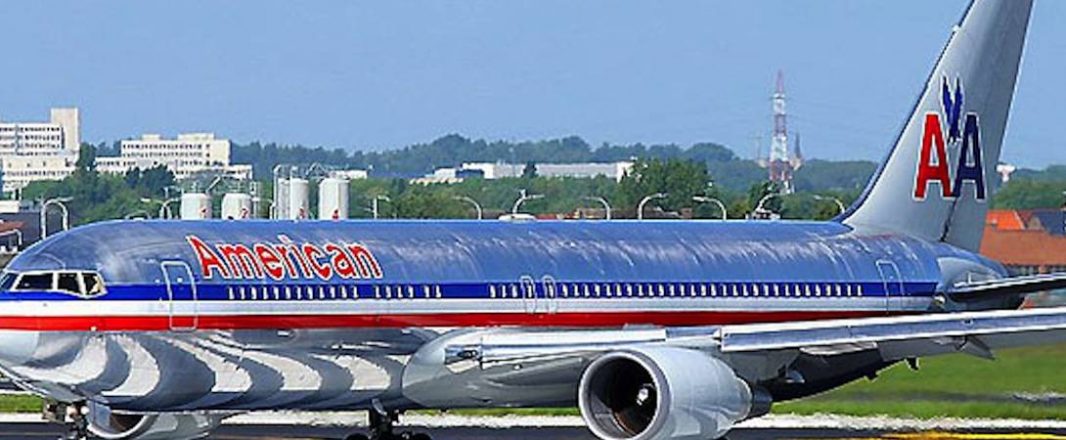
The battle for domination of airline product distribution has come to a head. Sabre and Travelport (individually) fought battles with American Airlines and, while the cases were both settled out of court, there is a clear winner. AA will receive multiple payments from both Sabre and Travelport.
And so a new era of openness is now coming upon us.
Just this week (April 2013) Travelport announced their new merchandising platform.
At the recent CAPA forum, Airlines in Transition, in Dublin Travelport went to great pains to explain to the audience of airline CEOs and senior industry leaders – that airlines could now distribute any content via the platform to agents (who in turn need to have the new Universal Desktop or Universal API and not the traditional green screen) their way.
Already, in various forms, American and Air Canada have announced their intention to use the platform. easyJet is already using a modified version without the traditional ATPCo fares to distribute some of its product via Travelport. The dam holding back the waters of change is clearly crumbling.
Other airlines are lining up for this. Today Farelogix and technology service providers such as VaultPAD’s LUTE is providing and printing a gazillion tickets of airlines who want this form of distribution.
But don’t think the war is over. Far from it. In the USA, IATA filed for the US DoT (regulator) to get NDC approved. This might seem odd for a communications protocol to have to go through regulatory approval. To view the comments and almost vitriolic battle of words –go here.
Frankly there is a significant amount of confusion abounding here. The issue of consumer choice has crept into the debate and become a critical part of the debate.
Let me deal with this now clear and head on.
Airlines want to obfuscate the price of the ticket. They need to do this in order to generate enough profits. The battle cry of the airlines these days is ROCI or Return on Capital Investment. They also want differentiation and the ability to speak directly to the consumer.
Just a few years back it was anything but a loss! The travel agents want a simplistic product to sell and for them to get a revenue model that compensates them for their services. The consumer wants a trustworthy place that allows online or offline to be able to search and shop and COMPARE easily and FAST. The GDSs want to preserve that nice revenue flow. Clearly there is no solution here that meets everybody’s needs.
In looking at the way out from here, regulators are wrestling with the problem of do they intervene or not. In my view they have no place getting involved. This is a changing business model situation. There will be winners and losers.
No one has the right to be in business unless they have a product that consumers want and are prepared to pay for at a rate that the two parties can agree on. Regulators are there to ensure a fairness in the market, these days that means a hands-off approach. The regulators have no need to protect the consumer as existing protection schemes already exist.
The argument of restriction on freedom of choice is spurious at best. Marketplaces (with very few exceptions) do not have to support cross company product shopping comparison. Is there a regulation on the comparison of products in Amazon? Does a supermarket have to show the different prices in a shopping display for all prices of say washing powder?
Absolutely the supplier and the retailer must publish legal, and full pricing. That any seller – direct or indirect – has the right to offer their good or services their way is a basic right of capitalism. Can someone emerge who can figure out the market price of an airline ticket and provide that as a service to the consumer and make money from it? Sure.
There are a whole number of them. From the large scale meta search companies like Skyscanner and Kayak or the personalized trip management system of Pintrips (another VaultPAD company, please use a Chrome browser).
In Asia this includes Wego, Skyscanner and Adioso – there are good places to go. However, consumer trust in the current batch of systems is low and will continue to be so – not least of the reasons is the complexity of the product. For a bit of fun read my article in Tnooz on the subject.
Conclusion
We are moving to a far more dynamic and personalized choice in the search, sale and delivery of airline products. This is a good thing. Getting there is painful and there will be casualties as we transform from a predetermined fixed price market to a truly dynamic personalized offering of a wide variety of choice.
Let’s be clear and open. The commercial practices and structures designed in the 1950s and 1960s have no place in today’s world. As consumers we demand choice. As sellers, we have a responsibility to meet the needs and demands of our customers. If we fail – whether intermediary or direct – to provide what the market needs, then we will be punished ultimately and forced from the market unless and until we do. Removing the unnatural barriers to a free market whether they are technological, regulatory, commercial or historic is good for everyone.
And now as I stare at the bottom of my glass and realize it’s time for a refill … that is what NDC is ultimately is all about.
• The views expressed in this article are those of the author’s.