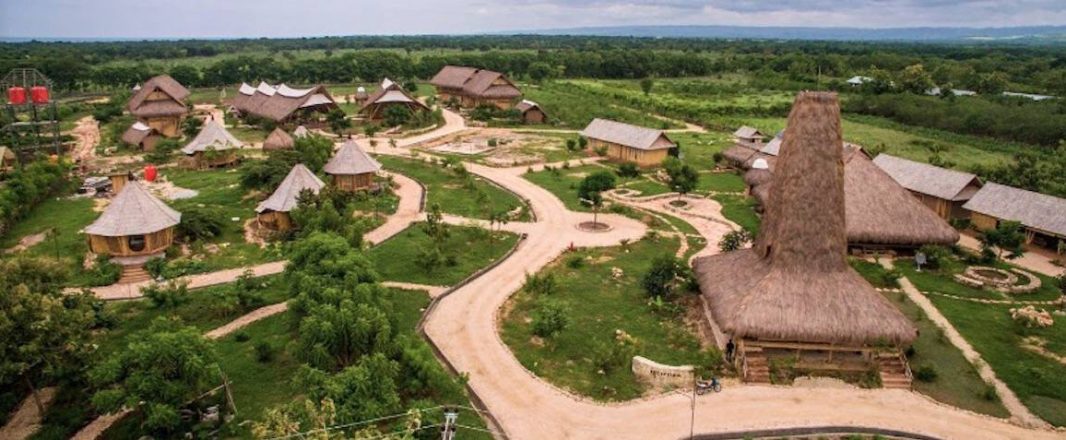
Sumba Hospitality Foundation was one of the startups that qualified for a grant from Booking Booster, the Booking.com programme that supports social enterprises. With the 100,000 Euro funds, it hopes to boost profitability at its eco-resort so that eventually it can support the school that prepares youths in Sumba for hospitality careers. Yeoh Siew Hoon speaks to Inge de Lathauwer about her long and challenging journey towards building a sustainable model in responsible tourism that she hopes will also break the poverty cycle on this remote island in Indonesia.
Hospitality is in Inge De Lathauwer’s blood, so is charity. Blend the two, and you get the Sumba Hospitality Foundation which runs a school that offers vocational training to underprivileged youths aged 17 to 23 to prepare them for careers in hospitality, as well as an eco-resort within the school’s premises.
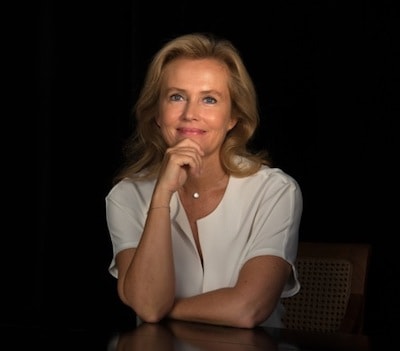
Hospitality and charity are in Inge De Lathauwer’s blood.
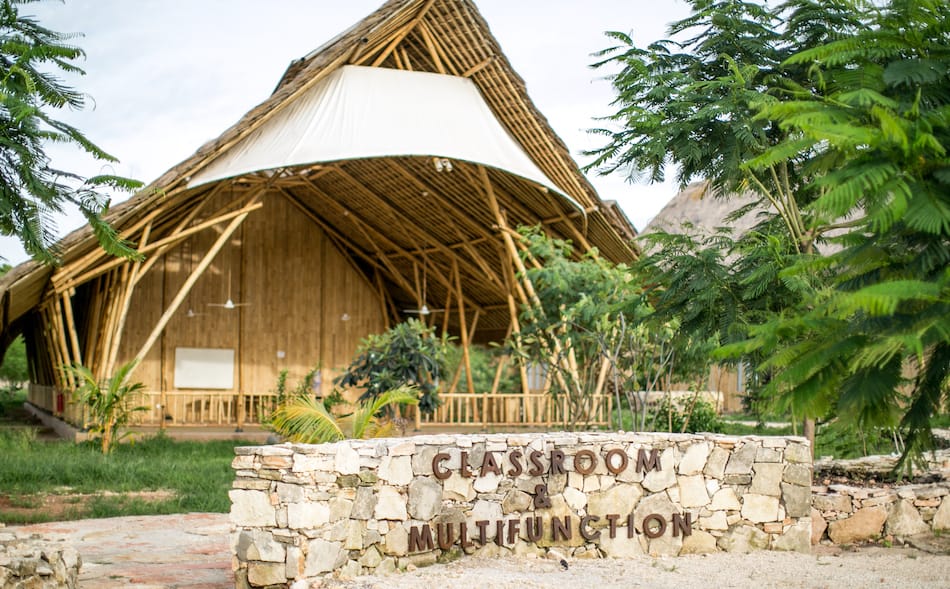
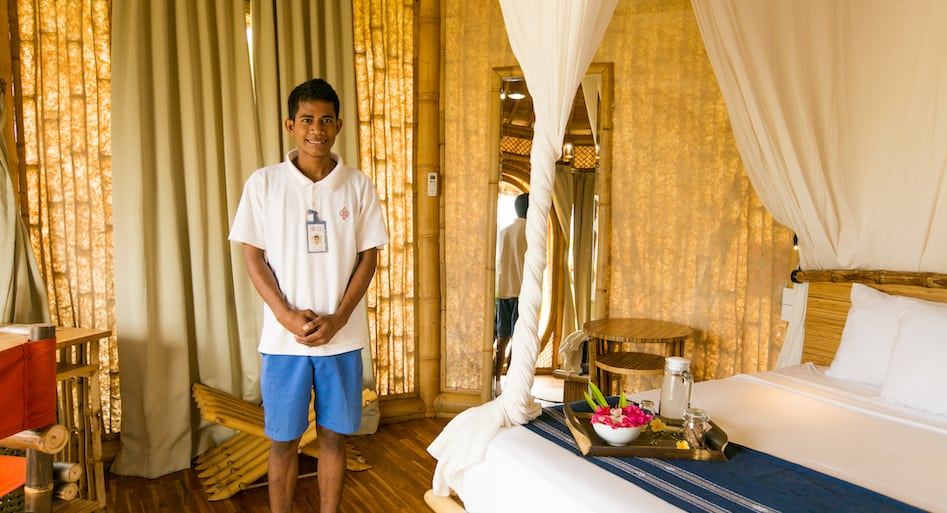
The Sumba hotel school is not just any school though. It is built entirely of bamboo, is run completely on solar power (288 solar panels) and has a waste water treatment that ensures 90% of waste water is filtered. In addition to the nine-room Maringe Eco Resort, which serves as on-the-job training for its students, it also operates a 2.5 hectare permaculture farm.
“We wanted to create a model for a truly sustainable development in hospitality. Often, people don’t know what it is until they see it and so we set out to build it so that people can see it for themselves,” said De Lathauwer, whom I caught up with on one of her many trips to Sumba via Singapore.
For the last six years, the petite Belgian woman has been commuting between her home in Brussels to Sumba to oversee the project, from an idea to construction to now operations in its third year.
This is clearly a passion project. She won’t say how much her family has spent on the project but you can take a guess – building something on an island as remote and as undeveloped as Sumba and then to set such high standards as to build a fully sustainable hotel and school cannot be inexpensive. And then to operate it is another story.
Other than a charity gala dinner that she organised in Brussels to raise funds among her network, funding has come from her family which has a history of philantrophy work. “I just wanted to get started and if I were to go out there and raise funds, it’d take too much time and too much convincing. I just felt I had to do it to prove it could be done.”
How love and a bad experience in Africa changed it all
To understand Inge De Lathauwer’s motivations, you have to start at the beginning. With a masters in Asian studies and a hospitality management degree from Switzerland, she took on her first hotel job at the then-Le Meridien in Singapore as a management trainee. This was around 1989 and at that time, China was just opening up, and she was awestruck by the promise of Asia.
But then Cupid’s arrow struck, she met her husband in Singapore and, as she said, love changed it all. “We went back to Belgium for his job.”
She put her career on hold and had four sons. “I had to choose between having a career or caring for my kids and I chose the latter.”
Through that time, she stayed involved in volunteer work and through her family’s philantrophic activities, she kept busy. “But I didn’t want to just write a cheque, I wanted to see what was really happening with the money.”
A bad experience heightened her awareness that if you wanted to do something really impactful, you had to do it yourself. “I was supporting a project of a large international organisation in Africa and it was to open a clinic for Caesarian operations. Having had four such operations myself, I knew its importance to the women in this village. If I had been born there, I’d be dead.
“When I went to visit the project, I saw all the materials we had spent money on still in their bubble wrap, turned out they hadn’t even got the licence from the government to employ a gynaecologist.
“People have great ideas but fail in the execution.”
“Can I sell you land in Sumba?” The question that started it all
This experience, eight years ago, stayed with her. About six years ago she was in Bali at a birthday dinner when she sat next to a Balinese man who wanted to sell her land in Sumba. She tried to do research on Sumba but couldn’t find anything. “I was intrigued.”
The timing was also right. With her sons all grown up, she was ready to do something for herself. She thought she could run a small eco-resort that would be sustainable and run by local people.
She visited Sumba with the Balinese land prospector. “In my travels, I saw the beauty of the island. I stayed in local places and I was also shocked to see poverty at that level – villages had no electricity, no access to water, there was a lot of malnutrition, it was shocking. The more I saw, the more I kept wondering what I could do.
“There were a lot of land speculators, people were buying land from local people for very little – more than 60% of the land on public beaches has been sold. I could not stop that. Hotels, they will come anyway, Sumba’s going to be the next hot spot for travel – it is twice the size of Bali and its potential is huge – but the local people will never get to work in them. They have no clue about hospitality.”
On the last day of that visit, she woke up and knew what she had to do – build a hotel school that would be an example of responsible tourism. “People have been talking about it but no one really knows what it looks like. To see it is to believe it and if I can make a model that would show what it is about, it would have a greater impact.”
Breaking the poverty cycle through educating the 17-23 age group
She bought the land in 2015 and by July 2016, she opened the school. In the first year, the school took in 40 students. The following year, it took in 48 and this year, it’s expanded to 60. The hunger for education is there – it receives 800 applications a year, shortlists to 300 and picks only those who dare to dream big.
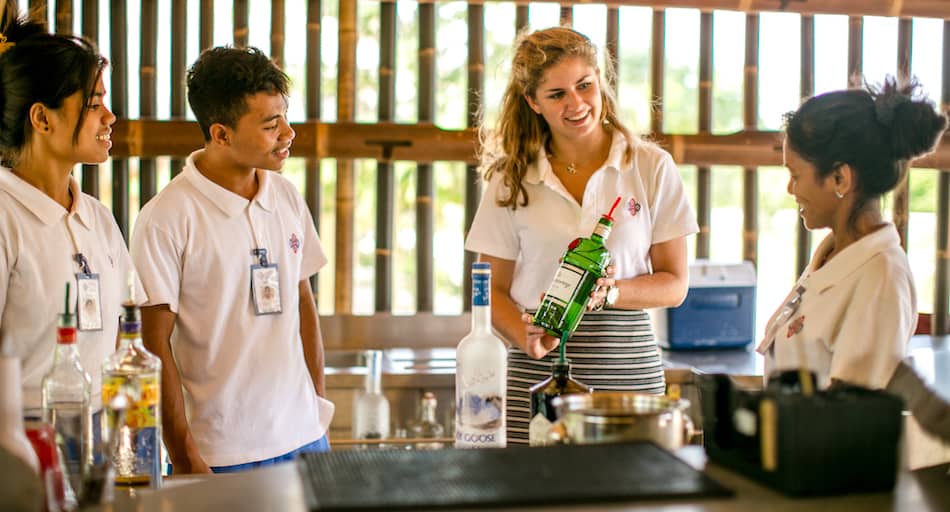
“We choose them based on their answers, how big they dare to dream because these are the kids with the right attitude. The 17-23 age group is the one that can break the poverty cycle. If these youths make it, they can look after their entire family, pay for the education of their younger siblings.”
Students pay about US$100 for an 18-month programme which gives them full immersion in English and exposure to different departments in hospitality. After graduation, they are given internships in hotels in Bali for now because, other than the luxury resort Nihi Sumba, there are not many hotels on Sumba – for now.
Building the project was one thing but getting acceptance from local communities and government officials was another. The breakthrough came when she found a local partner, redempta Bato, whom she described as a “small powerhouse”. Bato heads the foundation and runs things on the ground. “Without her, I couldn’t do it.”
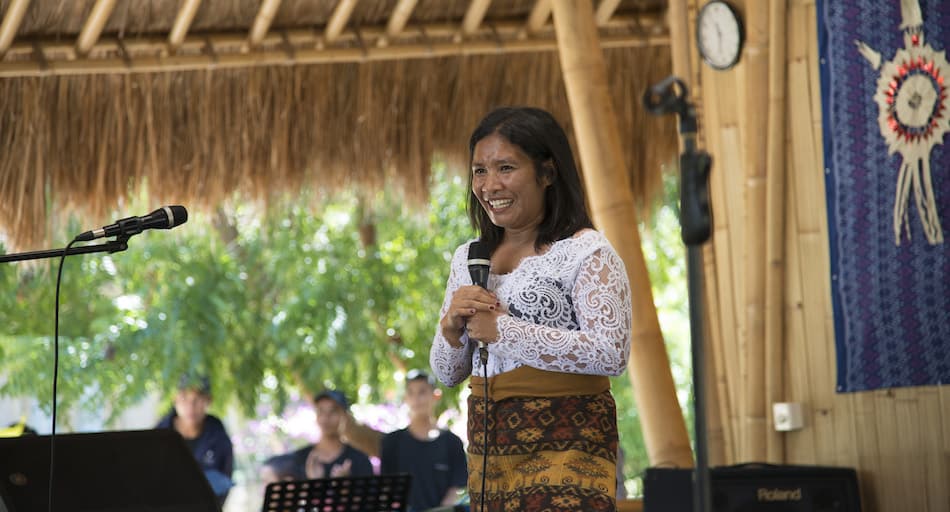
There was another challenge to overcome. Divided into four regions, Sumba is a tribal society and because the school is located in the east, it was difficult to get the three other regions to accept the project. “We had to convince them that this solution is for Sumba, the location does not matter.”
Today, the school is embraced with pride by Sumbanese.
Next mission – making it financially sustainable. New website, discovery and revenue management on the table
De Lathauwer’s next challenge is to make it financially sustainable – for the Maringe Eco Resort to operate profitably so that it can fund the school. This was the reason it entered the Booking Booster programme and while it didn’t receive the top prize, it came in third and received 100,000 Euros in funding from the scheme run by Booking.com.
“We will put the funds into a new website and hire a professional in revenue management. We want to take the occupancy from 30% to 60-80% and increase our rates,” she said.
It also solicits for donations – US$5,000 to sponsor a student – and it has 15 individuals who sponsor 15 students a year.
“It is important we find a way to make this financially sustainable too – to prove that a project that has responsible tourism at its heart can pay for itself.”
In the meantime, she continues to fund it herself. “I have told my sons, I am giving away your inheritance. They are very proud of it. How many kids can say, we have a school in Sumba?”
In fact, you could say this is a new kind of family business – three of her sons are involved in the project. One helps with financial planning, one is the operations manager based in Sumba and one who’s studying in the US helps with social media.
Asked if she’d ever thought of giving up midway, she said, “Yes but everytime that happened, someone would send me an email to offer help. I believe in connections and serendipidity. If you do something right, the universe will come together.”
• All images credit: Sumba Hospitality Foundation