“What if the smarter tourism investment is not in adding more stays, but in strengthening the soul of a place first?”
That was the thought that stayed with me after Airbnb’s Jeju forum, even if nobody on stage said it in exactly those words.
What they did say, across two linked panels, pointed in that direction.
At Every Corner of Korea: Spaces, Experiences and People That Make Us Stay Local, Airbnb brought together the Korea Tourism Organization, the Jeju Olle Foundation and renowned architect Hyunjun Yoo to talk about how Korea can revitalise rural travel. At the same event, Airbnb announced a USD $150,000 Community Fund donation to the Jeju Olle Foundation to support the second season of Grandma’s Stay, a programme that enables senior women living near the Jeju Olle Trail to host guests in spare rooms in their homes, with operational support from experienced co-hosts.
So yes, there was policy, product and platform context in the room. But the more revealing story came from the people.
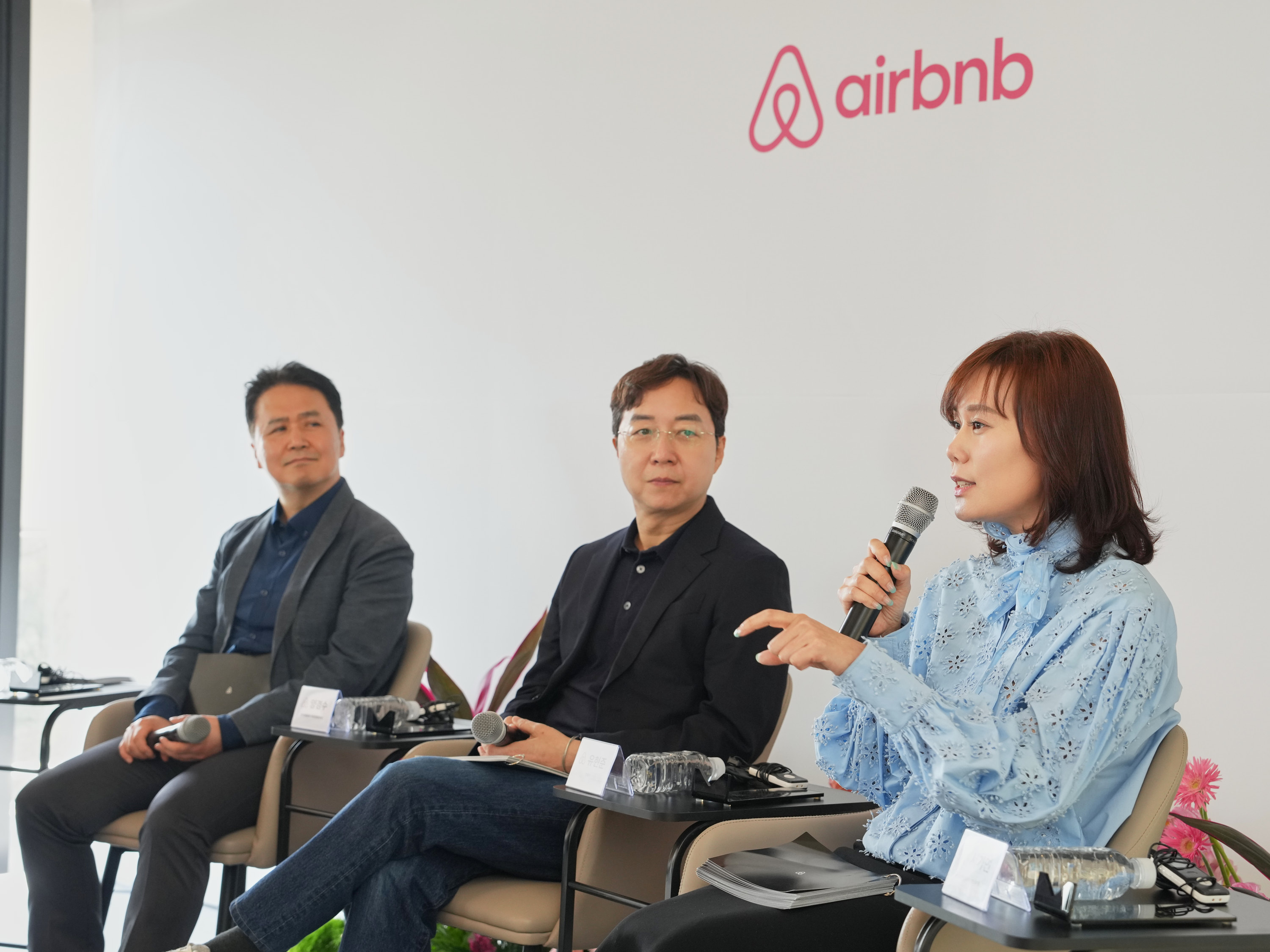
Lyla Seo, Country Manager of Airbnb Korea, set the tone early. “Our focus this year is revitalizing local communities,” she said. She added that by “expanding distinctive, high quality stays and empowering local hosts,” Airbnb wants to encourage longer stays in rural towns and spread tourism benefits more widely.
That could have remained a polished corporate line.
But then the conversation moved to Jeju’s sea women, spare rooms near the Olle Trail, old homes, breakfast, and what it really takes to make a place feel alive to a visitor.
“It needs to be different”
The first panel started with local travel, but quickly became a conversation about what makes people want to stay.
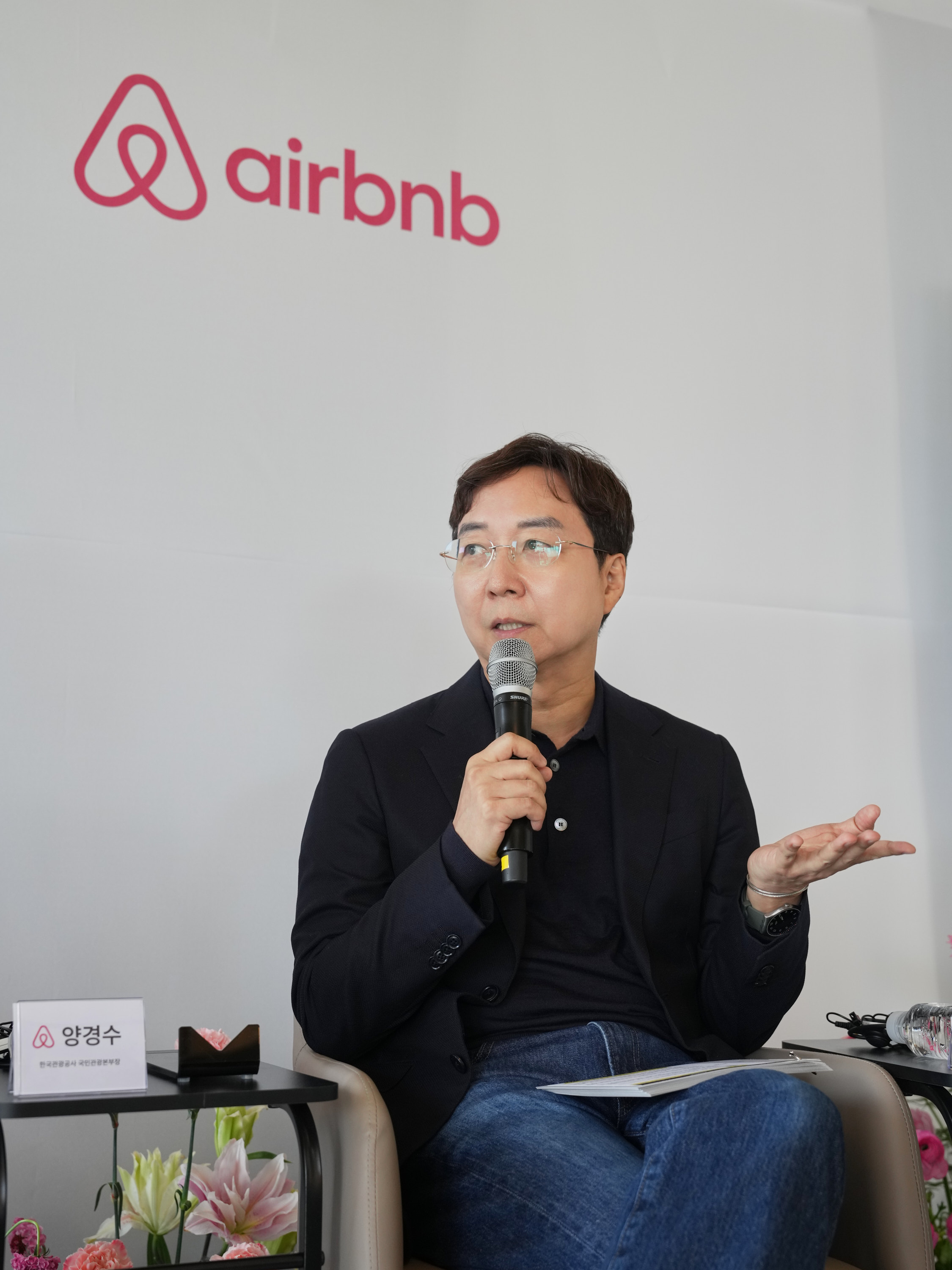
For renowned Korean architect Hyunjun Yoo, the answer was direct: “It needs to be different.”
He was talking about accommodation, but really he was talking about sameness. Too many places, especially in Korea, can begin to feel structurally similar. If a stay is going to stand out, it has to offer something that breaks from ordinary life. He shared his view that destination stays should reflect local identity, and that underutilised assets such as vacant homes can be transformed into compelling local experiences through thoughtful design.
But Yoo did not stop at design. He also pointed to the policy gap that keeps many good ideas from becoming reality. Looking at vacant homes and underused spaces, he suggested the issue is not a lack of imagination. “We have so many young, talented people who can turn those empty homes into great places,” he said, arguing that the real obstacle is often regulation. His frustration was clear. The government, he suggested, needs to ease the burden and “not hold us back,” because the creative energy is already there.
He also spoke about memorable travel not as a checklist of landmarks, but as a set of ordinary acts. Staying in a local area. Going grocery shopping. Cooking. Living, however briefly, in the rhythm of somewhere else.
That is what made one of his side remarks land so well.
“Breakfast is a big thing.”
He kept coming back to it.
Not because breakfast is glamorous, but because it is one of those small details that reveals whether a stay has been thought through with care. In a big city, breakfast is easy. In a rural town, it can be the moment when a stay feels warm or awkward.
Later, he sharpened the point again: “That small piece of detail can make a difference.”
It was one of the most useful lines of the day because it pulled the conversation away from grand tourism language and back into hospitality itself. A stay may begin with architecture, but it is often completed by the simplest gesture of care.
“We chatted for like two hours by the rocks”
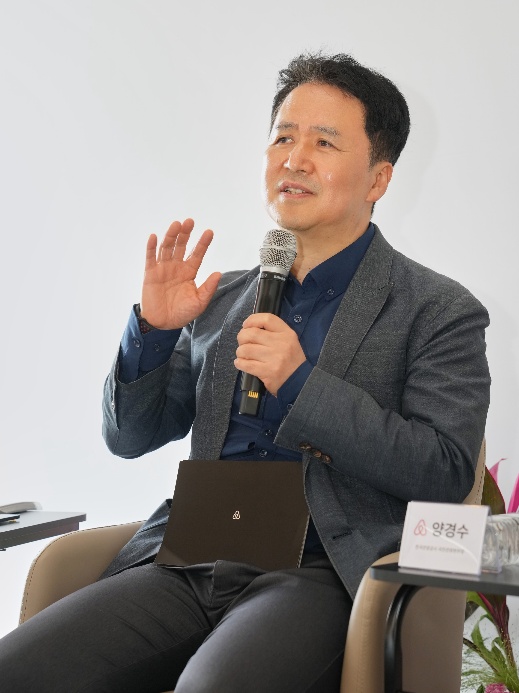
If Yoo pushed the discussion toward space and distinctiveness, Yang Kyung-soo, Executive Director of the National Tourism Division at KTO, brought it back to the lived texture of travel. He argued that rural tourism success should be measured by the duration and quality of stays, not just visitor numbers.
On stage, he gave that idea a face.
He spoke about coming to Jeju years ago, around 2006, not as an official but as someone who liked taking photos. He was driving around the island when he saw people by the seaside collecting shellfish. He asked what they were doing.
What followed, he said, was simple and unexpected: “We chatted for like two hours by the rocks, and ate and drank.”
That line did more work than a lot of strategy slides. It captured why local travel matters at all. The most memorable part of a place is often not the thing you were supposed to see. It is the conversation you did not plan, the person you did not expect to meet, the feeling that the destination opened up because someone inside it welcomed you into their world.
Yang made another useful point too. Local travel cannot be built by one host or one property alone.
“Not one single person can offer those options. It has to happen from the community.”
That line became the hinge between the two panels. Because if community is the real engine of local travel, then the next question is obvious: who in Jeju is actually carrying that community layer?
The answer, in the second panel, was clear.
“They want to know what locals eat, what locals do”

For Eunjoo Ahn, CEO of the Jeju Olle Foundation, the logic behind Grandma’s Stay was never just about filling an accommodation gap.
She took the room back to the early days of the Olle Trail. As the routes expanded through parts of Jeju that were not especially touristy, one practical challenge kept appearing: there were not enough places to stay.
So the foundation began looking to local communities, especially women living near the trails.
But Ahn also made clear that walkers wanted more than lodging.
“They want to know what locals eat, what locals do.”
That is the line that explains the project better.
Yes, there was a practical need. But there was also a deeper one. People walking the Jeju Olle Trail did not just want a bed at the end of the day. They wanted local life.
That is why the concept resonated. It started with only two rooms, Ahn said, and became popular enough that homeowners later refurbished their houses and expanded.
Still, the first season exposed the fragility of the model too. The homes were old. Many hosts were older women. Promotion, upkeep and operations were not easy.
As Ahn put it, “We really didn’t have a system.”
That is what makes Airbnb’s support more interesting than a surface level donation story. The money is not going into some flashy reinvention. It is helping make something already rooted in Jeju more sustainable.
“We want to fill the gap”
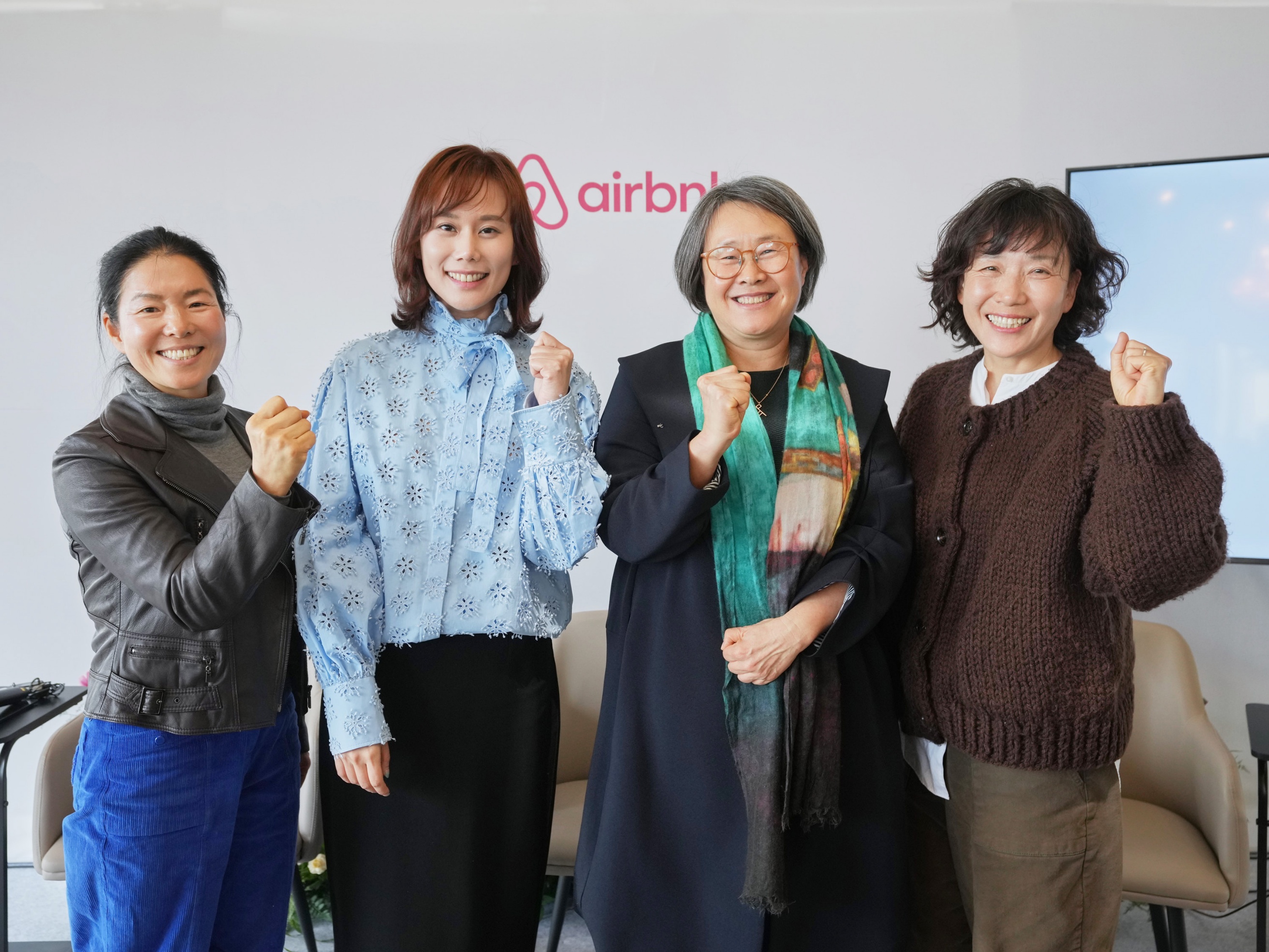
We picked up that thread when Lyla Seo, Country Manager of Airbnb Korea explained the role of Airbnb’s co-host network.
Starting a stay from scratch is not easy, she said. Hosts face many difficulties and struggles. So with co-host support, “we want to fill the gap.”
That phrase mattered because it was practical. The co-host network is there to help with guest greeting, reservations, promotion and the operating details that can overwhelm first timer or older hosts. All the participating senior hosts will receive operational support from experienced co-hosts.
And then Lyla widened the frame. Speaking more broadly about women hosts, she said that many had found more than income through hosting. Some had left work earlier in life to care for children and later returned through hosting.
She also pointed out that 55% of Airbnb hosts in Korea are women, and said that female hosts often receive especially strong feedback because they bring “heartwarming hospitality” to the experience. In the context of Jeju, that line landed with even more meaning. The conversation was no longer only about accommodation supply, but about what women hosts bring to the emotional texture of a stay.
In the panel, the thought came through clearly: they gained not only some economic independence, but another identity and a new life.
That is one of the most quietly powerful ideas in the whole Jeju story. The value of hosting is not only what the guest receives. It is also what the host regains.
“I was always a guest and now I became a host”

That emotional shift came through most clearly in Kim Soon-hee.
She is 64, a former mathematics tutor from Daegu who came to Jeju in 2019 for what was meant to be a one month stay, completed all the Olle Trail routes, earned scuba and free diving certifications, graduated from haenyeo school, and is now active at the Yeongnak-ri fishing village association, while continuing to tutor mathematics. Her home is in Yeongnak-ri, Daejeong-eup, Seogwipo City, about 4km from the endpoint of Olle Trail Route 11.
But the panel gave her story a different shape.
She spoke about coming because a friend wanted to. In the end, she said, the friend did not come, but she did. That chance led to another, and then another. She walked. She stayed. She persuaded her husband to move. She found her way into diving.
And then she said the line that held the room:
“I was always a guest and now I became a host.”
That sentence carries the whole emotional architecture of Grandma’s Stay.
A traveller arrives.
A place changes her.
She stays. Later, she becomes the one welcoming someone else.
Kim added that she wants to fill in the gaps she found as a traveller. She wants to share the local area, local ingredients, family friendly activities, and the sea related experiences she has gathered through her own life in Jeju.
“I want people to just enjoy the nature as it is”

If Kim’s story is about turning points, Choi Soon-duk brought another tone into the room.
Choi, 55, is a former café owner who relocated from Seoul and now works as an active haenyeo in the Goeum-ri fishing village community. She is joining Grandma’s Stay as a new host this year. For this season, she is preparing a farmhouse in Hagwi-ri, Aewol-eup, Jeju City, about 5km from the starting point of Olle Trail Route 17.
After running cafés and other businesses in Seoul, she moved to Jeju six years ago, built a two storey home in Goeum-ri near Olle Trail Route 16, and has been active in sea cleaning and local environmental festivals. She also hopes to incorporate mindfulness and nature based activities into her hosting in the future.
On stage, she did not introduce herself through credentials. She spoke instead about wanting a place close to a diver’s life and close to nature.
Then came the line that defined her version of hosting:
“I want people to just enjoy the nature as it is.”
She followed it with another thought that made the room go quieter. She wants guests to have time to look back on themselves. Not necessarily to do more, but to do less. To gaze out. To sit. To let Jeju work on them through stillness.
That is not the usual tourism pitch. Which is exactly why it felt real.
The part that stayed with me
What stayed with me from Jeju was not one big statement.
It was a series of smaller ones.
“It needs to be different.”
“Breakfast is a big thing.”
“We chatted for like two hours by the rocks.”
“They want to know what locals eat, what locals do.”
“We really didn’t have a system.”
“We want to fill the gap.”
“I was always a guest and now I became a host.”
“I want people to just enjoy the nature as it is.”
Put together, those lines say more than any tourism positioning could.
They suggest that rural travel works when space, care, community and host identity all meet in the same place. They suggest that a stay can begin as a room, but becomes memorable only when it opens into local life. And they suggest that in Jeju, the smartest investment may not be in scale first, but in helping the people who already carry a place keep welcoming others into it.
That is a more interesting story than simple expansion.
And in Jeju, it sounded best in the speakers’ own words.