
Jesper Koll, Senior Advisor, Wisdom Tree Investments, opened his presentation on “Destiny” at WiT Japan with the objection he hears most often: Japan’s population is shrinking by nearly 3,000 people every day. How can anyone be bullish?
His counter argument – scarcity is the mother of invention. The best decisions in business and in life are made not when everything is abundant but when constraint forces creativity. Japan’s labour scarcity is not a death sentence, he argues, it is an innovation engine.
He pointed to three structural forces.
The first is geoeconomic repositioning. Japan has concluded that neither the United States nor China can be fully trusted as a strategic partner, and the response is a serious commitment to self-reliance and resilience. This is not isolationism – it is a strategic recalibration that positions Japan as a stable, independent actor at a moment when the world craves exactly that.
The second is soft power, which is systematically undervalued. Japan has been the world’s largest creditor nation for 41 consecutive years. Its current account surplus continues to compound wealth. But the fastest-growing component of that wealth is not manufacturing – it is soft power.
Hello Kitty generates twice the annual revenue of Disney. Japan’s cultural exports – manga, gaming, fashion, food, pop culture – capture the imagination of young and old alike in ways that no marketing budget can manufacture. This is a structural demand driver for travel that compounds over time.
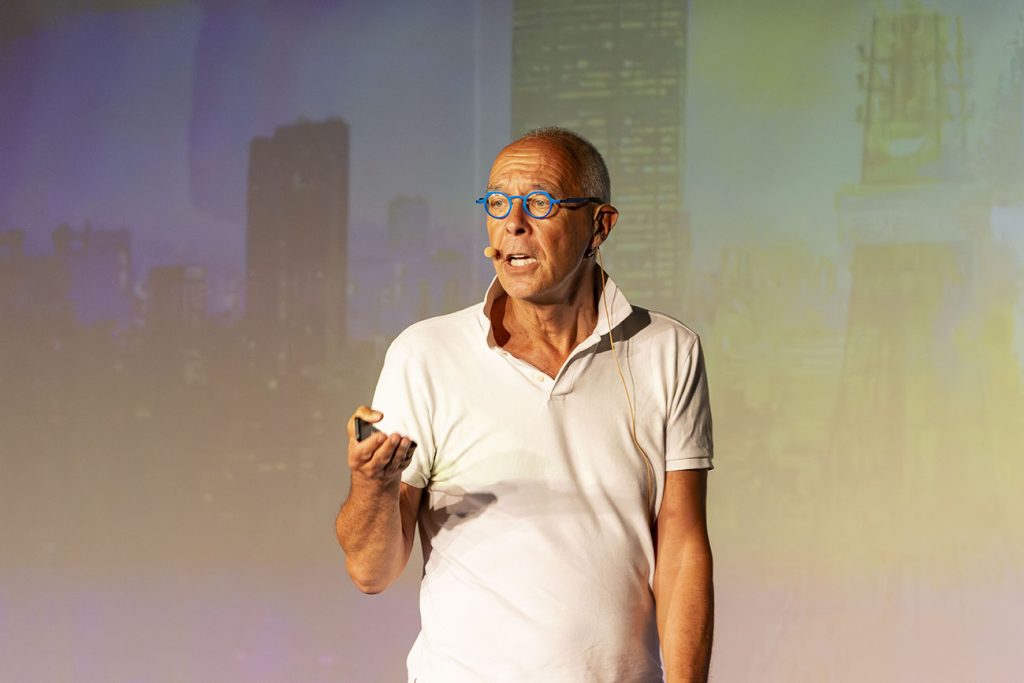
Jesper Koll, Senior Advisor, Wisdom Tree Investments
The third is corporate generational change. The average age of a departing Japanese CEO is 69. The average age of an incoming one is 51. The rigidity that made Japan’s corporate culture notoriously difficult to work with – what Koll called katai, meaning hard or unyielding – is softening as the baby boomer generation exits and a new cohort of leaders enters.
Starting salaries are rising sharply (40% increases at leading companies to attract young talent). Mid-career hiring by listed companies exceeded graduate intake for the first time in post-war history last year. Japan is, quietly and structurally, becoming more dynamic.
On AI, Koll offered the linguistic observation that has been circulating through Japanese business circles: AI in Japanese does not mean artificial intelligence. It means love.
His preferred framing – augmented intelligence rather than artificial intelligence – captures something real about Japan’s relationship with technology. Gundam, Astro Boy, a cultural tradition of animating machines with spirit: Japan has never been afraid of technology. Its diffidence about AI is not fear but measured pragmatism. One plus one equals three, four, five –humans and machines together, each doing what they do best.
Japan’s service sector productivity has flatlined for 20 years because it did not invest. AI changes that equation. In a labour-scarce economy where the cost of human attention is rising, the productivity gains from AI in service delivery are not optional – they are existential. And unlike every other AI market where anxiety competes with excitement, Japan is simply not anxious. It is measured, curious, and increasingly ready.
Koll’s closing remark – optimise your processes, yes, embrace AI, absolutely but never lose sight of the fundamental question of how you motivate your team to deliver the best customer service. “Walk into a 7-Eleven in Japan and look at the egg sandwich. Someone thought about that. Someone cared. That caring, multiplied across an economy, is what no algorithm has yet learned to replace,” he said.