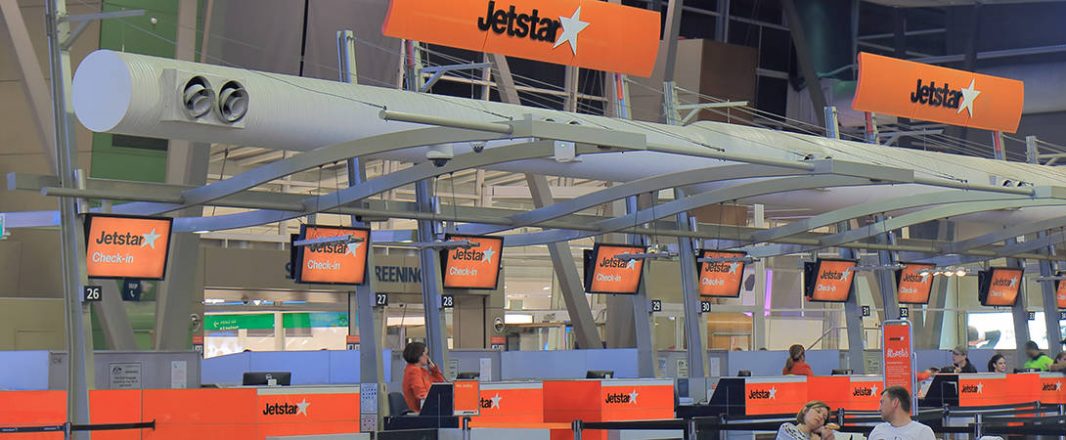
Jayne Hrdlicka, CEO of Jetstar Group, painted a picture as sunny as the weather outside for her airline at this week’s CAPA Aviation Summit in Sydney.
Opening the two-day conference, she said, “The global economy is in its best shape since the GFC. We are carrying 37 million passengers now, two thirds of whom travel for US$100 and less. That’s what we do – we make a big difference to the economies we are connecting.”
The day-to-day battle for consumers though is hard. She described Southeast Asia as “very competitive, fully penetrated in terms of stimulating new trips” and in particular Vietnam was “too much capacity, everyone’s struggling”.
She picked out Japan as exciting. Even though low cost is only 10% of total trips taken, it’s proven to be good competition to trains and inbound and domestic markets were both promising. “Even though Japan’s a mature market, there is big opportunity for low cost carriers.”
China is “terrifyingly exciting”. By 2034, a total of 800 million outbound travellers are expected. About 1.2 million Chinese visit Australia now. “If we just held our share, that would be an eight times growth in the number of domestic trips in Australia,” she said.
Jetstar, about to announce another direct service to China, approaches the mainland as it does other markets by looking at the different types of customer segments. “There’s a big leisure-driven price opportunity and we are not done innovating with our joint venture partner in that market.”
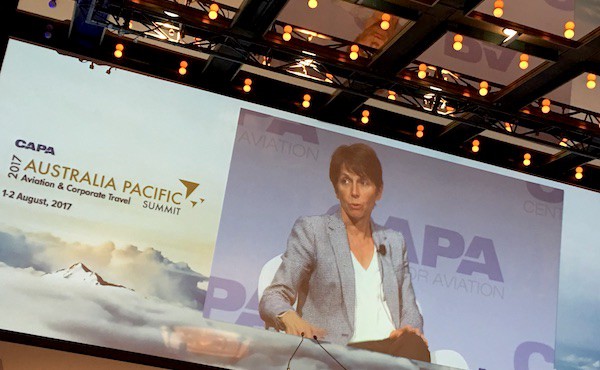
Jayne Hrdlicka: Japan is exciting, China is “terrifyingly exciting”
Two bets it made four years ago are paying off – the decision to re-platform the Jetstar group from a digital standpoint and overhauling its data architecture and adding new tools.
Said Hrdlicka, “Our business now has a different look and feel. We are a big online retailing business with software engineers, analysts, data scientists – we are in the early stages of Machine Learning and robotics and that’s being baked into our website and operations.
“As a result, ancillary revenues are higher than otherwise. We are selling to customers better and personalising. Our inventory management system now has ML baked in it – and we have seen a 1% lift in revenues that comes from the data smarts sitting on top of the system.
“It’s also working in cost management and customer service – our Price Beat guarantee is now driven by robotics.
“We are only 20% into the journey – the future is impossible for anyone to see fully – but we are super excited to use data and digital tools to sell better, manage costs better and serve customers better.”
Hrdlicka said customers were getting a better deal as well because “we know now how to add value. We can give you the best deals from hotels, car rentals – we can provide an end to end journey for you in terms of managing your trips.”
On average, it gets 70% direct business from its website and 30% is indirect but it varies across different markets. “In japan, we sell tickets through kiosks in local convenience stores – a total of 27,000 kiosks – and in Indonesia, we sell through mom-and-pop travel agents. It depends on markets – we are set up to service price-driven customers in the right ways in the right channels.”
In conclusion, she said, “Building a business on what your customers want does help.”
• Featured image credit: TkKurikawa/iStock