
We continue our look at the latest travel trends identified by JWT Intelligence’s annual The Future 100: 2020 report. Last week, we took a closer look at five of the top ten key trends that will unfold in travel this year. Read part one here. Here is part two:
Legacy tourism – protecting local heritage
In further efforts to mitigate the effects of overtourism, there has been an increase in tours and activities oriented around preserving historic landmarks and local communities, ultimately protecting local ways of life.
Last October, Airbnb in China created a “Lost & Found” campaign that granted travellers the opportunity to learn traditional Chinese crafts from 40 masters. According to Airbnb’s head of marketing, Mia Chen, the experiences would encourage greater “participation in cultural heritage”, particularly for younger generations.
Taking it a step further so that travellers don’t simply experience local traditions and crafts but rather have an active hand in preserving it, Airbnb sponsored “the Italian Sabbatical”, wherein five selected visitors could live in the southern Italian village of Grottole, and volunteer with “Wonder Grottole” to rehabilitating its historic centre.
Overall, it reflects a shift in experiential travel from passive to being much more participatory. In the era of ‘conscious travel’, tourists are taking the opportunity to have a direct hand in the conservation and protection of destinations, by recognising the impact they have.
Solo travel and social stays
The rise of the single traveller is well documented and according to Klook, Asia is leading the trend. Between 69% and 93% of travellers in Asia have either travelled alone in the past or say they are open to the idea, compared with 60-69% in western countries.
As a result, hospitality companies are looking at ways to transform themselves into ‘social hubs’ that enable single travellers to connect with others while abroad.
For example, Moxy Hotels established social programs, such as knitting classes, as well as collaboration with the networking and dating app Bumble. The USA-based Life House hotel chain has also developed an app that allows guests to connect with others during their stay, encouraging people to network and socialise.
This can be regarded as the hotel industry’s entry point into the experiential travel space, elevating its offerings from traditional accommodation and food and beverage to something far more differentiated.
Turning airports into destinations
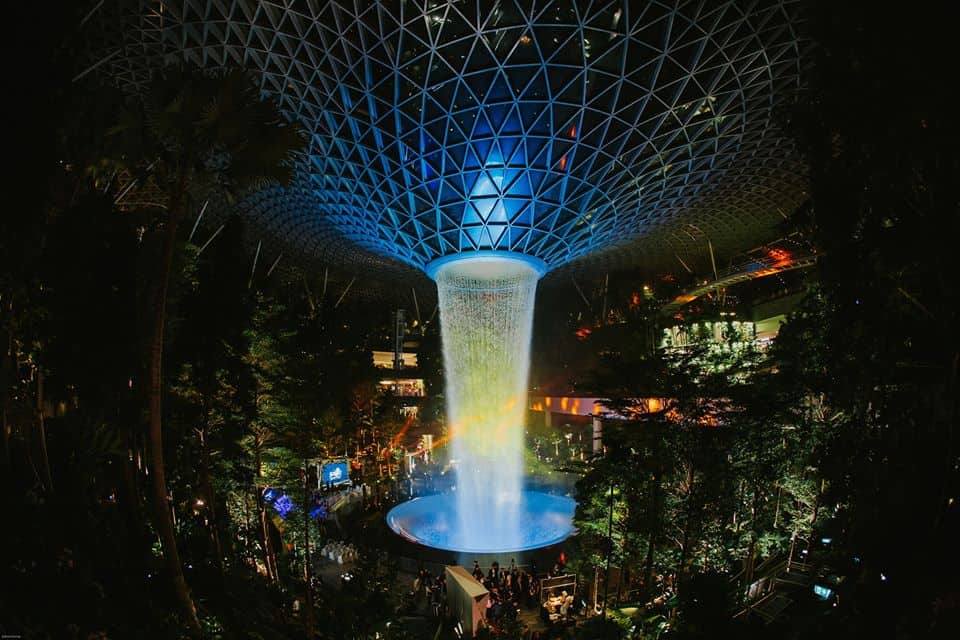
Airports are also expanding their roles from transport and immigration hubs into far more exciting lifestyle destinations, changing perceptions of layovers from dreadful and seemingly endless into a desirable travel option.
The opening of Jewel Changi Airport last April was regarded as a major step in the transformation of airports from ‘transit hub’ to ‘lifestyle destination’. The space, which houses the world’s largest indoor waterfall as well as a multi-storey indoor garden, has established itself amongst both travellers and locals as a key leisure spot in the city.
In China, Beijing Daxing International Airport – designed by Zaha Hadid – was modelled after a starfish to emulate the principles of movement, in anticipation of the 72m passengers it plans to service by 2025. It too has ambitions to become an attractive destination for non-travellers to visit too.
Similarly to hotels, airports are breaking out of traditional roles to offer travellers a much more holistic experience either on arrival or departure from the city. It reflects how some airports are actively shaking off their age-old reputations as one of the less appealing components of any given travel experience, by evolving into something for travellers to feel excited about.
Disaster-proof destinations
As the effects of climate change become ever more apparent, architects are designing “more resilient buildings”, capable of withstanding natural disasters such as hurricanes and earthquakes.
For example, Bruce Beinfield of Beinfield Architecture constructed a house with features specifically engineered to protect it from extreme weather conditions. “Salvaged wood sidings and roll-down steel shutters create an ‘exoskeleton of lateral-bracing shield storm shutters that protect the large operable glazed surfaces from storms’.”
While this may not be enough to convince customers to continue travelling during turbulent weather, it may foster a greater sense of security for those that find themselves facing freak conditions when abroad.
Healthier hospitality
Wellness tourism accounted for US$639b of the global wellness economy in 2017 according to the Global Wellness Institute. To address a growing market, hotels are working to create spaces that seek to ‘optimise’ guests’ wellbeing.
More than that, many properties are seeking to attain “WELL building certification” by fitting the International WELL Building Institute’s criteria of spaces that seek “to improve human health and wellbeing in buildings and communities…enhance people’s health and wellness through the buildings where we live, work, and play.”
Currently, there are almost 4000 projects applying WELL standards internationally however the vast majority are in workspaces, not hotels. However, it won’t be long before the hospitality industry follows suit as gusts demonstrate higher expectations for spaces that readily provide the latest trends in health and wellness.
Lead image: Getty Images