


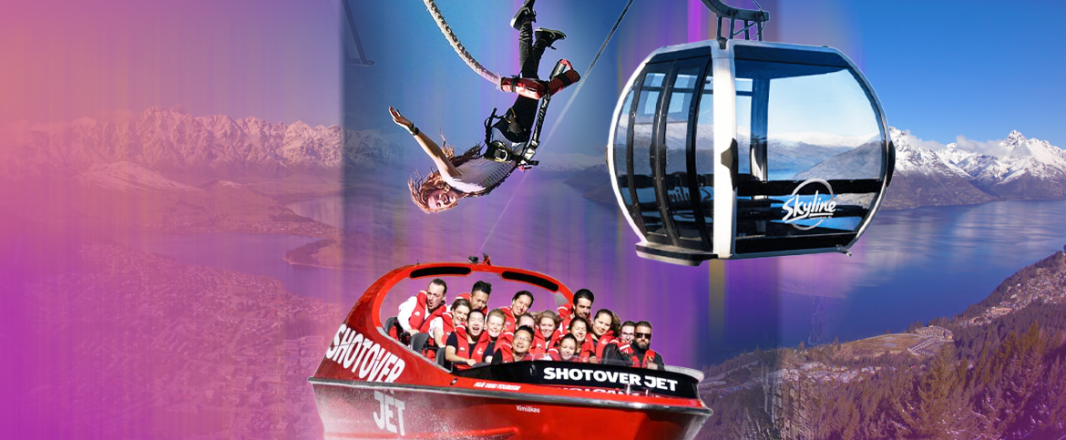
Five leaders of some of New Zealand’s most recognisable tourism brands – ski fields, jet boats, bungy jumping, conservation cruises and Māori-owned experiences – sat down with WiT founder Yeoh Siew Hoon to unpack what actually makes an experience iconic. The consensus, delivered from five very different products: it was never really about the adrenaline.
The panel brought together Paul Anderson (NZSki), Steve Bruce (RealNZ), Brooke Campbell (Skyline Enterprises), Dan Waugh (AJ Hackett Bungy) and Jolanda Cave (Ngāi Tahu Tourism) — a lineup covering, between them, skiing, jet boating, conservation cruising, gondolas and Aotearoa’s oldest bungy operator.
Fear, wonder, connection – pick a feeling
To kick it off, I asked that, given the trend of “travellers chasing a feeling”, what was the feeling each of their business was selling. Their answers were naturally tied closely to each of their products but converged on a shared word – connection.
NZSki’s Paul Anderson led with welcome: “The first thing is people feel very welcome. Our crew are there to share their passion for the mountains.”
RealNZ’s Steve Bruce broadened it to something more universal: “People travel for all sorts of reasons, but the outcome is typically pretty similar – connection. We strive to do that with nature, and increasingly we’re seeing the wellness benefit of that, both personally and with the people you’re travelling with.”
Skyline’s Brooke Campbell described a genuinely multi-dimensional offering — “thrill, awe, connection” – while AJ Hackett’s Dan Waugh, running the one product built explicitly around fear, pointed past the jump itself to what comes after: “Fear is obviously a core part of the product, but what we’re trying to leave people with is euphoria, and ultimately inspiration. Some of the best customer feedback I read is people saying, after doing this, I feel like I can do anything – I can go apply for that job, launch that business. It’s transformative.”
Ngāi Tahu Tourism’s Jolanda Cave closed the loop: “We want that connection to transform people.”
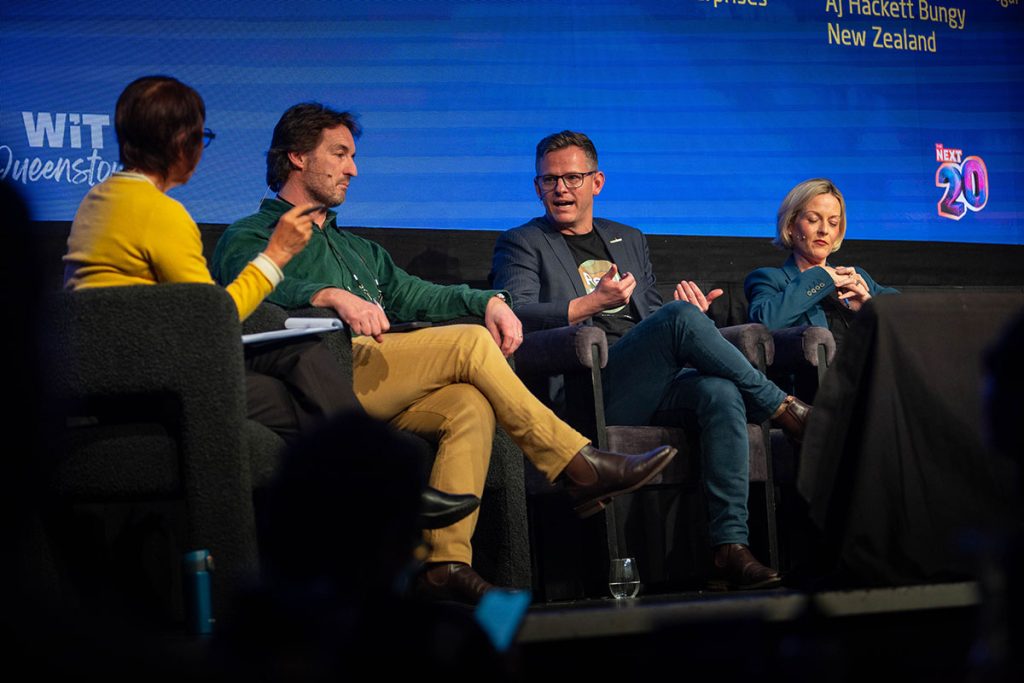
RealNZ’s Steve Bruce: “People travel for all sorts of reasons, but the outcome is typically pretty similar – connection.”
What can’t be copied and what has been anyway
Asked what makes their experiences genuinely unreplicable, Anderson made the strongest case for geography as moat. “When you’re skiing in New Zealand, you can have it all – you stand on white snow, look out across green hills and plains to the lakes and the ocean. In Canada you’d fly out to that; in Europe you’re up in a historic location. Here you can ski in the morning, jet boat in the afternoon, bungy jump in the evening, then get a wine experience or a cruise on the lake. That diversity, in one day, will never be replicated anywhere else.”
Combined, he argued, with genuine Kiwi hospitality, it’s a structural advantage no other ski destination can match.
Pushing the question to the two operators who have actually taken their product overseas: Skyline is in nine locations, and AJ Hackett has expanded internationally too, what, exactly, travels, I asked.
Campbell pointed to copycat attempts in South Korea as proof the format alone isn’t the moat. “Really, the people are what makes our experience the original and the best – the know-how, the guest experience they deliver. Bringing that unique, smiley guest experience to offshore locations has set us apart.”
Waugh traced AJ Hackett’s advantage back to origin: as the world’s first commercial bungy jumping company, the brand is now inseparable from New Zealand itself in many visitors’ minds — a halo effect the company has been able to lean on internationally.
For Ngāi Tahu’s Cave, the answer was simpler and less about execution than ownership. “Anyone can do jet-boating. Anyone can do guiding. Anyone can do conservation. For us, it’s our ownership – we’re a Māori organisation, and when you buy from us, your money actually goes toward preserving something real.”
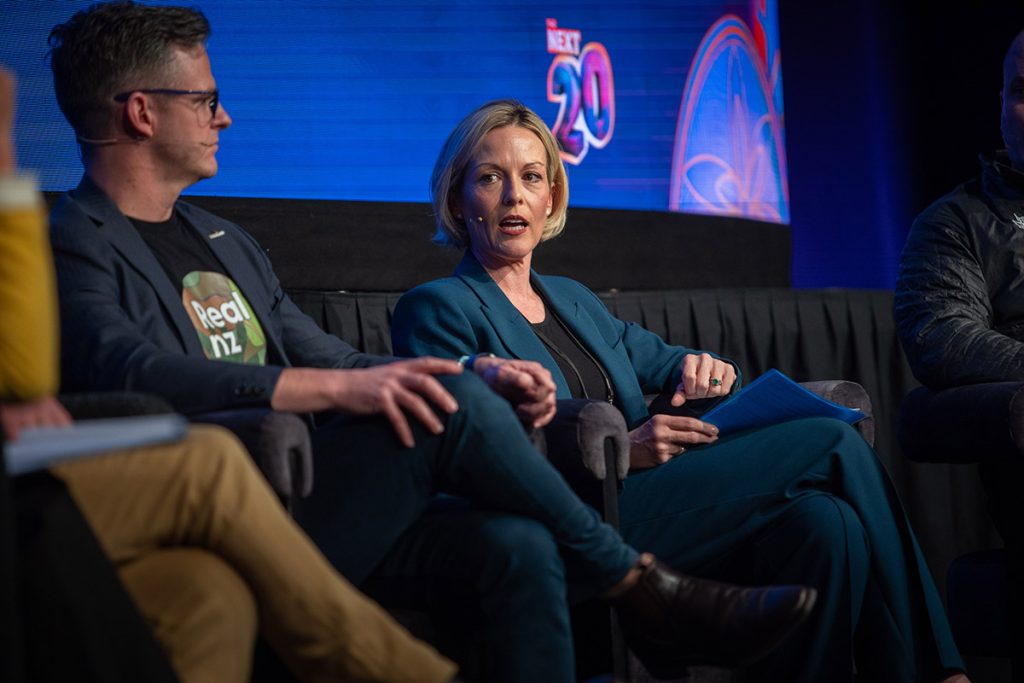
Skyline Enterprise’s Brooke Campbell: “Really, the people are what makes our experience the original and the best – the know-how, the guest experience they deliver. Bringing that unique, smiley guest experience to offshore locations has set us apart.”
Direct booking is high, and OTAs are earning their keep in new markets
I then asked them for their distribution economics: it was interesting to learn that direct bookings run as high as 85% for one operator, closer to 40–42% for another depending on whether you count by customer volume or revenue.
OTAs, several agreed, sit around 15% of the mix but are disproportionately valuable for opening new international markets like Australia and South-east Asia, where a specialist intermediary who understands the product can do work a small operator’s own marketing can’t.
Campbell pushed back gently on the instinct to blame OTAs for margin pressure: “I always find it a bit funny when operators are negative about OTAs because of what they’ve made them do. You agreed to use that tool in that way. They can be a fantastic tool for awareness and distribution – it’s about how you work with them.”
Turning every customer into a content creator
The visual and visceral nature of their experiences also lend themselves well to social media, with each operator saying that social was a big part of their customer acquisition strategy.
In particular, AJ Hackett’s EpicShot platform – an automated system for capturing customer footage at the moment of the jump – has turned ordinary bungy jumpers into a distribution channel in their own right; one customer’s post generated 11 million TikTok views in two months.
Waugh described the mechanics: a content creator programme that upskills willing customers, on average five to 12 brand touchpoints before conversion, and active tracking of platform shifts like TikTok’s and Google’s move into in-app video search.
Cave flagged the harder version of the same problem for a brand built on indigenous storytelling: how do you scale social content without flattening culture? “It’s something we always need to be cautious of. We’re excited about AI and embracing it, but from a cultural point of view, how do we protect these stories and make sure they’re shared the right way?”
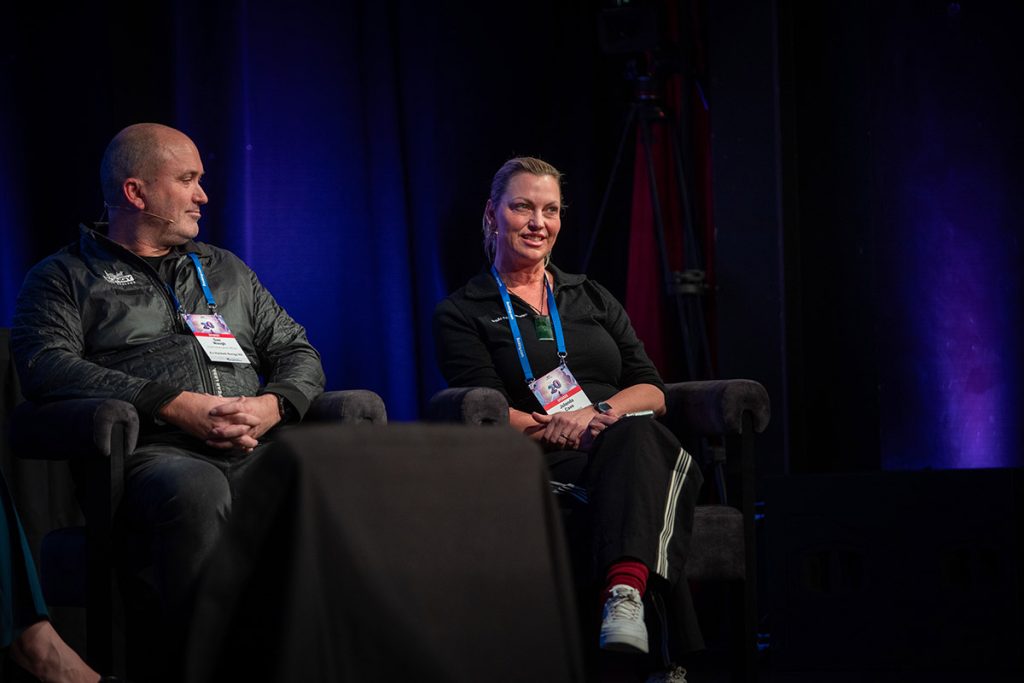
Jolanda Cave of Ngāi Tahu Tourism: “For us, it’s our ownership – we’re a Māori organisation, and when you buy from us, your money actually goes toward preserving something real.”
Reddit, DeepSeek, and the AI discovery problem
In his interview with WiT, RealNZ’s CEO Dave Beeche had described AI as “the next disruption” – chatbots now showing up meaningfully in referral data.
I asked whether this was an opportunity for genuinely iconic, well-reviewed operators to rise to the top of AI-mediated discovery, or a threat that flattens everyone into the same handful of sources?
Bruce’s answer leaned toward opportunity, provided operators stay disciplined about accuracy across every channel that might feed an AI model – not just their own website, but partner platforms like Destination Queenstown, and organic sources like Reddit itself. “Most people now ask an AI to do the searching. Using the foundations we’ve built well, and making sure the information coming through those other channels is accurate and reliable, matters enormously.”
Cave raised the harder structural question for the industry as a whole: as AI becomes the dominant discovery layer, do smaller operators without the resources to manage their footprint across a dozen platforms risk disappearing from the results entirely?
“As leaders in this sector, that’s something we need to be really mindful of — making sure everyone has the opportunity to have their data accessed and served up as an option.”
Volume down, value up
The conversation’s second half turned to growth and conservation — territory RealNZ and Ngāi Tahu Tourism occupy directly, running businesses at the intersection of tourism and environmental stewardship.
Cave had previously stated publicly that Ngāi Tahu Tourism is currently operating at around 560,000 visitors, roughly half its pre-COVID volume — a number she was candid about how it read externally. “I read that statement back and thought, that really doesn’t look good to my stakeholders. But COVID gave us the chance to properly look at what we do and how. Pre-COVID we were focused on numbers, numbers, numbers — we’d lost sight of other things. Post-COVID let us focus on the value of the experience itself. We made some tough calls, and it’s paid off: fewer customers, much higher satisfaction, and roughly the same revenue.
“Growth is not bad for us — it’s just making sure growth is in the right place.”
Bruce offered the parallel realisation from RealNZ’s own COVID experience: the business’s value to local communities as a recreation provider, separate from tourism revenue entirely, became the actual justification for reopening.
“That work community wouldn’t get up if we weren’t there — we’re there for our community first, then reopening for tourists once that was ready. That was the foundation for the winter.”
The ongoing challenge, both agreed, is smoothing demand that concentrates heavily around marquee destinations like Milford Sound — using owned channels and Tourism New Zealand’s offshore market development work to build a steadier, less peaky visitor profile year-round.
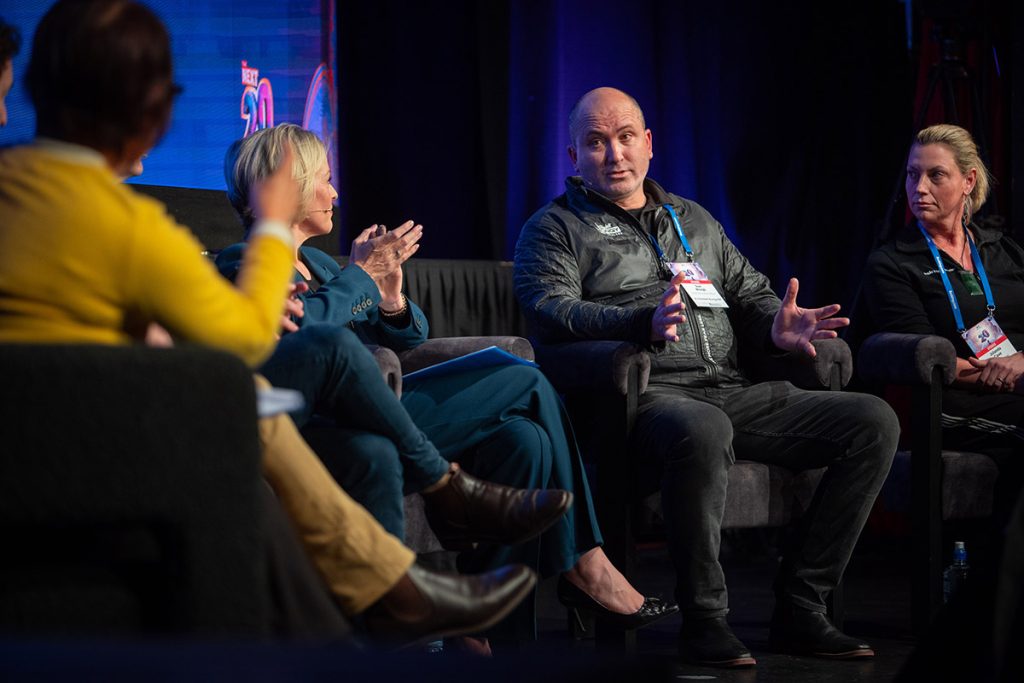
AJ Hackett’s Dan Waugh: “Fear is obviously a core part of the product, but what we’re trying to leave people with is euphoria, and ultimately inspiration. Some of the best customer feedback I read is people saying, after doing this, I feel like I can do anything.”
The audience’s biggest fear: complacency, overcrowding, and AI as a leveller
I then asked them to name the single biggest threat to their businesses over the next 20 years –climate change, overcrowding, AI or something else entirely.
Anderson didn’t pick one: “All of those things are probably happening. The biggest threat is complacency toward them.”
Bruce named overcrowding directly, and the discipline required to keep growth concentrated in the places built to absorb it. Waugh offered the panel’s most unexpected answer, framing AI not as a threat but as a genuine leveller for small operators: “If you’re a small business now, you can suddenly compete with the larger established players – you’ve effectively got a marketing department, a sales team. I think we’ll see the first billion-dollar business run by a single person.”
Community resentment was also raised in the discussions – Destination Queenstown, we were told, does track community sentiment locally, but the practice isn’t standard across the industry, and several operators on stage – working through a joint government-adjacent transport initiative to solve congestion issues central government hasn’t led on – argued the private sector may need to build these solutions itself.
From seeing, to experiencing, to becoming
Asked what comes after the “experience economy”, the panellists offered their different perspectives.
Bruce framed the next shift as one of reach rather than substance: connection remains the goal, but travellers now carry that story home through far more channels than word of mouth once allowed, turning a single visitor’s experience into a much larger amplifier for a small destination like New Zealand.
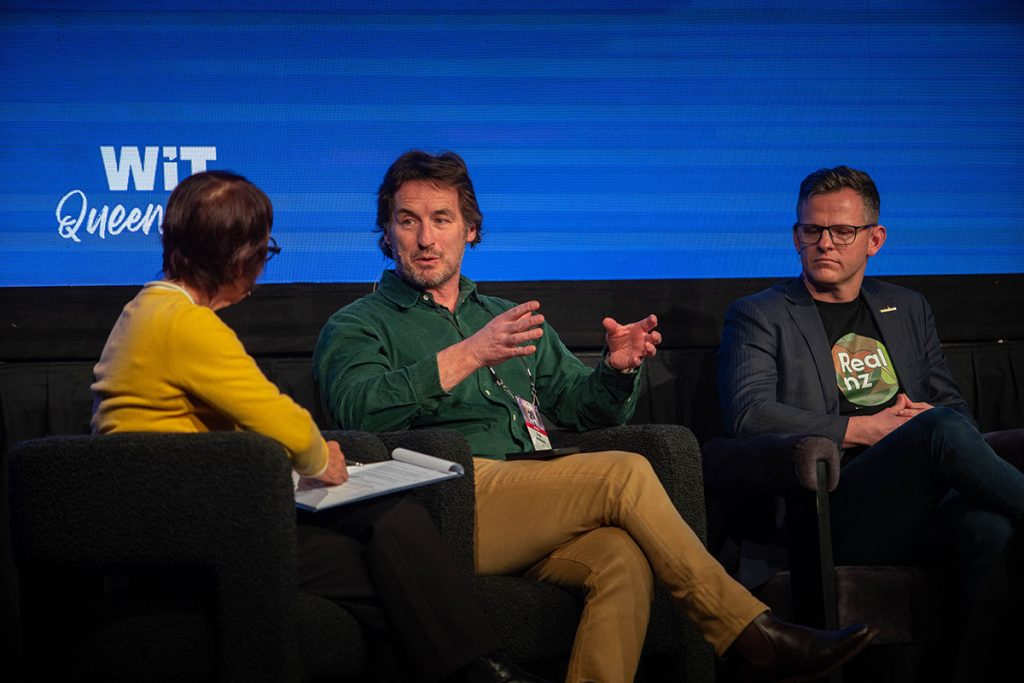
NZSki’s Paul Anderson: “When you’re skiing in New Zealand, you can have it all – you stand on white snow, look out across green hills and plains to the lakes and the ocean.”
Anderson pointed to rising guest expectations, illustrated through his own children: “I’ve got a 15- and 13-year-old – they have extremely high expectations about what they’re going to get out of an experience. I think we’ll see deeper, more meaningful experiences, and the disappearance of shallow ones.”
Cave put the sharpest label on the shift: “From seeing and experiencing to becoming – how do I become a better person? What did I contribute locally when I visited?”
Campbell connected it to a shift from passive to active travel — “seeing and experiencing can be quite passive, things that happen to you; increasingly guests want to be empowered, in the driver’s seat, with a personalised experience they help shape” — with contribution as the natural next evolution, driven as much by community expectation as traveller appetite.
What won’t survive the next 20 years
Asked what travel experience will simply cease to exist in New Zealand within two decades, the panel’s answers ranged from a punchy one-word verdict – “average ones” – to a broader thesis that products won’t disappear so much as evolve under pressure from rising guest expectations, and Queenstown’s own value proposition (diversity of experience, in one place) will only get stronger as competing single-experience destinations struggle to match it.
Cave concluded, “I legitimately think we may not see things like steam engines, because we’re innovating today specifically to change that into something different” – a fittingly Kiwi way of saying the industry is actively building its own obsolescence into better products, rather than waiting for it to arrive.


