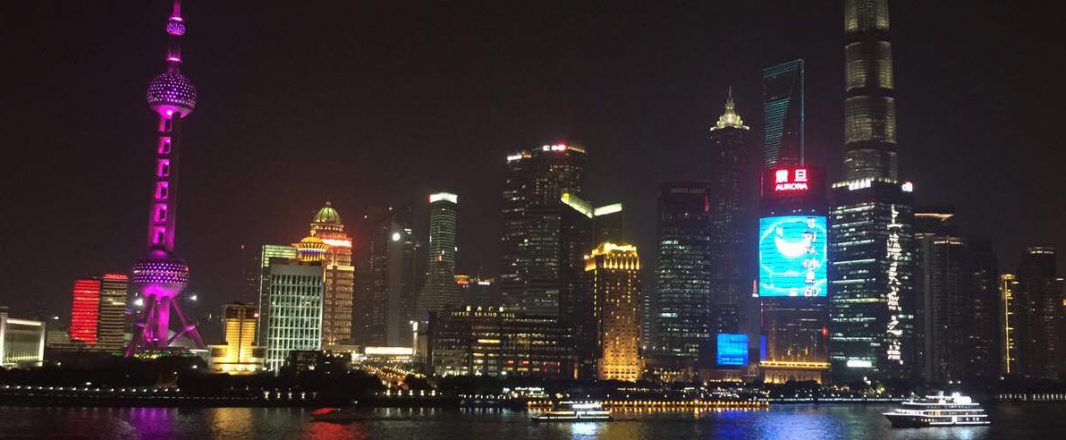
As I stood at the immigration queue at Delhi airport, just two days after I had departed Shanghai, I was mindful that I had just gone from one mega city to another, two giants that are leading what experts are calling the Asia Decade, or maybe the next two Decades.
In terms of population, both are pretty much on par – Shanghai’s 24.15m to Delhi’s 18.98m. In other terms, you could say they are as different as night and day – but there are similarities.
One, both countries have still some way to go towards opening their doors wide to inbound tourism, although visas have become slightly easier to obtain.
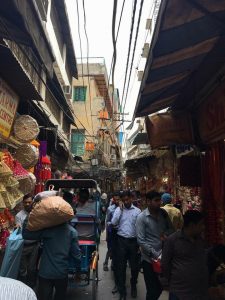
An alley in Delhi. Picture: Chiu Lai Har

The bicycle is now a museum piece in this M50 gallery in Shanghai.
Of the two, India’s the more improved – these days, you can get an e-visa pretty easily and there are separate e-visa counters at immigration to facilitate entry. The ruling though that you can’t enter again as a tourist within three months is slightly ridiculous – India’s a big country and deserves to be visited by tourists more frequently.
The process of getting a Chinese visa requires much paperwork, and physical surrendering of your passport, which can be a nuisance if you’re a frequent traveller, but once you get the paperwork done, you’re pretty much set.
Two, you see firsthand the rapid pace of development in both cities – more buildings, more cars, more pollution – and you feel the boundless energy of a new generation aspiring to better themselves, yet with both anchored in deep, rich and ancient cultures.
And so in both you feel the sense that anything is possible and yet some things are just immovable.
If you’ve done business in both countries, you know what I mean. At a hotel conference last week in Singapore, a developer said, “With India, you need patience. With China, you need resilience.”
You are also seeing more of what is called “Chindia” connections – Chinese companies investing in India – Alibaba in Paytm, the mobile payments company which has established a travel vertical, and Ctrip, which is invested in MakeMyTrip.
You can see that one has a lot to teach the other. Ctrip knows how to handle ultra-competitive markets – it meets competition head-on, knowing it has deeper pockets, and eventually it buys its competitors. MakeMyTrip buying Goibibo is a classic example of consolidation and market rationalisation.
Both countries also have mega secondary cities with populations bigger than some countries, and with similar consumer behavior in terms of leapfrogging of technology.
It was also interesting to observe that the two startups which won mention at the Phocuswright India Innovation Showcase were both Chinese companies, Mileslife and PK Fare.
Another striking similarity is that both are huge domestic markets. According to China National Tourism Administration, China’s domestic travel market reached 4.44 billion person-trips in 2016, an increase of 11%. In March this year, IATA called out India as the world’s fastest growing domestic air market for 22 months in a row.
Homegrown travel brands have thus grown on the back of those numbers. At Phocuswright India, one sensed that local brands like MakeMyTrip, Cleartrip and Yatra were more focused on domestic than expanding overseas. MakeMyTrip’s acquisition of hotelstravel.com some years ago has largely been one of alignment with its India-related business than an expansion to conquer new markets.
Yatra’s CEO and co-founder Dhruv Shringi has always maintained that there’s so much to do in India, why look abroad, and now it’s striking out in corporate travel while Cleartrip is making aggressive moves in the tours & activities space locally.
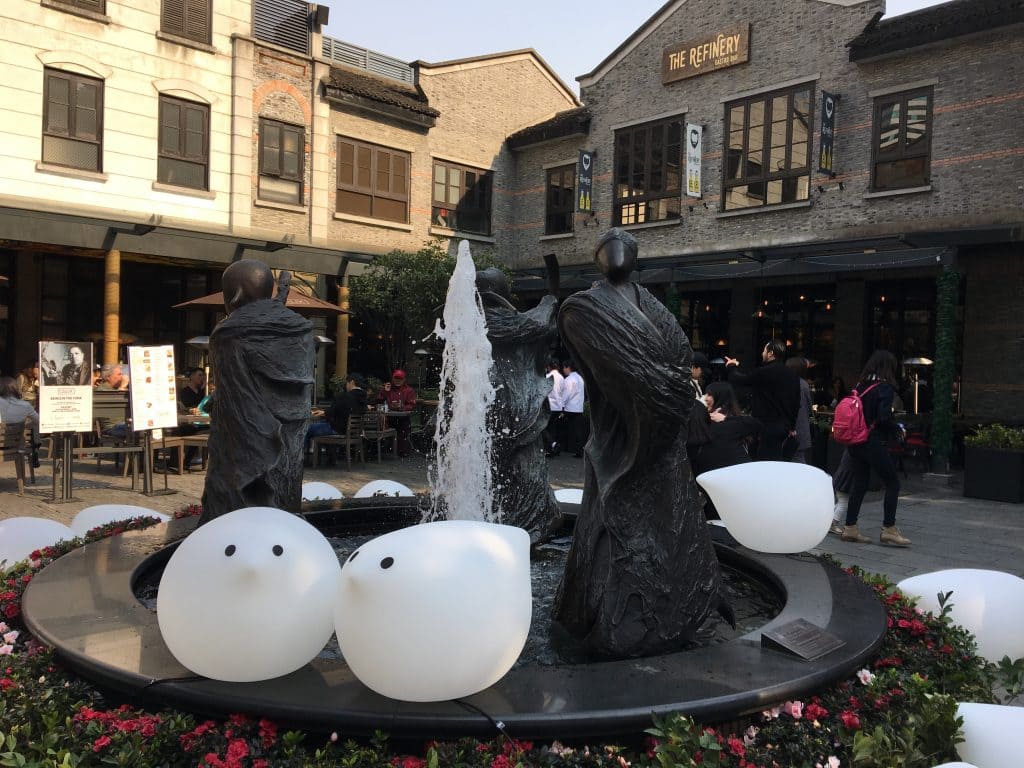
Xintiandi: A major lifestyle precinct in Shanghai which feels more European than Chinese.
It is Chinese brands though that are showing more hunger to expand beyond their shores – Ctrip being a classic example of one that’s built absolute dominance at home and now must conquer new lands. Its acquisition of Skyscanner was the latest move to globalise and you can bet this Chinese travel giant’s appetite for expansion will be huge the next couple of years.
Beyond Ctrip, other Chinese travel brands are expanding – Alibaba Travel declaring at a recent travel conference it wants to be the biggest travel company in the world in five years, and HNA building a travel and tourism empire through acquisitions in airlines, hotels and travel agencies worldwide.
Leading Indian hotel brands such as Taj and Oberoi have been slower to expand – but perhaps it’s only a matter of time.
For now, China is the clear mover and shaker of all things travel in Asia and the world and in Shanghai, an experience I had reminded me anew of the Chinese success story and why it will continue to prevail.
It comes down to its people.

In Delhi, a new generation aspiring to better themselves. Picture: Chiu Lai Har
In India, staying at the Leela Kempinski, as friendly as the service is, there’s a laidbackness to it that makes it feel well, incredibly Indian. There’s a desire to please which is not backed by process.
In Shanghai, I stayed at the Andaz and after my spa treatment, I was asked to fill in the feedback form. It had Poor, Average, Good, Excellent on it. In my post-massaged state, I marked “Good” for everything, thinking that was a pretty good rating.
My therapist looked concerned and called her manager, who immediately came, sat down next to me, and said, “You’ve obviously been to many spas, can you tell us how to improve? How can our therapist be better?”
Not wanting to get the therapist into trouble, I said, “No, no, she’s good,” to which she replied, “Yes, but how can she, we be excellent?”
I rest my case.