From warnings of climate change and war to celebration in the halls, first ITB Berlin in four years packs it all in
Stuck in traffic amid a light dusting of snow, I gaze up at the familiar walls of Messe Berlin. A big sign proclaims, “Welcome back, world”. Another smaller sign, with arrows pointing the other way, says, “Open for Change.”
The first change is you now enter via a QR code, no need to queue and get a badge. Welcome to the QR-isation of the world, and the first ITB Berlin in four years.
It’s a seminal moment for travel because this was the first international travel shut down by the pandemic, just days before it was due to open its doors in March 2020 and when attendees and exhibitors had already arrived in the city.
What a ruckus that was, with people crying foul, demanding refunds and decrying the irresponsibility of such a last minute decision.
Fast forward four years and it seems all has been forgotten and forgiven. It’s like nothing has happened.
As I step into Hall 9, I felt I had walked into a movie set – where the actors had just been put into pause mode and then suddenly someone pushes the Play button, and we are back in animation and action.
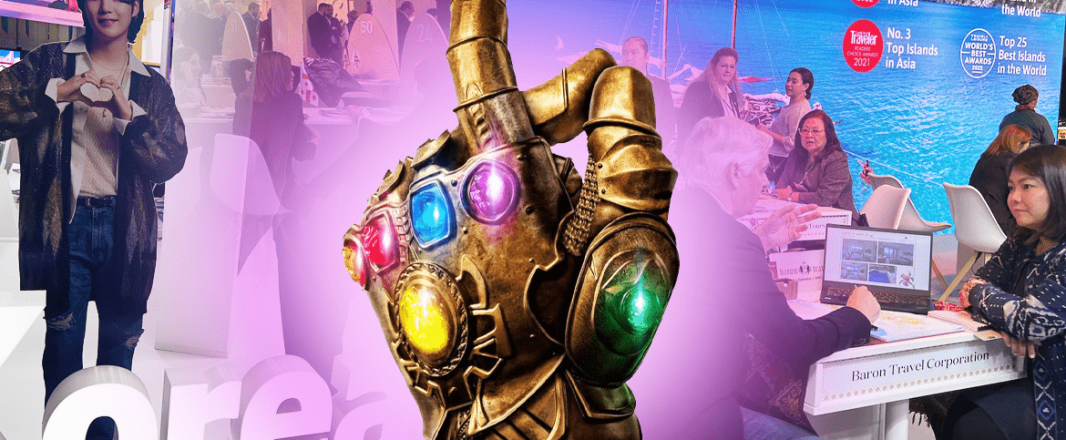
Think “The Blip” moment from Marvel – you know, when Thanos snaps his fingers and half of all living things are exterminated and then in the reversal, dust reforms into these beings who reappear in the same location with no direct awareness of what occurred.
Booths are back as they were before – familiar names such as Webbeds, Expedia Group, Siteminder standing out in their bigger-than-others stands, LED walls blinking with images of sun and beaches – and the halls are packed with people, going about their business.
I slip into my role – that of trend watcher – and head to the convention hall. I was curious to learn what economists, politicians and heads of industry associations in Europe had to say about “Mastering Transformation”.
The first words that greeted me as I walked into the darkened room and stumbled over coats and handbags was “we hope we can get back to a more stable world but we should be prepared if it doesn’t, especially in travel which is particularly vulnerable to conflicts”.
A poorer Europe, the “bureaucratising” of climate change
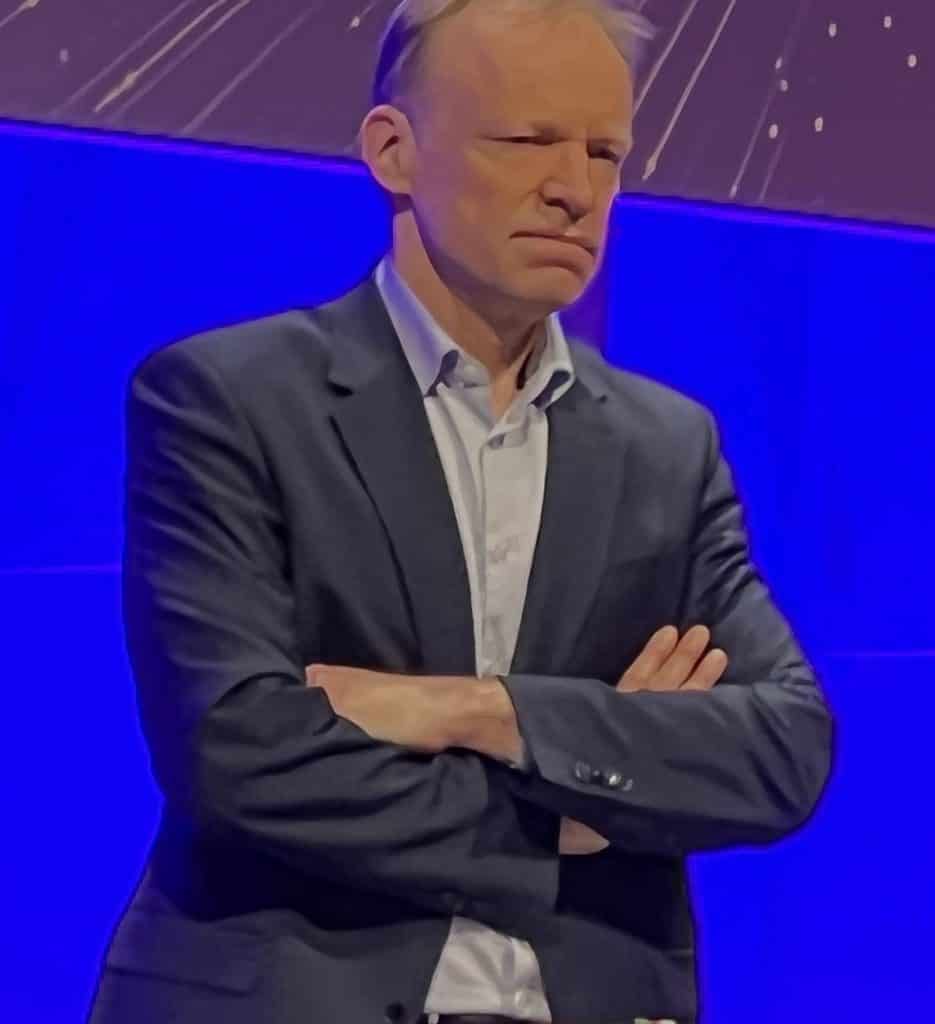
Dr Fuest: “In danger of bureaucratising and green washing instead of focusing on real problems.”
Professor Dr Dr h.c Clemens Fuest, President, ifo Institute, had just spoken about “the global economy and the great transformation” and had talked about the convergence of crises – climate, technology, demographic and political – and how this was creating a destabilised world of high inflation, climate crisis and societal shifts.
“The path of the future is to be flexible and more resilient. Adjust prices and come back quickly, not completely shut down. Come up with products that are less affected by crises – for example hiking was doable during the pandemic. Holidays that don’t require flights. Don’t build back as before, build different.”
The reality is, he said, “we have to live with high inflation. Customers will have squeezed budgets. In 2024, budget constraints will bite and people in Europe will be poorer.”
He called out the real dangers of “producing bureaucracy, rules and certification” in addressing climate change. “Companies are repeating what politicians tell us. We pretend we are greener because we have a green certificate. We are measuring sustainability, but is this really necessary? The truth is, we have to reduce carbon emissions – we should ask critical questions to solve that, we are in danger of bureaucratising and green washing instead of focusing on real problems.”
Addressing the issue of migration, and how it was affecting Europe, he said that rather than trying to “rescue the origin countries”, governments should create opportunities in tourism to stabilize origin countries. “Tourism is a realistic option of doing something for the global south. Maybe we can cooperate with them to develop tourism, then people will stay.”
Georgia goes for product diversification, Croatia eyes “well-balanced” tourism
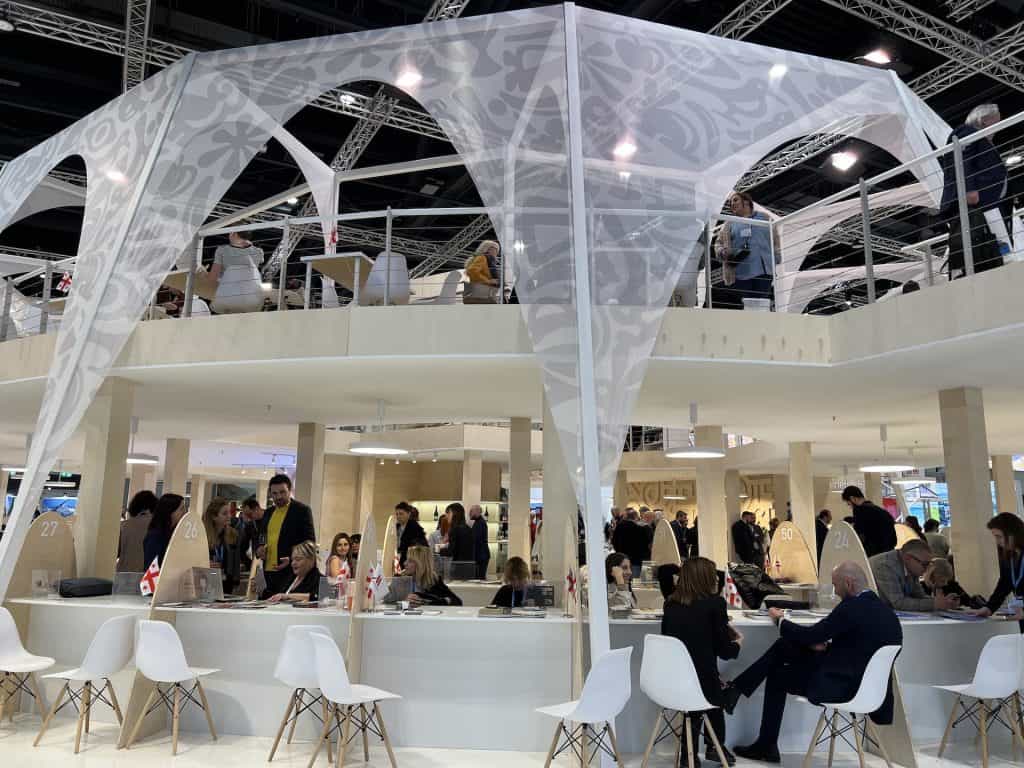
The Georgia stand: For me, a standout in simplicity and subtlety – just seemed to be more fitting in the times we live in.
Some destinations are trying to build back differently, or saying they are.
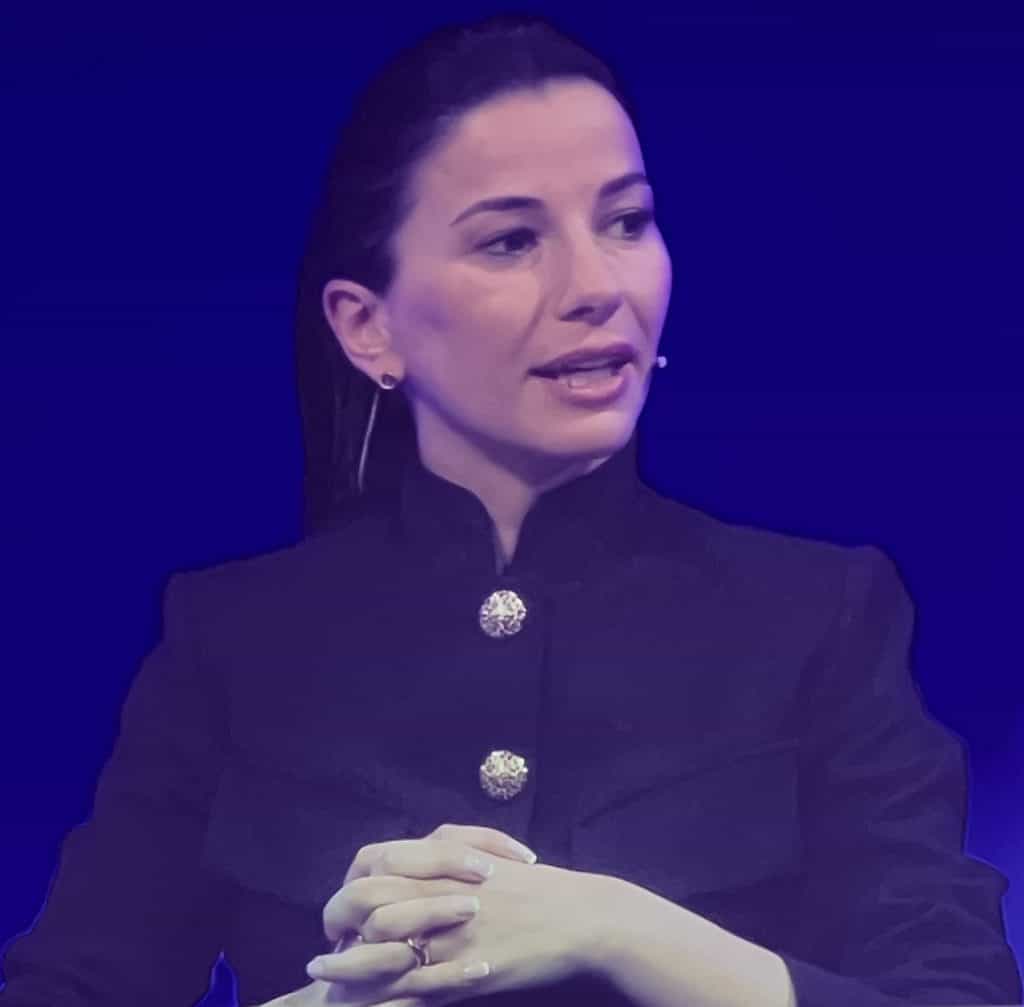
Mariam Kvrivishvili: “A guest is a gift from God.”
Georgia, host country for this year’s ITB, is out to show that despite war “and part of our country is occupied”, “we are completely safe and welcoming,” said Mariam Kvrivishvili, Deputy Minister of Economy and Sustainable Development.
The country, which is pursuing NATO membership, is going for product diversification – developing ecotourism, agro tourism and rural tourism – so that tourism can have positive impact in the rural areas. Its new brand “Georgia, a destination of infinite hospitality” plays to the destination’s strength and belief that “a guest is a gift from God”, said the minister.
By the way, among all the destination stands – some of which were mind-boggling and staggering in their proportions (guess no expense was spared in this comeback of all comebacks) – the Georgia stand stood out for me, with its simplicity and design. It seemed to just a lot more subtler, more fitting for the times we live in.
Croatia, with four million population and 20 million tourists, had to rethink its tourism strategy. The key word in its 2030 strategy is sustainability, said Nikolina Brnjac, Minister of Tourism and Sport, Republic of Croatia.
“Our goals are year-round tourism, well-balanced tourism and resilience,” she said. “We connected these goals with funding, you cannot have transformation without funds. We’ve committed 1.3 billion Euros, we have 500 projects in areas like health tourism and active tourism.”
Bahrain was more about its digital transformation. Her Excellency Fatima Al Sairifa said that during the Formula 1 event in her country, held just days ago – its 19th year – it received 110,000 visitors with international visitation up by 40%. She put this down to the shift towards digital channels and using international travel bloggers to target the right audience. Bahrain is aiming for 14 million visitors by 2026, by positioning itself as “island destination, luxury and MICE”.
Asia’s back – from royalty to K-pop to beaches
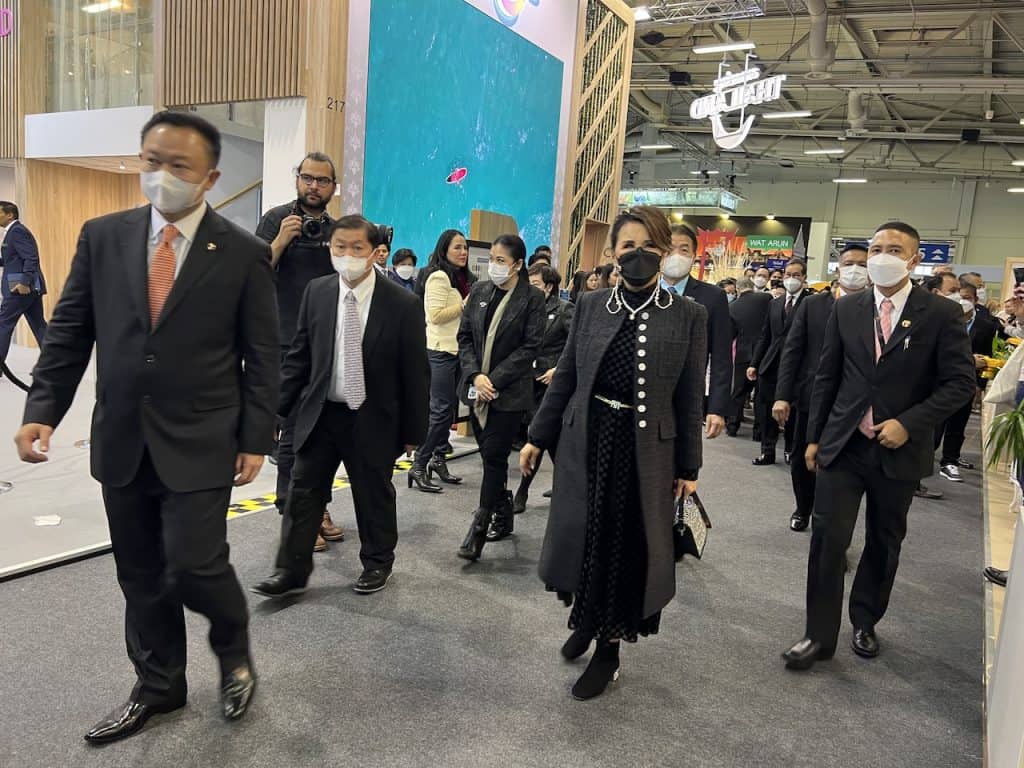
Thai royalty makes a showing.
In the Asia halls, it was good to see every destination back, except for China, with each place showcasing what they feel is their unique selling point in the European market. Korea with its K-pop, Philippines and its beaches, Sarawak with its staff dressed in tribal attire, Phuket and Samui back in strength and glory, Hong Kong, Indonesia … the diversity of Asia reflected in Halls 25 and 26, just as before.
Traffic came to a standstill when the Princess of Thailand made a visit to the show, just as before. At the Singapore stand, CEO of Singapore Tourism Board, Keith Tan, was trying to speak above the noise to tell the media about his destination’s latest incentive programme to give visitors a deeper experience of Singapore. (Report next week)
Noise permeates the halls. People talking, eating, drinking, catching up. Travel is back in force, celebrating the biggest reunion in four years.
Back at the convention hall, a politician from the German Federal Ministry for Economic Affairs and Climate Action, declared climate change the “challenge of the century”.
Imagine, he said, winter spots without snow (it is already happening, he noted); heat waves and forest fires, falling ground water despite storms and heavy rainfall. “If we fail to protect the natural environment and ignore the limits of what our planet can cope with, it will affect our economic and social life.
“Tourism accounts for a significant proportion of carbon emissions,” he said. “We must take this seriously.”
In the streets of Berlin, I noticed one difference from four years ago – how much darker it was at night. I asked my Berlin friend if I was imagining things and he told me that public and commercial buildings were now switching off lights at night and by 10pm, no huge blinking neon lights were encouraged and private residents were also turning down lights because of rising energy costs, a consequence of the times we live in.
Let’s hope Thanos doesn’t appear again, anytime soon.