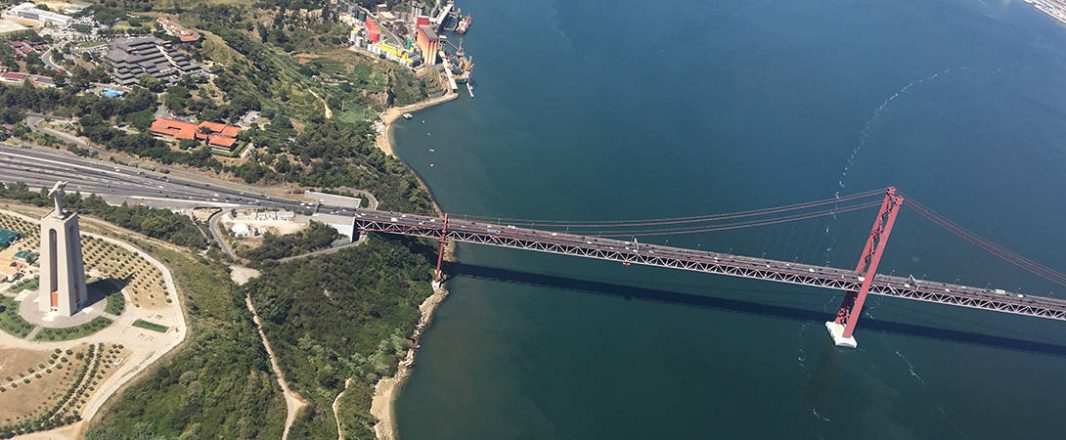
It is funny how like with handbags, destinations too have their trends. For example, these days, you will see people everywhere carrying Anello backpacks – these bags aren’t particularly good to look at, they are unwieldy and cumbersome to use in my opinion but suddenly it seems everywhere you look, they are on some traveller’s back.
Portugal first came to my consciousness through social media. Suddenly it seemed all my “friends” were going there and posting lovely pictures of its buildings, streets and food. And so when I was thinking of a summer holiday this year, Portugal became the IT destination for me. And it seems everyone else’s.
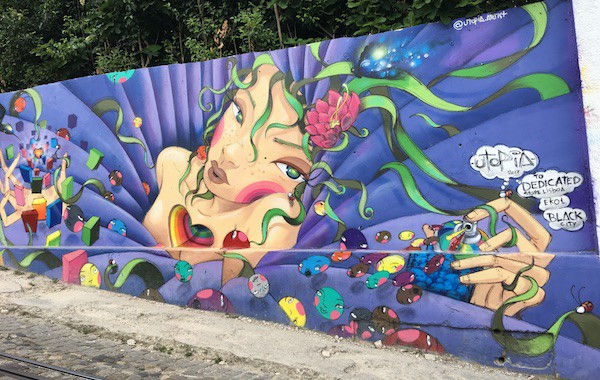
Eye-catching street art along Lisbon’s streets
Speaking to Luis Canto, whose family runs Presstur, the Portuguese travel trade publication, the tourism rush to his country began only about two years ago. “Suddenly we started seeing a growth in inbound tourism, from everywhere, the US, other parts of Europe and increasingly Asia,” he said. (In 2015, tourist numbers broke a record. That year, according to Statistics Portugal, the number of foreign tourists reached 10.18 million, a rise of 10% on the previous year.)
Getting ready for China with first direct flights
Indeed the day he and I met, Portugal’s tourism folks were in Macau promoting their destination ahead of the first direct flights to be launched by Capital Airlines between Lisbon and Beijing on July 26. The three-times-a-week direct service will undoubtedly be the start of big changes for this relatively small country of 11 million people.
In my 10 days in Portugal, I saw proportionately few travellers from Asia. On the Uniworld river cruise we were on, we were the only two from our region. Outside Lisbon, we hardly saw any. In Porto, the second largest city, there were a few Asian groups but nowhere to the extent you see in other European cities like Madrid, Barcelona or Istanbul.
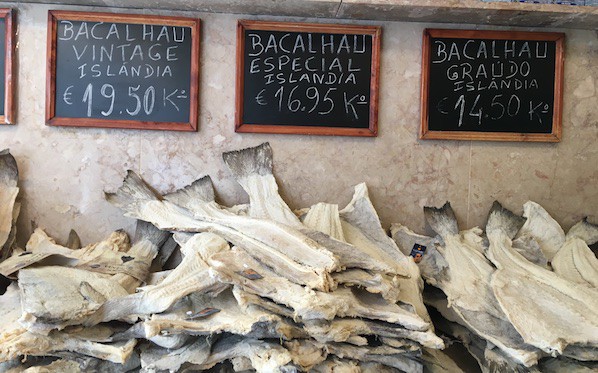
Bacalhau, salted and fried cod, a local speciality
In many ways, it felt like my first trip to Europe all those years ago when I visited places like Bern and Milan – when being Asian was a novelty and people wondered where I was from and everyone spoke Japanese to me. On Queen Isabel one day, a boatload of schoolkids sailed past us and as I waved at the kids, they waved back and shouted, “Konichiwa.” I suspect that soon, they’ll be saying “Ni hao” or perhaps “Sawasdee” as more travellers from Asia find their way to their shores.
In Lisbon, I stayed at the AVANI, the brand owned by Thailand’s Minor Hotel Group. In February 2016, the group controlled by hotelier William Heinecke made its biggest ever acquisition, paying 294 million euros to buy 14 Tivoli hotels – 12 in Portugal and two in Brazil – belonging to the collapsed Espirito Santo Group, It was the largest ever hospitality deal in Portugal.
In the year past, they’ve renovated and upgraded the former Tivoli hotel to reflect the AVANI look and feel – although there’s still another hotel called Tivoli nearby. Hardware-wise, its public areas are contemporary and modern but it is in no way comparable to the AVANI experience you get when you stay at the Bangkok property. It’s a common challenge facing Asian hotel brands when they expand outside the region – how to recreate similar levels of service and experience and yet keep the sense of place specific to a location.
Safe, good value and peaceful
There are a couple of theories as to why Portugal has become the IT destination for now. One, it is considered a relatively safe haven in Europe given all that’s happening elsewhere on the continent; two, it is incredibly good value and three, it is relatively unspoilt and undeveloped.
Tour guides take pains to tell you how Portugal is a peaceful country – it was neutral during the war and it is inclusive of all religions, with a big Muslim community made up of Pakistanis and Indians who came here from Mozambique, their former colony in Africa.
Along the Douro river, you hardly see any big towns and in one town we docked at, I swear there were more dogs than people.
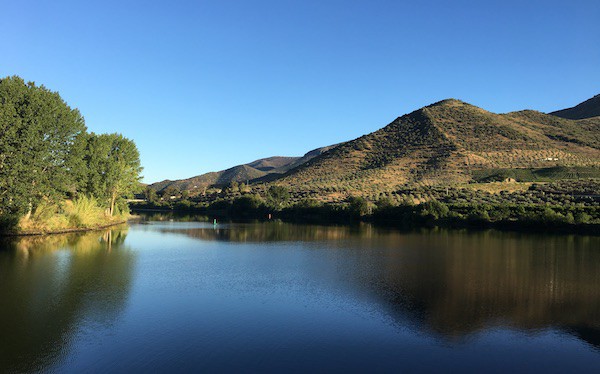
Along the Douro River are numerous small towns with dwindling populations
Portugal is still recovering from the aftermath of the global financial crisis of 2010-2014 when it had to be bailed out by the EU in 2011 and it has a declining and ageing population. You see evidence of this in the small towns where many shops remain closed and you hardly see youths on the streets, only the elderly who have remained behind.
At Amarante, where I sat at a café in the town square and had coffee straight up the way they do here, there’s a cathedral devoted to fertility and hopeful shops selling bridal and children’s clothing.
Lisbon’s easy to love
It is easy to fall in love with Lisbon. It’s not only beautiful to look at but it is also charming. It has a distinctly laidback feel, the people are friendly and welcoming, English is widely spoken, more than in Spain or Italy, and it is easy to get around – either by foot, bus, tram or tuk-tuks. The Metro is easy to use and the Rossio train station, where we took the train to Sintra, is user-friendly for foreigners.
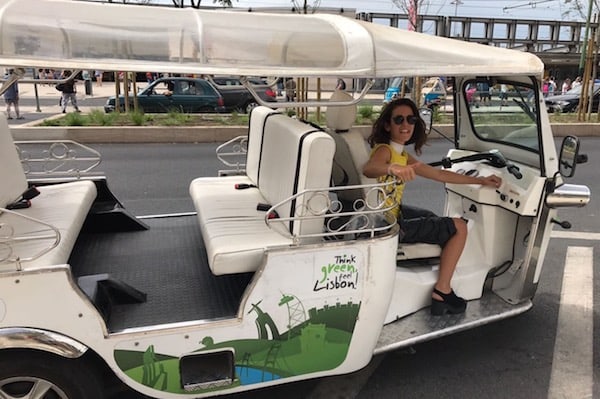
The tuk-tuk is a popular mode of transport in Lisbon
The city’s rich history is reflected in its buildings, the windows, doors and terraces, resembling patchworks of colours and shapes. Its liberal use of blue tiles gives it an almost Oriental feel – said to have Chinese Ming influences. The train station at Porto has 20,000 tiles, laid out to depict the history of the country.
Coming from Malaysia and having visited Malacca as well as having lived in Macau for a while, both Portuguese colonies, I have a certain affinity with Portuguese history and culture. Parts of Lisbon reminded me of Malacca and Macau and at Belem, there’s a massive monument that pays tribute to the early explorers and navigators that set forth from Portugal to conquer new lands and territories.
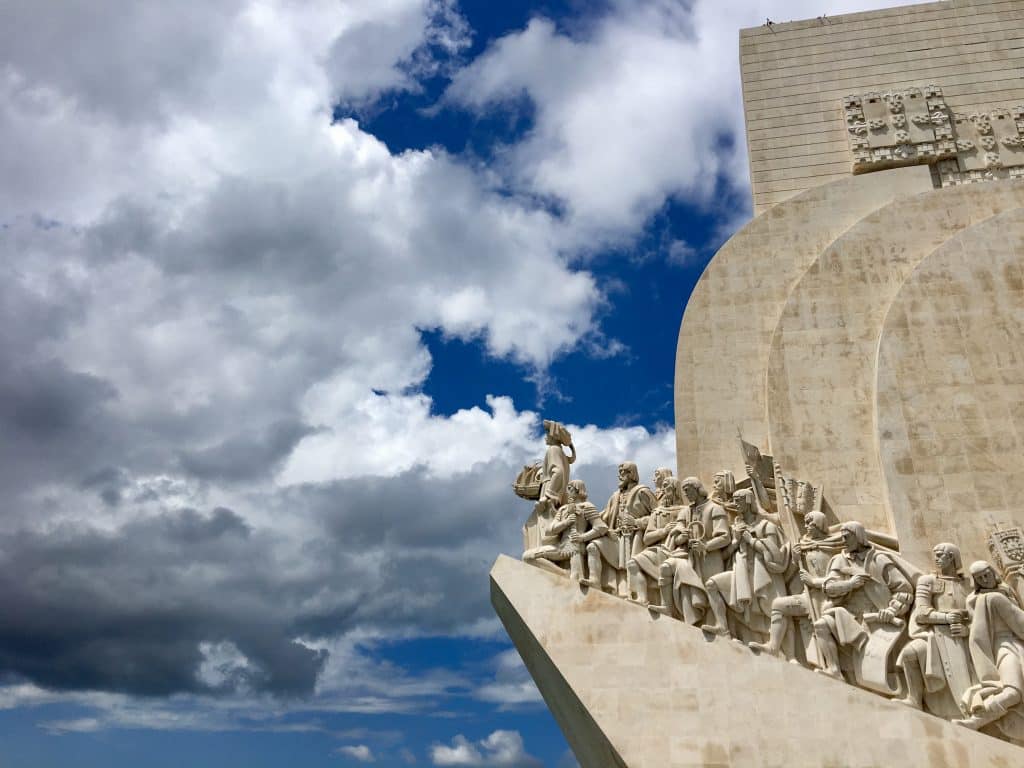
The monument at Belem to celebrate the Portuguese sea-faring spirit
And of course, there’s the famous Portuguese egg tarts and at Pasteis de Belem, which has been making these tarts since the 1830s, there’s always queues of tourists lining up to buy tarts by the bagfuls. It is worth the wait.
Within the tourist areas of Lisbon, there’s lots of people and you are often warned to watch out for pickpockets – the curse of the European summer season – but I felt safe walking the streets day and night.
By day, the city is a museum, full of history to uncover and neighbourhoods to discover. By night it is party town. The area of Bairro Alto, with its narrow cobbled streets packed with bars, clubs and restaurants come alive past midnight and there’s always throngs of people standing around drinking till the early hours of the morning.
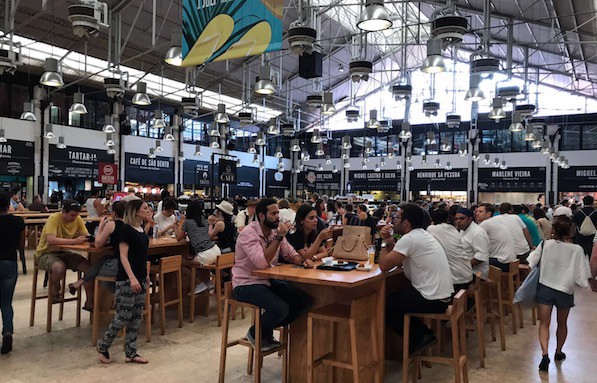
The Time Out market is the place to hang out in Lisbon
The Time Out market is a must-visit if you are into food and wine. It doesn’t matter the time of day but there’s always lots of people trying out the different food stalls – from the classics like gambas ajillo and grilled sardines to more contemporary cuisine by chefs such as Chef Kiko of Surf & Turf who mix it all up and create to-die-for dishes.
The weekend we were there, Commerce Square was getting set for Gay Pride celebrations. Portugal is considered one of the most progressive countries for LGBT rights, same-sex marriages are legal and a new law passed recently that allows same sex couples to adopt children.
Luis told me when he was growing up in the 80s, there was nothing happening at Commerce Square, today it’s a constant hub of activity. He lives in Alfama, the oldest district of Lisbon, which is a wonderful place to explore on foot. It’s a maze of narrow streets which lead from the Tejo estuary uphill to the castle Sao Jorge and along the way, you can stop to have bacalhau (dried and salted cod), port and cheese.
The Airbnb effect on old neighbourhoods
Luis tells me the neighbourhood is changing with tourism of course, and locals are complaining about their streets being crowded with tourists. The feel of the place is also changing with more and more homes being rented out on Airbnb. Tanya Rodrigues, our guide in Sintra, whose mother runs a restaurant in Alfama, is concerned about the hollowing out of the neighbourhood. She’s a “couchsurfer”, having listed on Couchsurfing for several years, but she refuses to put her place on Airbnb.
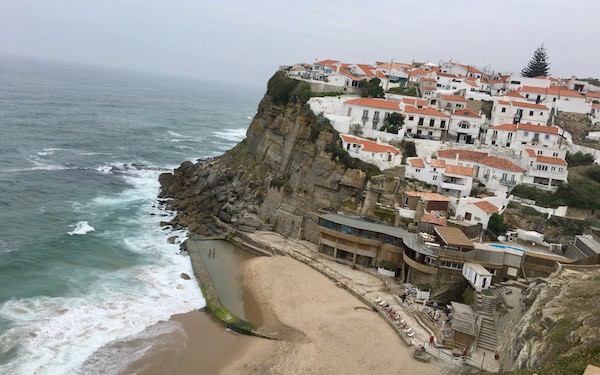
Azenhas del Mar, Sintra’s “Cinque Terre”, on the coast – a great place to stop for a seafood lunch
Her concern is that with Airbnb, when entire homes are let out, neighbourhoods like Alfama change. “When you don’t have locals living in the area anymore, traditions die,” she said. For example, there’s a day when residents hang white curtains to mark a certain festival. “My mother still does it every year and the whole place looks so pretty but because now residents have moved out, travellers don’t know about the tradition and that tradition is disappearing,” she said.
Like all destinations that have found their place in the sun, Portugal will have to balance inbound tourism with local concerns, and should take lessons from other cities in Europe which are facing similar challenges.
At Sintra, the summer playground of the elite, there were long queues for the main attractions, Pena Palace and the Castelo dos Mouros (Moors Castle) that we couldn’t be bothered.
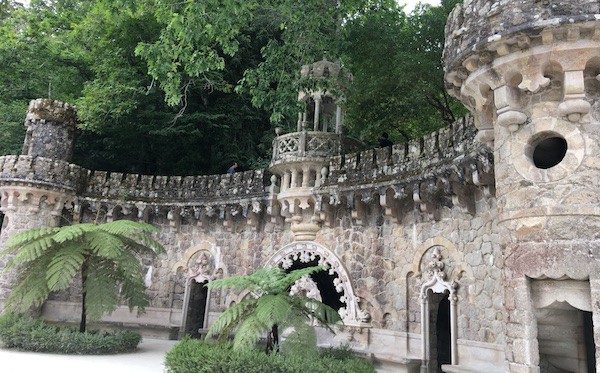
The gardens of Quinta de Regal, a former Masonic lodge
Having a guide has its uses and Tanya did get us past the queue at the Quinta da Regaleira, the former Masonic lodge known for its elaborate gardens, mazes and labyrinths. I enjoyed exploring the grounds but for me, the point of travel is to feel and experience, not see and do. And when it comes to that, Portugal gets top marks.
My advice – go before it gets too hot.