
I have in my Dropbox a food guide to Penang. It saves me time whenever a friend tells me, “Hey I am going to Penang, what shall I eat and where?”
The problem with Penang is the good food is found in places which I don’t even know the name of, just the location – for example, right across the police station in Pulau Tikus or at the traffic light between this and that.
See in Penang, we are guided by our internal FPS (Food Positioning System) and it was only until Google Maps came along that I actually knew the name of my favourite coffee shop and on which street it is.
Technology has enabled previously hidden places to be discoverable as Lionel Yeo of TripAdvisor pointed out in his talk during the Travel Tech track at Echelon Malaysia, for example, the “char koay teow” uncle at Siam Road is listed as offering one of the best of this Penang signature street food.

Char koay teow, a must have when visiting Penang (Image credit: ChinHooi/iStock)
Believe it or not though, there’s more to Penang than food and as more than 400 delegates discovered during Echelon Malaysia recently, the island state is becoming quite the place for tech startups.
From hardware to IoT to fintech to, of course, travel, entrepreneurs see the relatively low cost-base of Penang as attractive to starting new businesses and it’s become one of the world’s top-rated places for digital nomads just as it was the place in the 70s and 80s for soul-searching hippies.
During the Travel Tech Track, which WIT ran, we heard from entrepreneurs who’ve found their groove in travel as well as hoteliers who are trying to find their groove in the complex distribution and marketing landscape.
An entrepreneur with purpose beyond financials

Chris Ong buys dilapidated buildings and restore them with love and respect.(Image credit: Yeoh Siew Hoon)
Chris Ong, sixth generation Penang-Peranakan, returned home to build up Georgetown Heritage & Hotels, a collection of shophouse hotels and residences and his mission is to make shophouses as associated with travel to Penang as ryokans are to Japan and farmhouses to Tuscany.
He’s focused on building a brand based on the core values of compassion, integrity and fairness and through the brand, he hopes to grow direct sales to his hotels which include Seven Terraces, Muntri Mews and Jawi Peranakan Mansion.
Like all entrepreneurs, he’s brimming with ideas and he said he’d invest in an app that would help tourists discover the street art more easily and tell the stories behind each piece.
For Ong, buying dilapidated buildings and restoring them with love and respect is a matter of destiny – the buildings call out to him, he says – and the former investment analyst is clearly not doing what he does now for profit but rather purpose.
Entrepreneurs must have purpose that go beyond the financials, he said.
Why is there no strong local OTA In Malaysia?
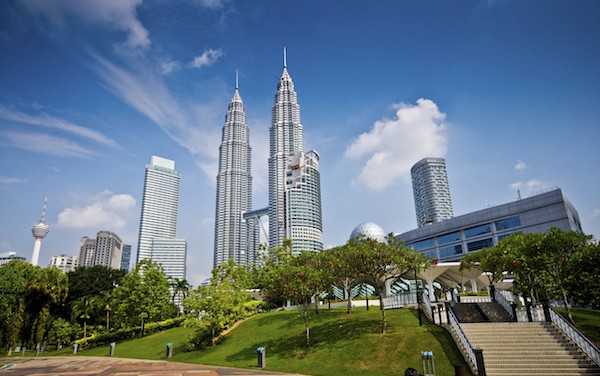
Malaysia: No OTAs but many tourists due to ‘shringgit’. (Image credit: Noraznen Azit/iStock)
In the OTA market, it is interesting to note that while Indonesia has its own local OTA, Traveloka, which has expanded beyond national boundaries, Malaysia does not have a strong local OTA. The hotel market is dominated by the likes of Booking.com, Expedia, Agoda and increasingly Traveloka.
Clearly the market is open for a strong local OTA but is the market big enough? With a population of 21 million, and a shrinking ringgit, Malaysia’s seen a boom in domestic tourism, as Expedia’s Cliva Ellul Hawthorn shared in his talk.
“Malaysians are discovering their own country due to the ‘shringgit’,” he said, and Expedia was enjoying a growth in domestic bookings as well as inbound growth.
Data is the key pain point for hotels and airlines
Hoteliers, when asked for their wishlist of new technology they’d invest in, expressed their desire for solutions to solve their data problems.
Chis Cheong of Berjaya Hotels & Resorts said right now while hotels have a lot of data, they sat in silos and “we are not able to integrate them to give us a big picture view”.
Albert Lafuente of Shangri-La’s Rasa Sayang Resort also said he’d invest in data but also said that when he was at Shangri-La Cebu, they were the first hotel in the Philippines to use Virtual Reality at trade shows and “we were a hit because of the novelty”.
Hoteliers should keep experimenting with new technology to get themselves talked about and noticed in a crowded market, he said. Christine Tan of FASTBOOKING said the company that specializes in helping hotels increase direct bookings is piloting an AI tool that’d help hotels with conversions on their website.

Nikunj Shanti: AirAsia on mission to transform itself into a digital airline (Image credit: Corinne Wan)
Clearly, airlines face the same problem with data. Nikunj Shanti, chief data and digital officer of AirAsia, told the startups that the biggest pain point they could help solve is to help airlines integrate the data that sat in silos.
AirAsia is on a mission to transform itself into a digital airline and is using technology to drive a customized experience. Shanti, formerly with Expedia, has been in the role for over a year.
He said the airline was not selling its data to third party companies because it wants to own and sell the data itself to other travel suppliers – however its presence on Google Flights means it’s still subservient to the world’s biggest search engine.
As the travel market in Malaysia matures and evolves, and mobile changes the behavior of more Malaysians, it is clear the market will become ripe for more startups. Right now, travel startup activity in Malaysia is not as active as say Indonesia or Singapore despite the size of its market but things are changing.
Startups like Tripfez, specialising in halal-friendly travel, Softinn, a solutions provider to independent hotels, and Singapore-based BeMyGuest, which is facilitating tours & activities providers, are clearly finding their groove in the travel ecosystem.
Which brings me back to the subject of food which is very much a part of the ecosystem – that’s the one area that Malaysian startups are finding their groove in.

Healthy food choices from dahmakan
dahmakan, a two-year-old service out of Malaysia, offering a new kind of food delivery service – it cooks its own food and delivers them – recently closed US$1.3 million seed funding round from backers that include NFQ Capital, East Ventures, Asia Venture Group and Grupara.
In Penang, cooking schools and food tours have mushroomed on the back of the island’s reputation for food.
Which just goes to show, there’s no running away from the one thing that makes Penang go round – that, and heritage and tech.
•Featured image credit (Penang Bridge): Yeoh Siew Hoon