As I boarded my Singapore Airlines flight from Singapore to Phuket this week, I couldn’t help but reflect on that first flight I took to New York back in November 2021 when travel was still largely restricted in Asia, and I was literally crying over my satay from the emotion of being at 30,000 feet at last.
The crew then were certainly pleased to see us, the first travellers from Singapore venturing out into the world, but there was a prevailing sombre feel in the cabin because so much was still unknown.
Fast forward to May 2023 and I don’t know if it was my imagination but on this flight, which was pretty packed, I felt like the crew was extra ebullient and attentive, even to those of us flying in the back of the bus.
And who can blame them if it were so?
From being grounded for more than two years and having to do jobs such as “social distancing ambassadors”, they’ve just been told they would receive an eight-month bonus after their airline posted the highest-ever full-year net profit in its nearly eight-decade-long history. The SIA Group earned a record-breaking net profit of approximately S$2.16 billion (US$1.61 billion), reversing the S$962 million loss posted the previous financial year.
SIA is not alone in such a dramatic turnaround. Emirates too announced a record profit of $3b from a US$1b loss the previous year, and a six-month bonus for employees.
This dramatic turnaround in travel fortunes was top of my mind as I landed at Phuket airport, my first time back on this island that is, in many ways, the cradle of Asia Pacific tourism. From the depths of suffering given how reliant it is on inbound tourism, Phuket now expects to welcome 12 million domestic and foreign tourists this year, marking an 85% recovery from 14 million visitors in 2019.
It certainly was good to see all the welcome signs at the airport from hotels and tour companies welcoming their guests back to the island.
I’ve always thought the power of Phuket is its diversity of products to cater to every type of traveller conceivable, and this has not changed.
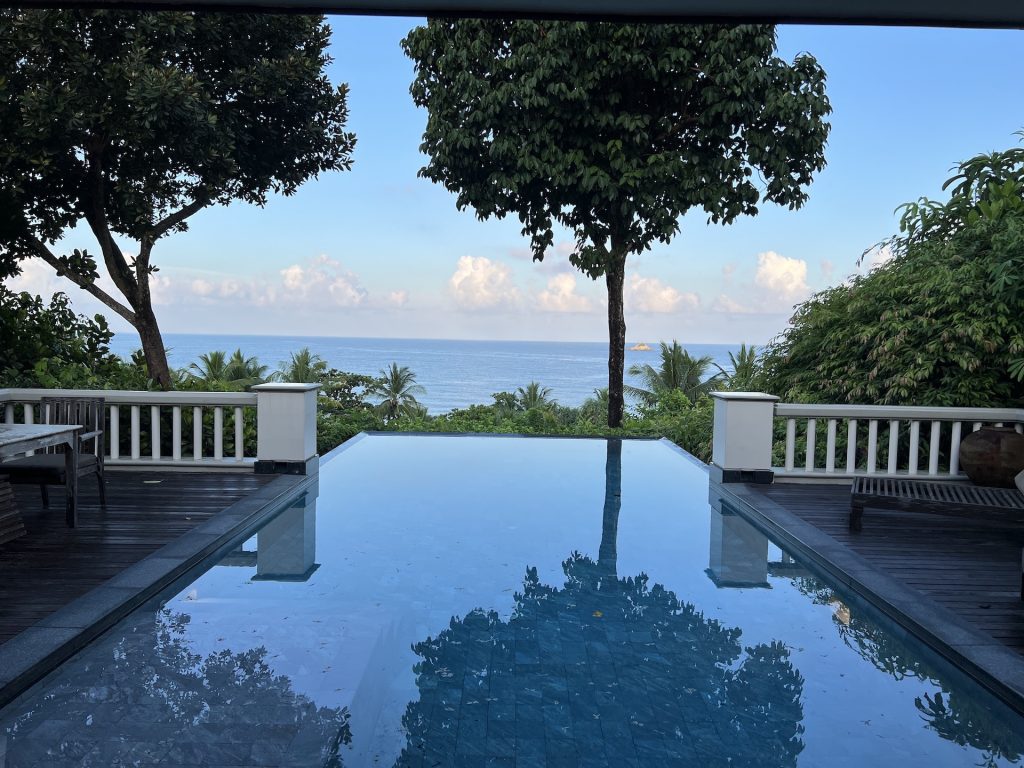
Trisara with its sense of privacy, space and nature.
I started my week with a stay in Trisara, wanting to return to its sense of privacy, space and nature. This resort, when built nearly 20 years ago, blazed the trail in private pool villas and residences, a concept that has proven evergreen with a certain set of travellers who gravitate towards its philosophy of nature-first and quiet elegance.
When its residences came up for sale, I recall a frenzy among expatriates in Hong Kong, where I was living at the time, flocking to buy them, like they were buying dim sum.
Today, post-pandemic, the “I want to buy a second home in Phuket” sector, whatever the price seemingly, is on fire. An influx of mostly Russians and Chinese, I am told, have snapped up real estate on the island and everywhere you go, you see signs of further development of residential estates, promising wellness, sanctuary, beach living, well-being, nature – whatever it takes to feed the dreams of these new buyers.
It’s reminiscent of the first “gold rush” in Phuket when land was being snapped up to build hotels everywhere and each time I visited, I noticed parts of hills had disappeared and the many bays which make Phuket special swamped with new builds.
After two days of quiet at Trisara, only to be woken up by the birds and the sound of the ocean, I moved to Pullman Arcadia, just down the road on Naithon Beach but what a world of difference. Here’s a resort where the developers have, instead of deciding to build 40 villas as Trisara did, have built 227 rooms on the sides of a hill.
As the venue hotel of the Worldline Rise Travel conference, it’s clearly intended for big groups and families. With rooms tucked away in every nook and cranny of the hillside one could possibly find, it must be a bit of a nightmare to operate because depending where your room is, you have to call for a car to be picked up and each drive is almost like a roller-coaster ride, up, down and around the hill.
I was told by one of the drivers that each day, he does almost 70km a day – multiply that by the number of cars, and you can imagine the fuel being used just to transport guests around the resort.
As part of the conference, I re-visited The Slate, the much-talked-about resort designed by Bill Bensley. This resort is clearly pitched at the design crowd, younger, more affluent travellers who are after style in their life.
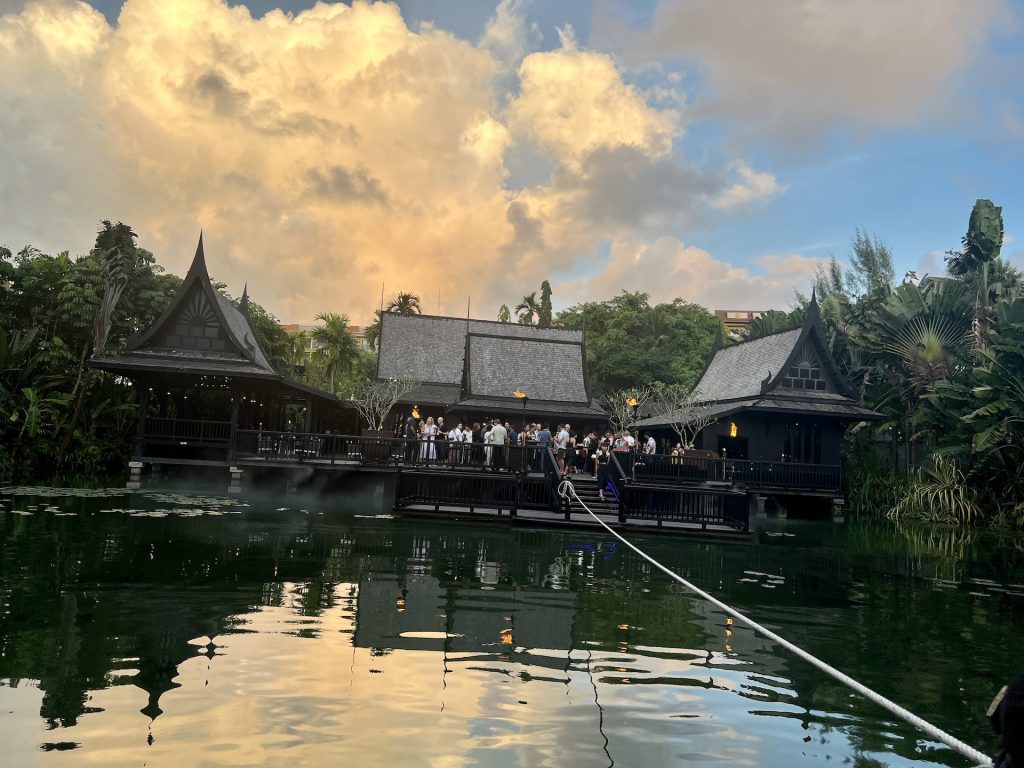
Black Ginger at the Slate: A dining experience made for corporates and incentives.
We have dinner at the Black Ginger, the Michelin-rated restaurant, where you have to be pulled by a barge over to the restaurant, all part of the experience, clearly, where lit torches and smiling Thai hosts and hostesses welcome you with cocktails and tom yum kung-flavoured peanuts. I felt I had walked into a James Michener’s “Tales of the South Pacific” but with a Thai twist. I almost expected bare-chested men to leap out at me, but I was happy enough with Thai traditional dancers.
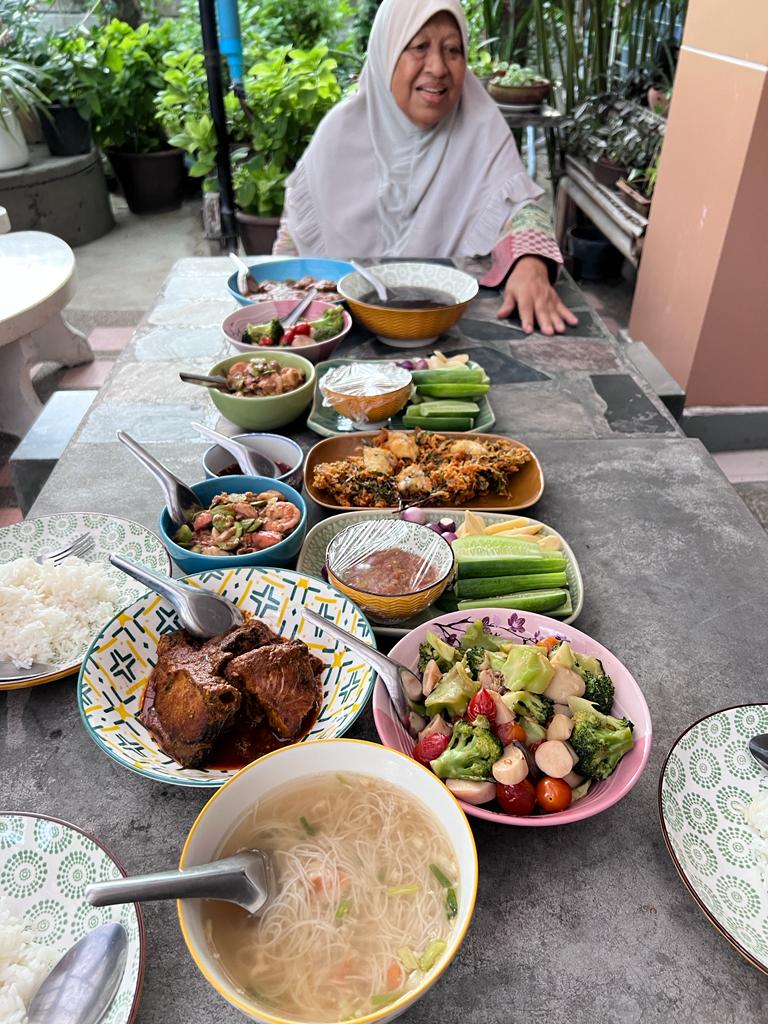
“Mama” of Dinar Lodge:
The true heart and soul of hospitality.
For the last night, I had dinner with the family behind Dinar Lodge, a 30-room hotel in the heart of Bang Tao. This is pitched at the budget sector – rooms going for about 1,000 baht, what a bargain really for rooms that are spacious and with views overlooking the village of Bang Tao. This is for those who want to be in the heart of local life as well as the hubbub of entertainment and nightlife and yet close enough to the beach.
It was “Mama”, the matriarch, who had the dream of building a hotel because she wanted to welcome people into her home and kitchen, and nothing pleases her more than watching her guests enjoying her food, which we thoroughly did – to me, she is the true heart and soul of hospitality, and she didn’t have to go to hotel school for that.
Her daughters help run the 12-year-old lodge, getting bookings from one OTA channel, Booking.com. Wahidah finds it easier to manage just one OTA and is happy enough with the business they get – a mix of long term stays and short-term guests, from Russia, Europe and a sprinkling from South-east Asia.
It was however at the Cherngtalay Boat Avenue open air market that I felt like I had really come home to Phuket.
Here, tourists of all nationalities and types flock to experience Thai street food and life in all its colours and flavours. Bars pump out loud music, cannabis “boutiques” line the perimeter, food stalls sell everything from sushi to kebabs and to entertain everyone, buskers in their early-teens slash away at electric guitars and wail to the tune of “Zombie”.
Welcome back, Phuket.
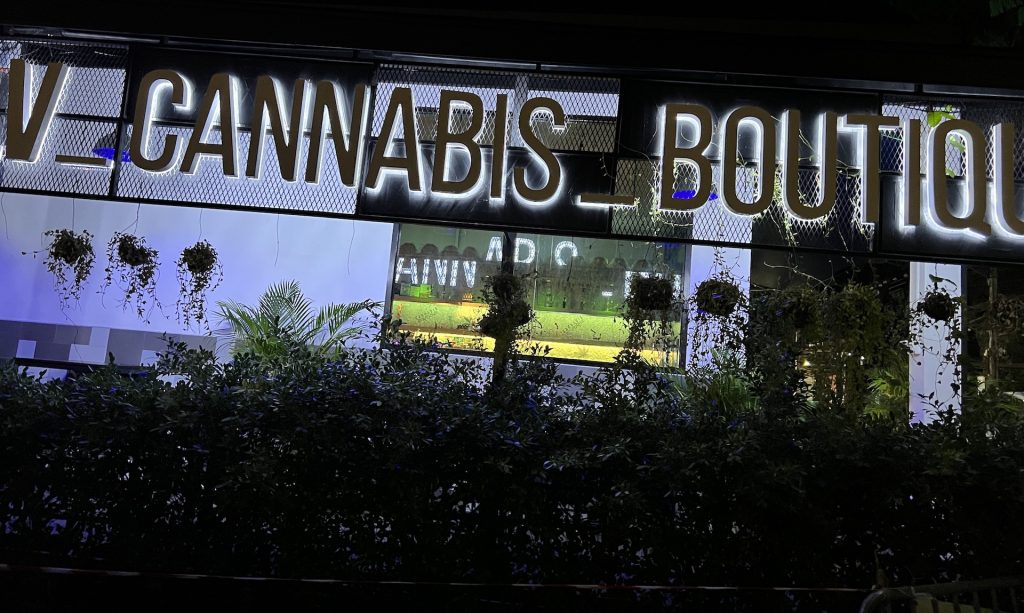
New offering at the Cherngtalay Boat Avenue open air market.