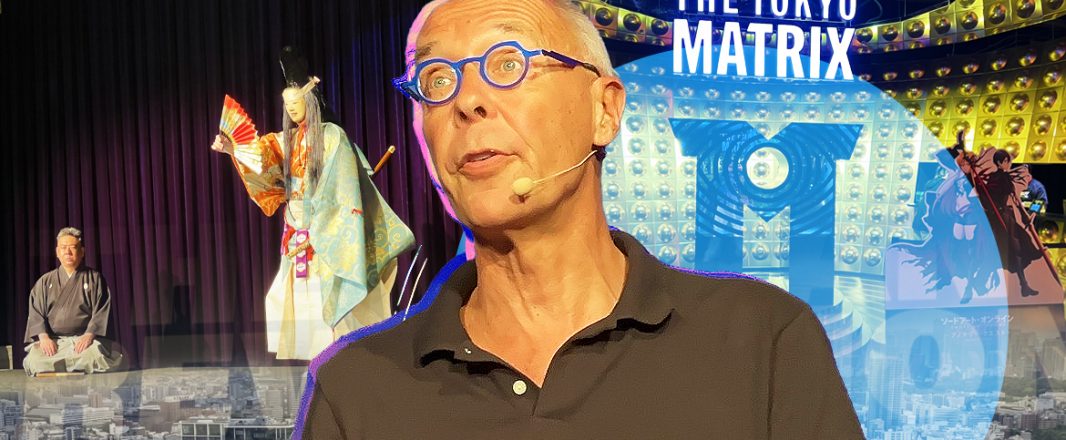
Inbound rush, outbound slump, new tech and travellers shaping future of travel – how will it play out in Japan? WiT Japan & North Asia 2024 had it all covered.
There is no better place in the world to observe the twin revolutions of human and technology unfolding at this time than in Japan, a country that sits at the juxtaposition of tradition and innovation like nowhere else in the world.
Inbound is surging, outbound is sluggish, Japanese travel brands remain caught in the tussle between the staying local or going global, while global travel giants have no compunctions about scaling and crossing borders, a next generation technology is sweeping the world at the same time as a new wave of travellers with different behaviours and aspirations is shaping the future of travel demand.
You feel the inbound surge on arrival at Haneda airport, which made the biggest leap in the world’s busiest airport rankings (according to Airports Council International’s preliminary rankings for 2023), from No 16 to No 5 in one year.
The queue was long and even though we had filled in the electronic arrival and customs declaration form and gotten our QR code, we still had to pass through at least five human checkpoints. Staff tried to move people as politely as they could through the snaking queues, but their reticence to be forceful (to put it politely) made the process even longer, because well, crowds need a certain kind of firm handling.
My taxi driver was most welcoming, which helped to alleviate the stress of arrival. He told me he’d charge me a fixed fare, which was a discount on the metered fare. “It’s a welcome from our government to visitors,” he said, nodding profusely. On drop-off at Bellustar Hotel, located in the entertainment district of Kabukicho, by which time it was 1am, he helped me with my bags and said, “Please be careful. This is dangerous area. Don’t follow strange men.”
I felt most comforted. It felt like my late father speaking to me and I wanted to tell him that I wouldn’t follow strange men anywhere, anyway. But it was the first time I had been warned about danger in Tokyo, in all my visits – I consider Tokyo to be one of the safest cities to be a traveller, whatever gender you area.
Nick Nishikawa, general manager of Tokyu Hotels, which manages the two hotels – Hotel GROOVE and Bellustar, part of the Pan Pacific Hotels Group, is well aware of the connotations of his neighbourhood and since opening, he and his team have set out to change the perception of the area.
“It’s locals who think it’s dangerous,” he said. “Our visitors love it. Since opening, we have been full.” I certainly didn’t feel insecure or unsafe while out and about, and the hotels are staffed with so many humans eager to look after you that it’s rather reassuring.
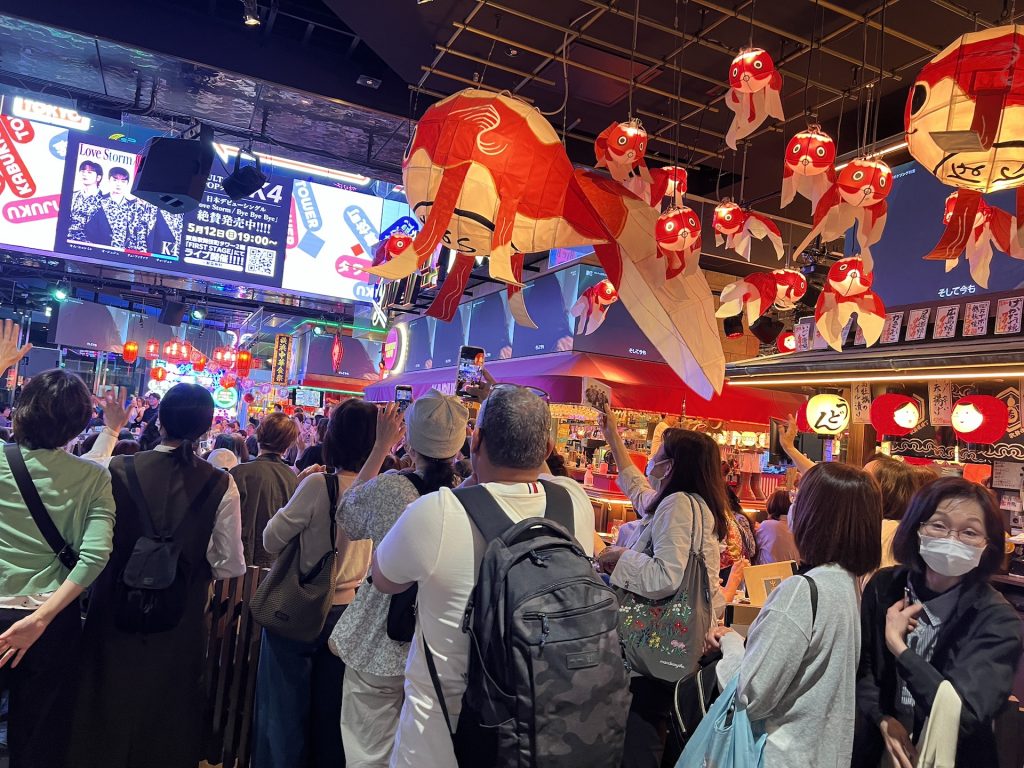
Crowds at Kabukicho Tower, gathered to watch a Korean boy band: South Korea is the largest visitor market to Japan.
Living the drama at Kabukicho, changing perceptions and visitors
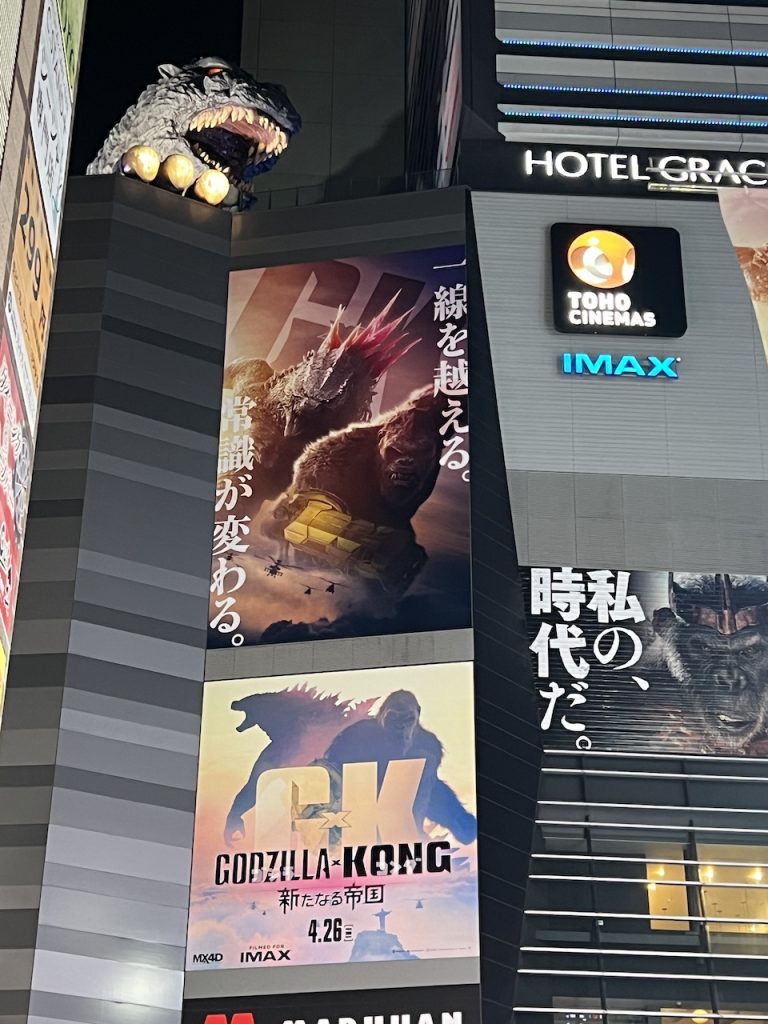
Ah, the tales Godzilla could tell of his neighbourhood
It certainly is a colourful, vibrant, never-sleep-at-night neighbourhood. One evening, at Kabukicho Tower, with Godzilla looking on, a Korean boy band performed to packed crowds in the open plaza and later that night, a DJ took over to entertain the crowds of locals and tourists.
His music mix must have been so good because a senior Japanese gentleman, dressed sharply in a suit, leapt on stage to perform some pretty good hip-hop moves – and I watched with some degree of sympathy as he was ushered off stage (politely) by the DJ, but he kept dancing through the mall to anyone who’d watch. The resilience of age meets embarrassment of youth – “he’s like my grandfather, how can he make such a scene?”
The biggest difference I felt in the precinct and within the hotels, from a year ago, is the different South-east Asian accents I hear – from Filipino to Thais and Indonesians. Caesar Indra, president of Traveloka speaking at WiT Japan & North Asia, spoke of Indonesians preferring to travel to Japan these days, over Singapore, thanks to the weak yen, which is making Japan very affordable to South-east Asians who would normally consider Japan an expensive destination.
The weak yen is certainly making Japan extremely attractive to all markets. According to the Japan National Tourism Organization, the number of international visitors in Japan 2023 reached 25,066,100, almost 80% of the result in 2019 (31,882,049). The government is targeting 60m by 2030, and every speaker at WiT, including global hotel brands, airlines, inbound operators, OTAs, is upbeat on Japan inbound.
But there are concerns about its ability to cope – an ageing population, a declining workforce, reluctance of youths to join the industry, and will tourism growth lead to erosion of age-old traditions, or could it lead to a renaissance? And how about outbound?

The Noh performance, by Kawamura Haruhisa, which opened WiT Japan & North Asia 2024
The dance between Noh and Innovation: What makes Japan unique
This is the delicate balance traditional artists like Kawamura Haruhisa, of Kyoto’s Kawamura Noh Theatre, who performed at the opening of our conference, is treading.
Speaking at the closing panel, “The Art of Travel”, the third-generation performer of this 14th century art form, said that to ensure the enduring legacy of traditional art forms like Noh theatre, practitioners must strike a delicate balance between preserving the essence of the tradition and introducing innovative elements that resonate with modern audiences.
“Usually I must create each performance, so it’s always fresh. Yet, we must not forget our beginning. Don’t forget when you were young. Now I’m 67 years old and my first stage performance was at three years old, so even though I’ve been performing for 60 years, I am also a beginner, this makes me creative every time, invent myself anew each time.”
And he’s just beginning to introduce his theatre to foreign visitors. He’s starting Noh workshops and Noh experiences. “I want to introduce the spirituality of Noh, which is to appreciate what cannot be seen; the tradition and essence of Noh – which is about contemporary, change and continuance; and the role of Noh – co-existence with Nature – to foreign visitors and younger generations.”
It is this delicate balance – this dance between tradition and innovation, humans and technology – that was at the heart of most of the discussions at WiT Japan & North Asia 2024. How can Japan do it within its unique context and history?
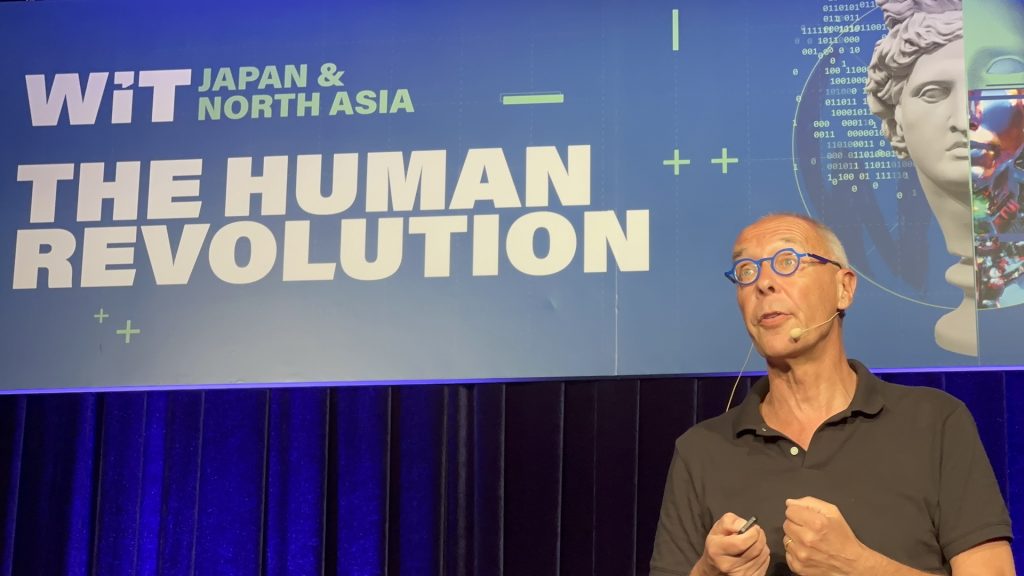
Jesper Koll: “Japan is the only place where even German food tastes good.”
The Constancy of Japan, and The Change Happening
Opening speaker Jesper Koll, who calls himself the Japan Optimist, reeled off the reasons why we should never discount Japan.
- Culinary diplomacy – “Japan is the only country where even German food tastes good.”
- Government Efficiency and Tourism Focus – “Japan’s prime minister has actually passed 100% of the bills that were introduced in parliament.”
- Emergence of a New Middle Class – “Younger people are securing full-time employment, leading to greater job security, higher incomes, and increased purchasing power for domestic travel.
- Generational Shift in Corporate Japan – “The age of the CEO that has been appointed over the last year and a half has basically dropped from about 69 years to about 52 years.”
- Japan’s Labour Mobility and Startup Culture – “There’s a notable increase in labour mobility within Japan’s elite workforce, with many young professionals leaving secure government jobs to join startups, indicating a cultural shift towards risk-taking and innovation.”
- Japan’s Immigration Transformation – “Japan is on the path to becoming an immigration superpower, with the number of non-Japanese residents on work visas or permanent residency increasing significantly, reflecting a more open and diverse society. Today it is 3.2 million.”
Tech disruption to come in jobs and competition
But there’s no denying the disruption to come from AI not only in jobs but in incoming competition for Japanese travel brands from global giants who are not fenced in by traditions, and whose culture is to “break things fast, fail and scale”.
Koll spoke of the disruption to come in jobs. “As information becomes freely accessible, traditional jobs that acted as curators or gatekeepers will be disintermediated, forcing a re-evaluation of their roles and value propositions. The traditional jobs that basically acted as curators are going to be disintermediated.”
At the conference, the term “replacing skills” was used instead of “displacing jobs” but it is clear that even while the mega travel companies are announcing all sorts of AI-infused trip planning tools for consumers, the real work is going behind-the-scenes – AI is being embedded in internal processes to make companies more efficient, workers more productive and shareholders happier.
Said Rod Cuthbert, founder of Viator, when asked how AI tools would benefit the tours and activities sector, “I think most of the benefit is going to come from making these companies more efficient, automating tasks like content creation, translation, and customer support.”
It’s also happening in bigger players like Agoda. Tim Hughes, vice president, corporate development, spoke of what was happening under the hood. One was enhancing developer productivity. “We think we can make our developers already 10% to 15% more effective … just by getting AI to help with code review.”
Two is unlocking customer insights. “The biggest one, which we’re trying sort of the middle layer is content, you know, descriptions, review using reviews, filtering, advertising content, video content. This is the other area, customer care content, so that we can dramatically consume all the stuff coming into us from suppliers and consumers and find more creative ways of using that more effectively.”
The wave in competition to come from global giants
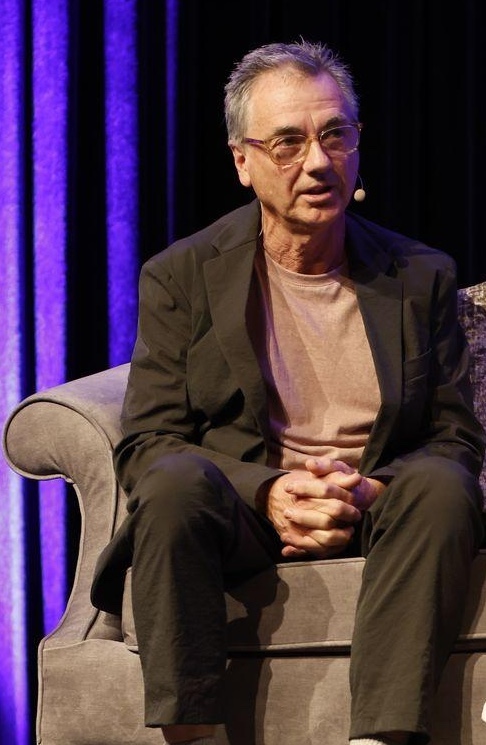
Rod Cuthbert: “It’s a challenge to think if you’re going to compete with global OTAs who have a very Silicon Valley mindset of move fast and break things,”
Kei Shibata, CEO of travel.jp and Travel 101, in opening, said after 12 years of holding WiT in Japan, “we find ourselves on the brink of another technological revolution: Artificial Intelligence. I believe this isn’t just a wave; it’s a paradigm shift, more like a big tsunami poised to reshape our industry.”
Cuthbert, who sits on the board of Veltra, Japan’s largest tours and activities platform, has the unique position of being an outsider-insider. His observation is – Japanese travel companies face cultural challenges in their global expansion efforts, as their traditional mindset of extensive planning and risk aversion clashes with the Silicon Valley ethos of “move fast and break things” that has proven successful in online travel.
“It’s a challenge for them. It’s a challenge to think if you’re going to compete with global OTAs who have a very Silicon Valley mindset of move fast and break things,” said Cuthbert.
Their strength though, he said, is “the deep cultural understanding which can be a competitive advantage, especially when catering to domestic travellers with unique perspectives and expectations. They understand Japan and the Japanese mindset, which is fundamentally different to the mindset of a Western traveller.”
The key is how Japanese travel brands tread the balance between deep localisation and broad globalisation, if that’s their intention.
Meanwhile, Koll, calling Japan “Empire of the Senses”, said, “While AI and technology offer unprecedented possibilities, businesses must never forget that their customers are human beings who crave special attention, love, care, and unique experiences. Your customer will not be a robot.
“Your customer will not be some avatar. Your customer will be a human being. And that human being wants special attention, special love and care, and very much so wants to have a special experience of which Japan absolutely offers a lot.”
And during this visit, as has been the case with every visit to Japan, I can attest to the very special human experience that is Japan. At my hotel, there are more humans to welcome and guide me through the labyrinth that is the complex, than I have encountered in any other hotel, and they are all so polite, insisting they book my taxi than me calling Uber. I am ushered to my taxi by umbrella (it rained one day), my handbag carried and my door closed. I have not come across a single robot in the hotel.
The toilet seats are still warm, the neon lights continue to flash, the pachinko parlours are still buzzing and the convenience stores filled with the most wonderful array of stuff – but underneath, just as I feel the constant rumble of the trains underneath my hotel, I know something deep and fundamental is shifting in this country. It’s like watching a Noh performance and wondering what comes next in the drama.