For the last eight years, I’ve been visiting Tokyo pretty regularly – more so after visa restrictions for Malaysians (and the rest of South-east Asia) were lifted a couple of years ago. But it’s only this year that I am noticing discernible changes in the visitor experience for foreigners.
First and foremost is how much more English is being spoken – by the crew on Japan Airlines, the stewardesses seem more confident engaging in English; by the immigation officers and taxi drivers who you can tell are making the effort to speak one or two words and between my one or two words of Japanese, we are now able to comprehend each other better.
You also feel it in restaurants, cafes and shops. Last night, we dined at a teppanyaki restaurant in Ropponggi and seated at the cooking counter, we were able to have a conversation with the young chef who told us about the different dishes he was preparing for us. “This is a radish,” he says proudly holding up a vegetable I would have never known was a radish.
Japan and its secrets …
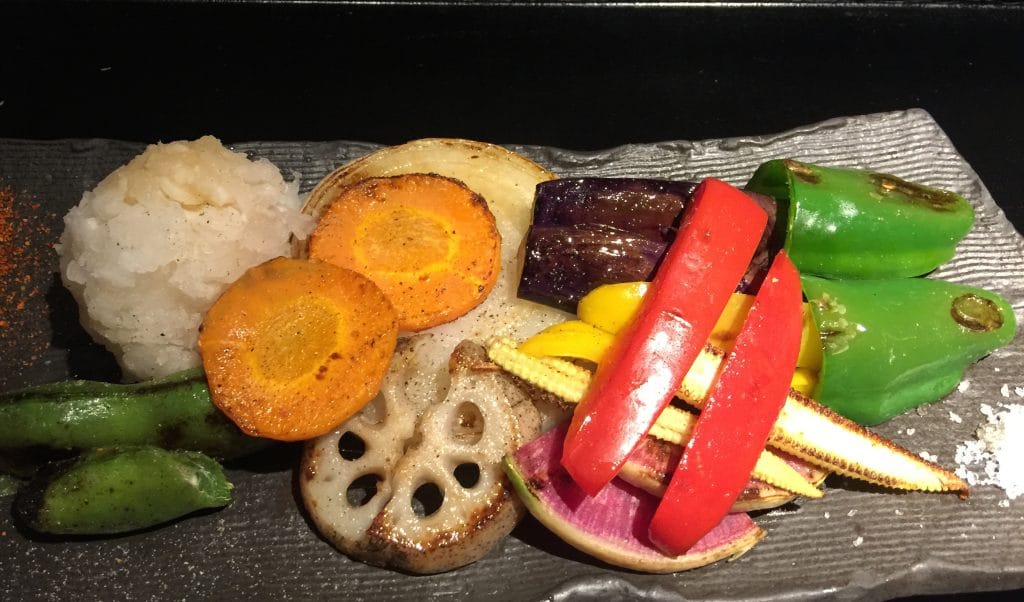
Vegetables that look like art on a plate
One of this restaurant’s specialities is thinly-sliced lotus root crisps – how he gets them so wafer-thin, I want to know. It feels like eating paper, but more flavourful of course. That’s what I love about Tokyo. Every visit, I discover a new dish, a new culinary treat.
There are now also plenty of ways to get connectivity in Tokyo so you don’t get that lost. This time I ordered a wifi router from econnect – the service is pretty impressive. I placed an order six hours before my flight saying I needed delivery at my hotel the next morning. I got an email saying if I processed my order within the hour, they’d be able to deliver before 11am, an hour after my flight landed.
True enough, there was a package for me – and included is a return package which I just have to drop into a postbox before I depart Tokyo. It’s 4G, amazing speed, so I am as happy as a kid in a candy store.
Efficiency and quality, two hallmarks of Japan.
The other hallmark is courtesy and this is where, after 24 hours here, I feel something’s changed and I hope it’s not a trend or something – but at two places we went to, a bar and a café, we were told (rather abruptly) that everyone had to place an individual order, which means you can’t share a dessert for example.
This is the first time I’ve encountered this rule in Tokyo and I wonder if it’s due to the influx of foreign visitors who sit around and occupy real estate (which we know is expensive in this city) without contributing to the bar or food bill.
Another change – which to me is pretty symbolic of the changes taking place as Japan gears up to welcome 40m visitors by 2020 (double the number today) – is the fact that the hotel where we hold WIT every year is now the Hilton, no longer Nikko.
Physically, not much has changed. The rooms are the same, amenities similar, the lobby looks the same. But you see and feel the difference – more foreign guests and on the elevator doors, big bold in-your-face ads that tell you to “Stop Clicking Around” – Hilton’s campaign to get travellers to book direct with them.
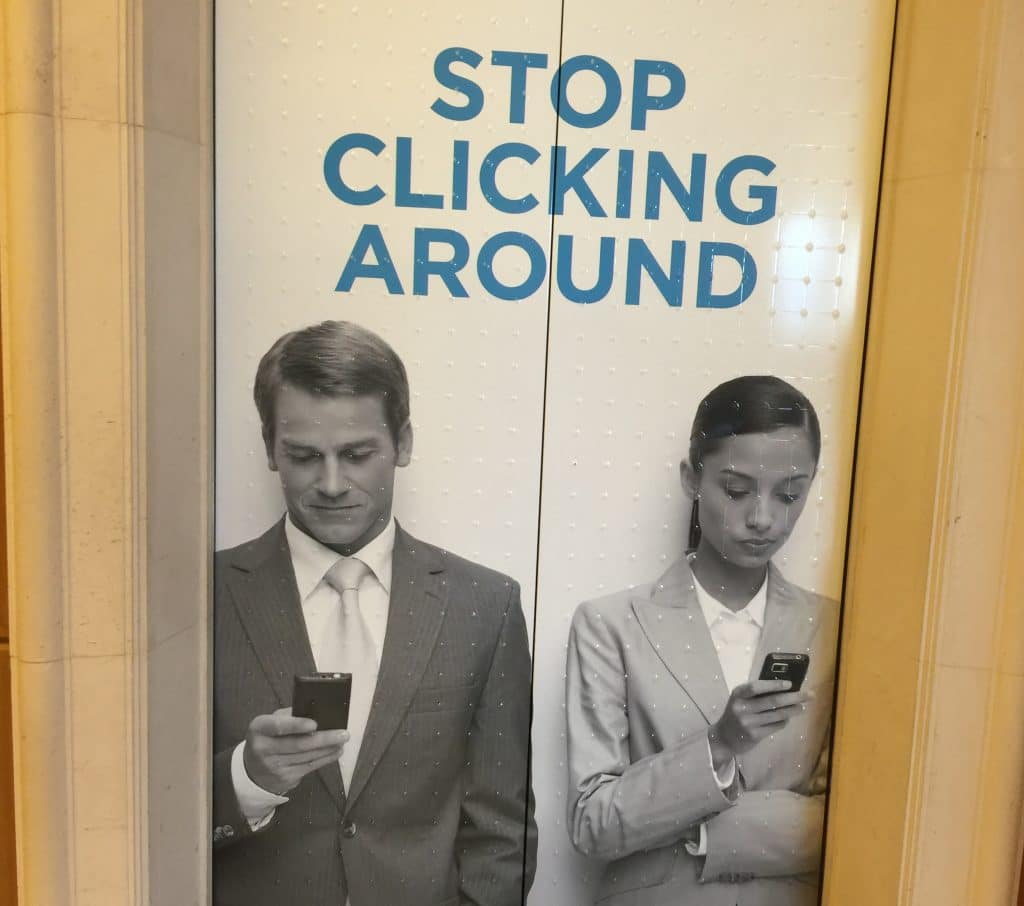
Saying it directly.
Wifi is no longer included with the room. I asked why and they said, “It’s Hilton.” I signed up for Hilton Honors and wifi becomes free. Not sure loyalty works that way but I guess in today’s world, that’s the currency of exchange – my data for free wifi.
Order more than two bottles of water and you’ll be charged for the third. Why? “It’s Hilton.” Want to use the swimming pool? An extra charge. Why? “It’s Hilton.” It seems to be the standard explanation offered by staff when they are asked about the changes.
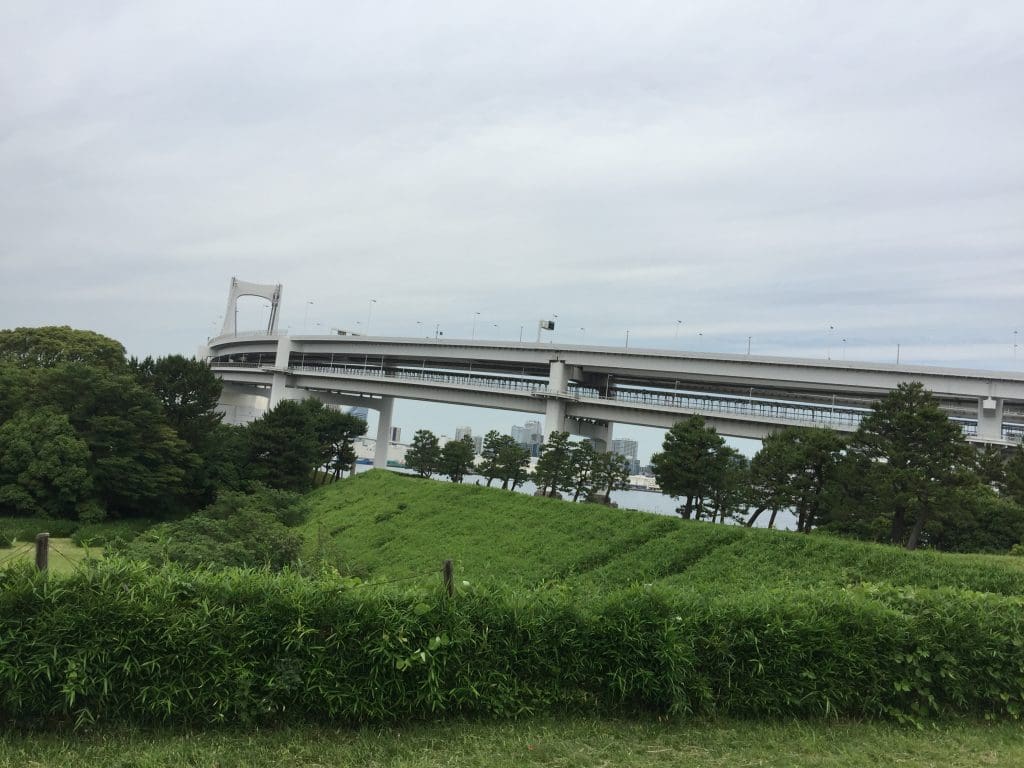
Rainbow Bridge, up close from Daiba Park
Thankfully, the view from my room hasn’t changed – the Rainbow Bridge, such a powerful symbol for the current moment in history that Japan is in. It is called such – apparently it was named by the public – because it looks like a rainbow stretching over Tokyo Bay.
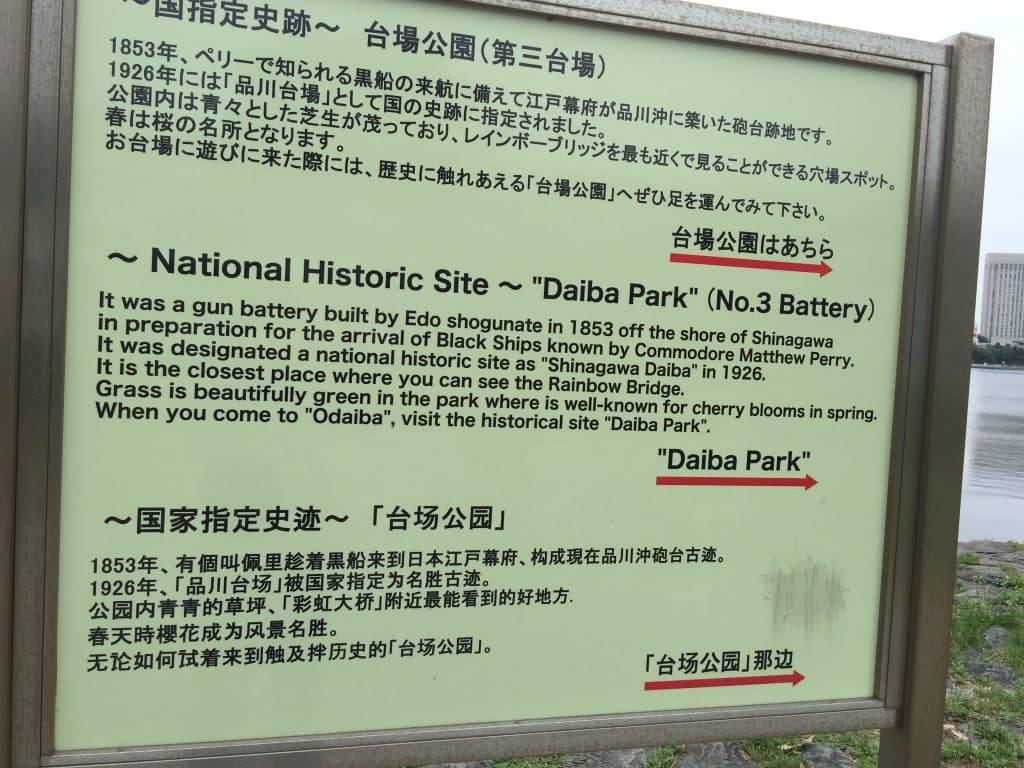
A historic reminder in English
The closest point to view it is from Daiba Park, a national historic site, which houses a gun battery built by Edo shogunate in 1853 “in preparation for the arrival of Black Ships known by Commodore Matthew Perry”.
I know this because there is an English sign. To see this in an obscure and I bet rarely-visited attraction speaks volumes of the mindshift taking place in Japan tourism.
So as we kick off our fifth WIT Japan & North Asia tomorrow, and as Japan builds out a bridge into the region and future, my hope is that it not lose the unique qualities that make it what it is.
Buy a ticket here