
As I write this at JFK airport, waiting for my Korean Airlines flight to Incheon, the Force has awakened. Yesterday – December 17 – was the premiere of the long-awaited and much-anticipated “Star Wars: The Force Awakens”, which is getting smash reviews by the way.
It was thus only natural that the Expedia Partner conference held the week before would have lots of references to the much-anticipated George Lucas movie in which a warrior, a rebel soldier, a couple of robots and an overgrown monkey rescue a princess. (Forgive me Star Wars fans for over-simplifying).
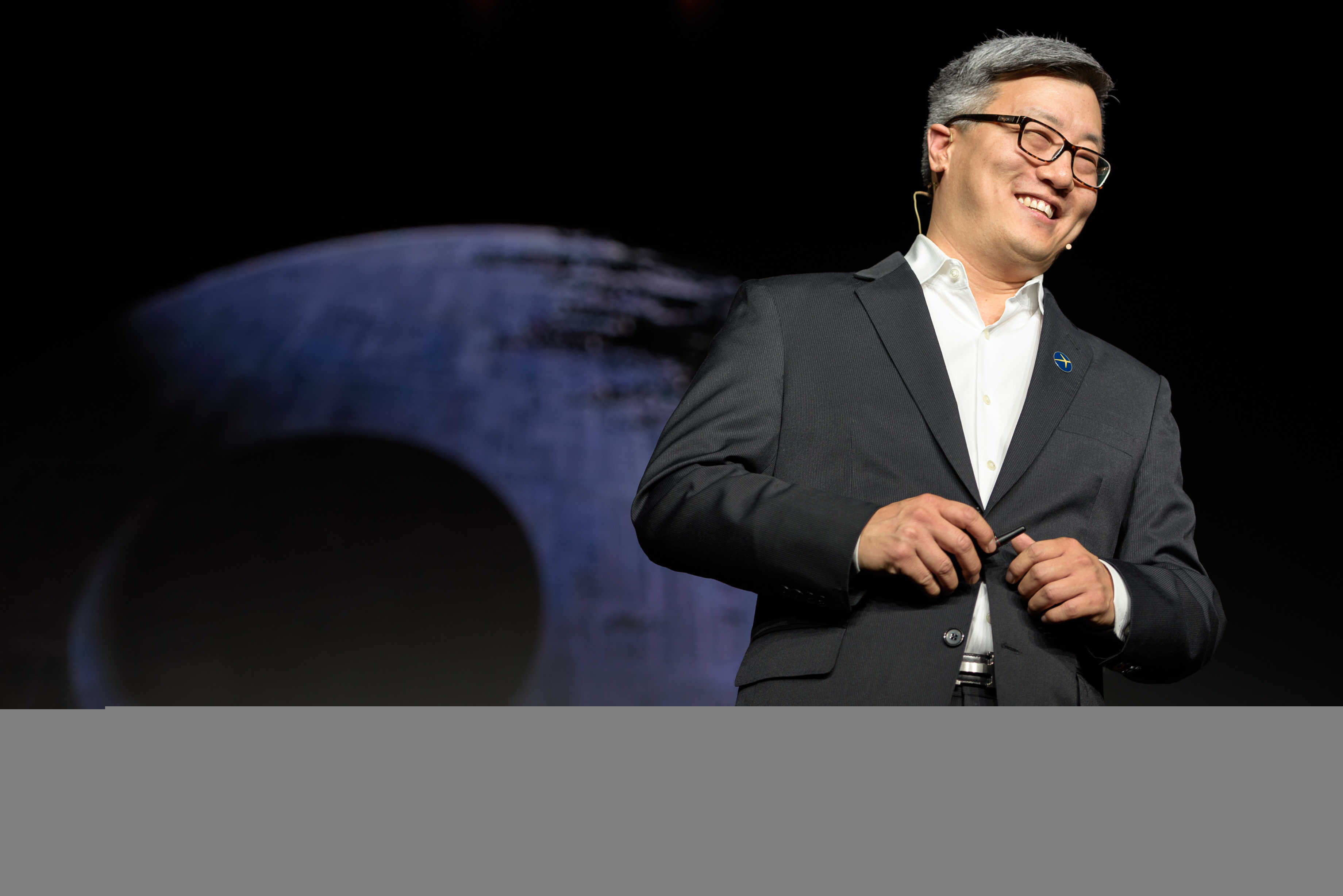
John Kim: Faster speeds, content shock and a reality beyond virtual.
Laser lights, synchronised to the theme from the movie, were used to vast effect during the opening, and John Kim, chief product officer, paraphrased a new clarion call for the industry, “May the Internet be with you”.
It’s an apt turn of phrase for a company that’s first and foremost a technology company before it is a travel company – and over the two days in Las Vegas, more than 2,000 partners from around the world learnt about the tech advancements it has made, and is making.
Call it sensory and information overload – we were in Las Vegas after all – but a few core themes resonated with me.

Johan Svanstrom: The international market will be three times the size of the US by 2030.
1. The force is in mobile and international, and hotels.com is the leading Stormtrooper
Hotels.com showed off its mobile tech – by far the leading brand in the family in this space, with more than 50% of transactions. And Asia leads the way in mobile behaviour – 35% for international travellers to the US vs 60% of visits to its website in South Korea.
It is also the most global of the family and president Johan Svanstrom is clearly the stormtrooper leading the charge for the international market. In his presentation, he and Neha Parikh, SVP, global brands and retail, spoke of the 1.8 billion international travellers by 2030, a market three times the size of the US.
He spoke of his son Alex, 10, who’s already visited 26 countries. This is the new generation of travellers who will be our customers, and he clearly wants to drive this point home with not only the partners but his colleagues.
Adam Jay, SVP, product and global marketing, talked about using technology to solve complexity on a global scale as well as at the local level – for example, how its search model which works in the US does not work in South Korea and how it made mistakes with the calendar in Arabic. It translates 60 million words a year and once it translated pet-friendly to tiger-friendly. It’s launched voice search, local last minute deals where users can book till 5am and on the loyalty front, it gives away one free night every 30 seconds under its “book 10 nights, get 1 free night” rewards programme.
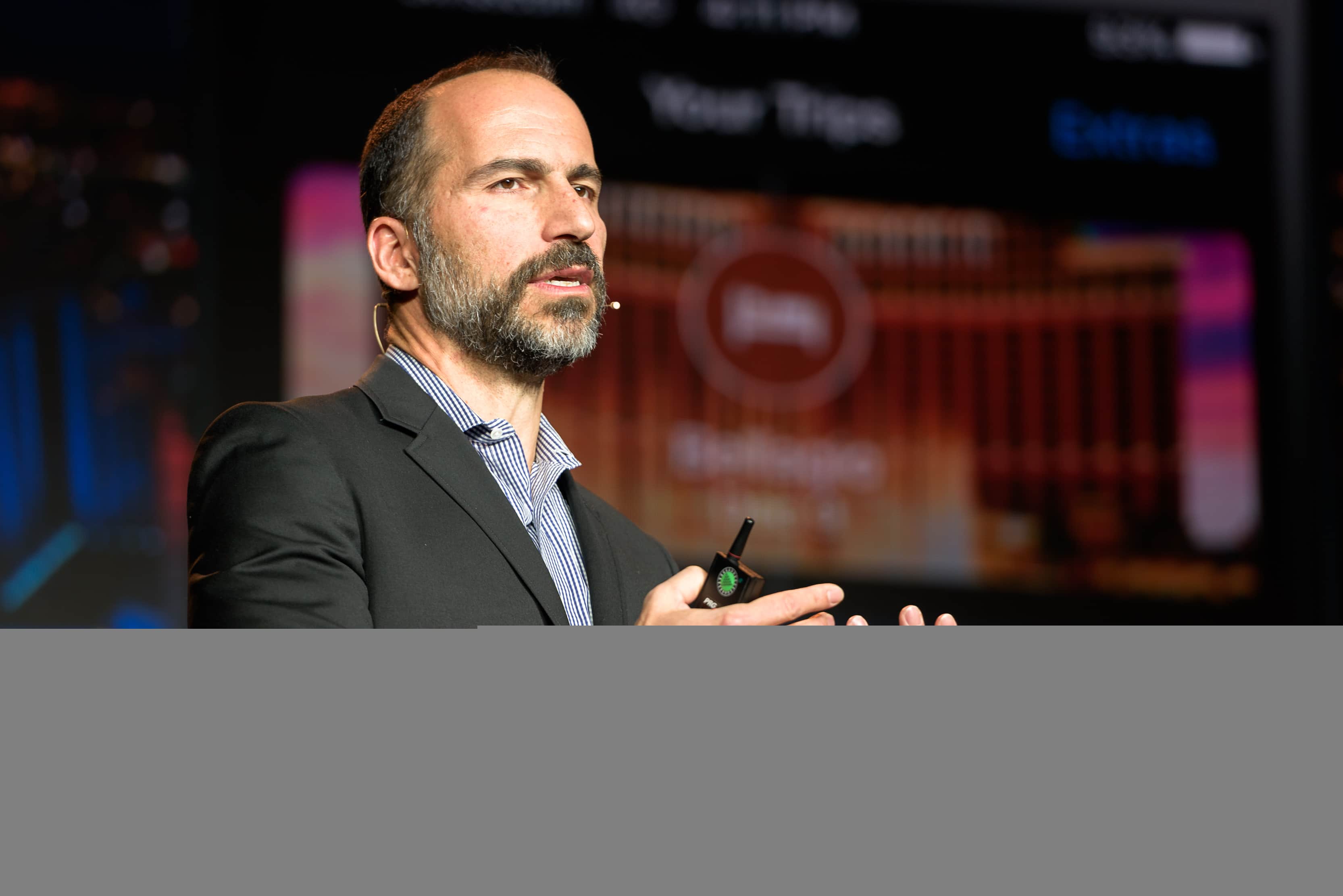
Dara Khosrowshahi: The most successful apps are high frequency.
2. The next galaxy is tours & activities
Expedia is including tours and activities in its app which means travellers can now book flight, hotel, car and tours. “The expansion of product increases the frequency of communication on the mobile app,” said Dara Khosrowshahi, CEO and president of Expedia Inc.
“The most successful apps are high frequency and the problem with travel is it’s a low frequency purchase. Increasing the frequency with which to communicate with consumers in context will give us an unfair advantage over our competitors,” he said.
3. Speed, cloud, split seconds
It’s investing in the cloud, using AWS, and is seeing increases in speed of website downloads. In this battle, who wins is down to a matter of seconds.
4. A move from transactions to partnerships
More than anything else, I felt a distinct shift in the company culture – from one that was largely consumer-focused to a stronger B2B play.
“In the past, it was about power to the consumers and now we will make it available to the partners,” said Khosrowshahi. It’s held two hackathons, it’s working with Silver Rail Technologies to build a rail product and it’s launched a plethora of new tools on its Expedia Partner Central platform for hoteliers, ranging from instant reviews to dynamic pricing tools.
“We want to take the relationship we have from transactional to partnership-oriented,” said Khosrowshahi.
5. Data explosion, content shock, marketing becomes an engineering challenge
In his presentation, Kim spoke of the new Internet that will be upon us in the not-so-distant future. LiFi 100 times faster than WiFi, exponential increases in data output and storage, content shock and virtual reality.
“The PC market is shrinking, tablet sales are declining, even phone sales are slowing down but the Samsung VR goggles sold out on Amazon and Best Buy in one day.”
But maybe, he asked, virtual reality doesn’t go far enough. Will reality be our new interface? Will screens be everywhere? And if reality is our interface, will we see a world as portrayed in “The Minority Report”?
What this means is there will be more content than we can consume, less chance to be seen and discovered which means production value has got to be higher which means higher risk for businesses which means “we have to monetise it”.
The entire advertising ecosystem is being rebuilt around data at the core. Marketing is now an engineering challenge, he declared.

Aman Bhutani: It’s about how customers segment us.
6. Segmentation is up to the customers
It’s telling indeed that earlier this year chief engineering officer Aman Bhutani was made President of Brand Expedia, which includes Expedia.com, Travelocity, Wotif, Orbitz and Expedia’s joint venture with AirAsia in which it now owns 75% share.
Bhutani is no ordinary geek though. He combines zen and common sense. While he is a believer in using science to solve problems, he knows ultimately it’s about the customer.
Asked repeatedly about the possible cannibalisation between the brands, Bhutani said, “It’s not about how we segment the brands, it’s about how our customers segment us.”
He said, “Consumers make the choices. Don’t force them to change, instead make it easier for them to get what they want.”
Later, I had the opportunity to ask John Kim which character he would be in “Star Wars” and he replied without hesitation, “Han Solo. I am a rebel.”
Well, if he is Han Solo, then Bhutani, to me, is Yoda.