
WE need to rethink the issue of human labour in our industry, urges Timothy O’Neil-Dunne, principal, T2Impact. How can we do more with fewer people?
As the world emerges from the pandemic, the desire to travel has exploded. Looking at the future it is hard to ignore that in the field of travel, tourism and transportation, there will be some development of new modes but we are going to be stuck with the same old infrastructure.
From high-speed trains to self-driving cars, it seems that the future of transportation should be bright and filled with endless possibilities. It isn’t – meet Susie.
There is one major Achilles heel that continues to plague the travel industry: the extensive use of humans.
We know that the travel and tourism industry is one of the largest employers in the world, employing approximately 300 million people. That’s more than 10% of the global workforce. This reliance on human labour ignoring the financial costs for the industry, comes with a number of risks and challenges, as we have seen in the past couple of years.
In the past, one of the biggest challenges faced by the travel industry was the issue of employee turnover. For example, American Airlines’ 2020 turnover (latest figures) was 24%. With so many people working in the industry, it can be difficult to find and retain skilled workers. This leads to high levels of employee churn, which can be costly and disruptive for businesses.
The pandemic exacerbated the situation. Now we are dealing with a seemingly simple problem.
Not enough people. But if that is the problem, should we take the traditional approach to solving it, that is, throwing more people at it? Or should we look deeper into the problem and innovate? I have spoken to many senior people since the pandemic started to wane. The story is the same. “I can’t get the people.” Travel has lost a good deal of luster and goodwill.
Meet Susie or Kevin.
Despite these challenges, the travel industry has made some progress in terms of automation and technology. For example, many airlines now use automated check-in kiosks to reduce the need for human labour. Similarly, hotels are beginning to adopt technology such as mobile check-in to streamline.
However, these efforts have been largely limited to limited specific tasks. Indeed, all we are doing is using technology to replicate humans without thinking too much about the core problem. The fact remains that the travel industry is still heavily reliant on human labour, and this will likely remain the case for the foreseeable future unless we rethink the issue.
So what can be done? One solution is to invest in training and development programmes, but this takes too long and doesn’t scale well.
In my view, the better solution for the airline and travel industry is to invest in technology BUT to rethink the requirements.
Thus, there should be an intersection of three components.
- Technology
- Humans
- Processes
We need to do better in more than complex tasks, such as customer service and people processing. While this may require significant investment upfront, it could ultimately lead to cost savings in the long run and allow businesses to better serve their customers. Re-thinking the issue would reduce the number of steps and disconnected processes. Too often we are constrained by physical infrastructure. We need to attack some of these core issues.
Consider the number of times a bag is handled during its trip life cycle.
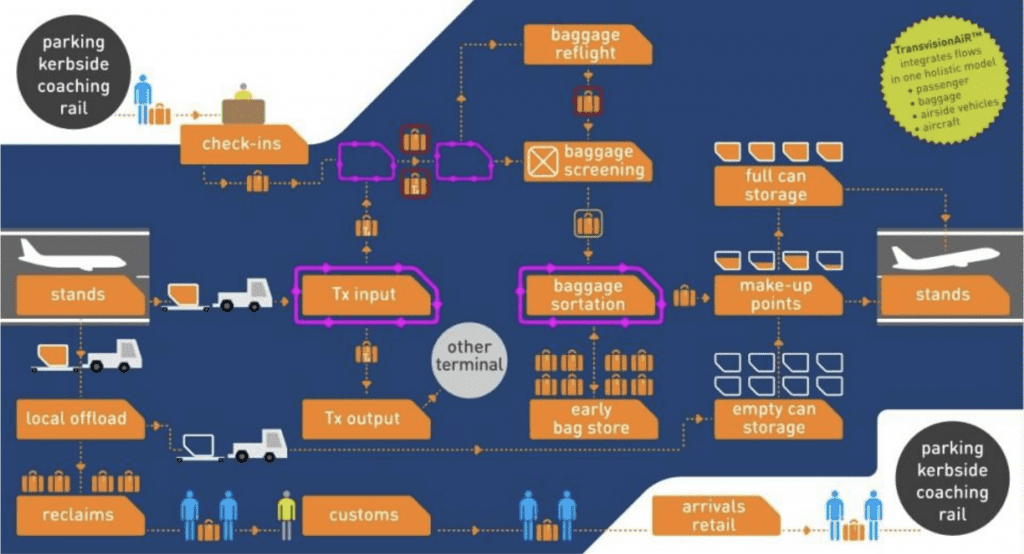
And what about Susie and Kevin?
We need to upgrade them. We need to arm them with more capability. We need to retrain them. We need to better support them. And we need to pay them more. IE we need fewer Susies and Kevins but of higher quality.
Ultimately, the travel industry’s reliance on human labour will continue to be both its richness but also its Achilles heel until more progress is made in design and technology. With the right investments and strategies, it is possible to address these challenges and create a more sustainable and efficient industry for all involved. So, it is the high time to think about it and try to solve this problem.
We need Susie 2.0 or Kevin 2.0.

Note: About 50% of the content in this article was generated by my ChatGPT but the detectors could not figure that out.