SHANGRI-LA Hotels and Resorts in Malaysia has signed a partnership with BNPL startup, Pace, the first for the hotel group to delve into the Buy Now Pay Later space and for Pace, its first break into travel and hospitality. WiT speaks to Turochas ‘T’ Fuad, founder & CEO, Pace and Katie Roberts, director of marketing, Shangri-La Group, Malaysia, on the thinking behind the partnership, and the acceleration in alternative payments in South-east Asia.

Turochas ‘T’ Fuad, founder & CEO of Pace
T, this is your first break into travel. Why was it so important to get into travel?
The travel sector is experiencing a rebound as border restrictions ease and more people start to travel again. According to the World Travel and Tourism Council (WTTC), the sector’s contribution to Asia Pacific’s (APAC) GDP could see a year on year increase of 36.3% this year, ahead of the global average of 30.7%, which represents an increase of US$515 billion. Additionally, international travel spend growth is set to rise by US$156 billion (148%) in 2022, providing a massive boost to the region’s economy. Just as Pace has supported retail merchants regain market share during the pandemic through its “buy now pay later” (BNPL) payment solutions, we see the same opportunity with the travel industry as operators embark on recovery.
Katie, why BNPL for your hotels? No fear of dilution to brand value and quality? Other travel suppliers had said the BNPL model is expensive for hospitality – how did you overcome that barrier?
We are pleased to provide a flexible payment offering for our guests. While BNPL is seen to be particularly appealing to the millennials and Gen Z, who are forming a rising segment of the consumer mix, we feel the BNPL model also offers greater convenience, control and accessibility to our hotels and resorts offerings for all guests.
T, how will the partnership work? What’s the business model? Percentage of transactions? Did you have to find a different model to work with hospitality as opposed to ecommerce and other retail? Cos I know it’s been difficult to get into travel.
The approach is to introduce BNPL payments as an alternative payment option to complement the existing payment methods offered by Shangri-La Hotels and Resorts, across all its participating hotels in Malaysia. The flexible payment solution can be used for various services including hotel stays, dining, and wellness services, including massages or spas.
Pace’s BNPL payment infrastructure can be easily integrated into customers’ point-of-sale systems, regardless of the industry they operate in. Ultimately, our goal is to support users, from regular consumers to hotel guests or patrons, to conveniently split their payments over three payments, interest-free.
Katie, why Pace? There are other BNPL models around and you must have talked to several. What do you hope it will do for you that others can’t?
Pace has a proven track record of boosting merchant sales and average expenditures among customers in various industries and sectors. Their growth trajectory and focus on South-east Asia was also among the reasons why it stood out for us as our first BNPL partner in the region.
T, is there something about the timing of this partnership that’s significant – as South-east Asia reopens, how can alternative payment solutions drive hospitality and tourism as the country reopens? What funds are you committing to marketing this partnership?
In the past month, more South-east Asian countries like Malaysia and Singapore are opening up their borders to international travellers. According to Tourism Malaysia, Malaysia is gearing up to welcome international travellers – targeting to attract 2 million tourist arrivals with a contribution of RM8.6 billion this year. Tapping on BNPL solutions like Pace would allow hotels to reach a wider pool of potential guests and patrons, including younger audiences or gig economy workers who aspire to travel frequently but may not have the budgets to do so. Alternative payment solutions enable new audience segments to manage their cash flow and enjoy their well-deserved holidays without compromising their budgets. This allows more people to travel and take a break after enduring two years of restrictions. Marketing plans are currently underway but we are unable to disclose the breakdowns for this.

Katie Roberts, director of marketing, Shangri-La Group, Malaysia
Katie, how will Shangri-La leverage this to reach more consumers looking to travel again? What are your expectations?
Our main goal for the Pace partnership was to offer an alternative, convenient payment method for our guests. We will be actively looking to partner Pace for other consumer outreach opportunities to heighten awareness of this new offering. For now, any Pace users from Malaysia, Singapore, Thailand and Hong Kong can make BNPL payments at our Shangri-La hotels in Malaysia. As Pace continues to expand to other markets, we look forward to welcoming more guests from the Asia region.
T, what trends are you seeing on BNPL adoption across other Asian markets? Is the demographic skewed younger? Lower income?
BNPL has been growing rapidly across Asia, driven in part by its popularity with the younger generation and the economic effects of the pandemic. It’s a solution that is ideal for Gen Z and Millennials in a global pandemic with the promise of safer and easier payment alternatives. With a mobile-first mindset and limited access to credit, the younger generation is more likely to tap on BNPL as the perfect solution for their payment needs. Based on our internal data, we also observed that the user profiles of the same generation are evenly spread across different income groups.
T, Traveloka has had success with BNPL in Indonesia and has said it is also looking to roll it out in other South-east Asian markets. How do you compete with specialist BNPL OTAs such as Traveloka?
Overall, BNPL accounted for only 1% of APAC’s digital payment transactions in 2021 and is expected to double by 2025. There is still room for the BNPL industry to grow and enough to accommodate healthy competition.
In addition, Pace is a dedicated platform that connects users and merchants for flexible payment needs, across all categories. As opposed to domain-specific BNPL providers such as e-commerce marketplaces and OTAs, Pace’s BNPL payment platform covers a much wider range of payment features and merchant partners. By leveraging insights and data gathered from our fast-growing BNPL platform, we are able to introduce new and innovative payment solutions catering to the ever-evolving needs of merchants and businesses.
Pace is also strengthening its presence in Asia through the recent acquisition of Rely, a pioneer in the BNPL industry that brings a depth of expertise that is set to drive forward Pace’s goal of democratising financial services across the region.
Katie, what trends are you seeing related to alternative payment solutions in Asia? How is the rise in wallets across South-east Asia affecting how Shangri-La sees its payment strategy evolving?
The pandemic has accelerated the growth of contactless payments and e-wallets. With new payment methods like BNPL being offered to our guests, we can make new headways into new customer segments which may exist in the underbanked or unbanked population or markets with lower credit card penetration. For instance, in markets like Malaysia where there is a large population which remains underbanked and unbanked (according to a study by Bain & Company, around 55% of Malaysia’s adult population is still underbanked and unbanked), payment modes like BNPL could have a natural appeal for many potential guests.
T, you’ve been in travel before with Travelmob before its exit to HomeAway. How do you see the BNPL model fitting into the travel ecosystem? Or rather disrupting it? Do you see Pace flipping the travel funnel so you attack it from the payments end while other OTAs attack it from the traditional inspiration and transaction end?
We see BNPL as a powerful payment solution that addresses fast-evolving needs of users across the board – from regular consumers to new ones including travellers. The key factor here is that users are no longer just using BNPL as a payment method, but relying on it as the first point of discovery for their shopping needs. This allows BNPL providers like ourselves to not only support our customers by enabling seamless flexible payments, but also guides users to the right merchants, including those in the travel industry. The high engagement with users via the platform enables us to drive real demand across a wide range of brands and industries.
Katie/T, under what circumstances would this partnership not be deemed a success? Are there parameters set, and timelines?
T: It’s a clear win-win for everyone involved: Shangri-La, consumers & Pace. For Pace, we focused on building a strong partnership with Shangri-La to enable access to new audience segments. With wider reach, more people can tap on BNPL payments through Pace to book their stay or enjoy the facilities at Shangri-La hotels.
Katie: There are a few ways we will be gauging the success of the partnership. Besides adoption rates, we will also be soliciting guest feedback about the flexible payment offering and monitoring whether there is incremental spend among guests.
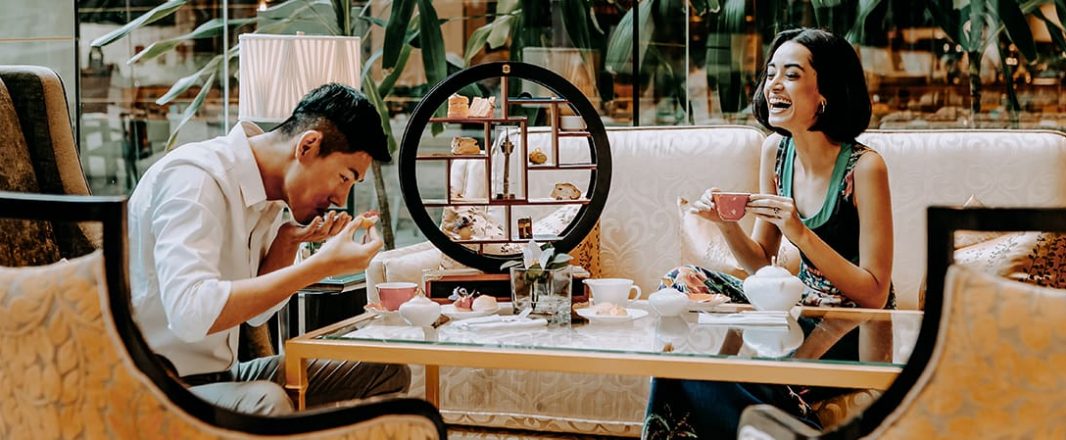
• Featured image: High tea at Shangri-La hotels