The International Air Transport Association (IATA) has released data for global passenger demand in May 2024, highlighting growth across all regions.
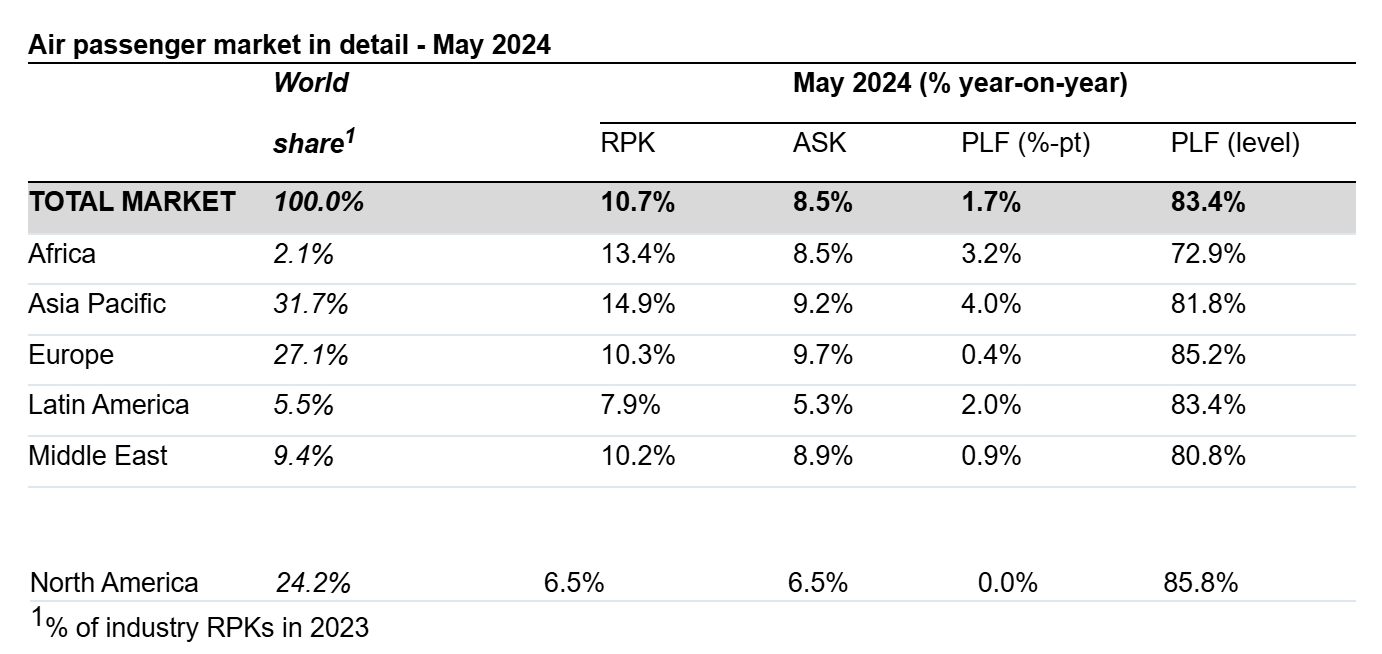
Total global demand, measured in revenue passenger kilometers (RPKs), increased by 10.7% compared to May 2023. Total capacity, measured in available seat kilometers (ASK), rose by 8.5% year-on-year. The load factor for May was 83.4%, up 1.7 percentage points (ppt) from May 2023, marking a record high for the month.
International and Domestic Markets
International passenger demand rose by 14.6% compared to May 2023, with capacity increasing by 14.1%. The load factor improved slightly to 82.8%, up 0.3 ppt from the previous year.
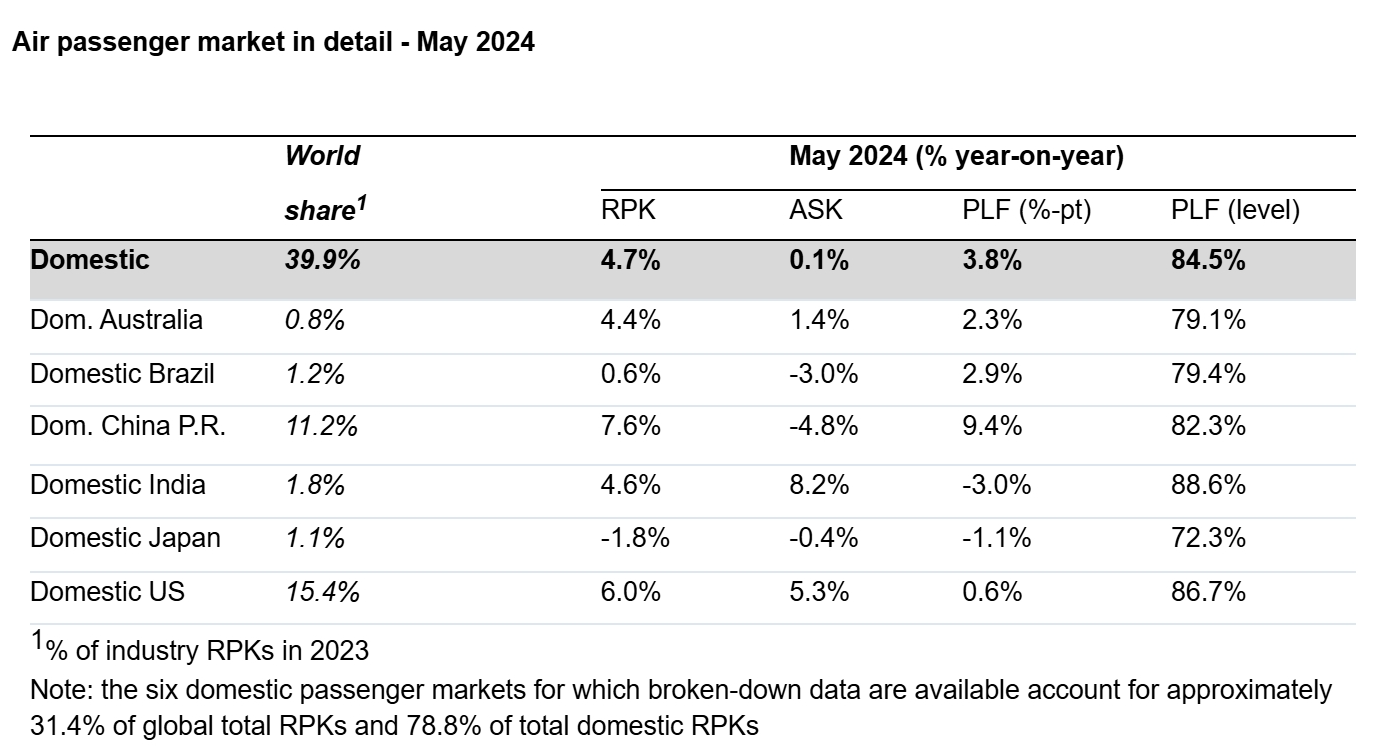
Domestic demand saw a more modest increase of 4.7% compared to May 2023, with capacity barely changing at 0.1%. However, the load factor for domestic flights was robust at 84.5%, up 3.8 ppt year-on-year.
IATA’s Director General, Willie Walsh, commented, “Strong demand for travel continues with airlines posting a 10.7% year-on-year increase in travel for May. Airlines filled 83.4% of their seats, a record for the month. With May ticket sales for early peak-season travel up nearly 6%, the growth trend shows no signs of abating. Airlines are doing everything they can to ensure smooth journeys for all travelers over the peak northern summer period. But our expectations of air navigation service providers (ANSPs) are already being tested. With 5.2 million minutes of air traffic control delays racked up in Europe even before the peak season begins, it is clear that Europe’s ANSPs have unresolved challenges. And the 32,000 flight delays over the Memorial Day weekend in May show that challenges persist in the US too. Airlines are accountable to their customers; ANSPs must be as well. ANSP performance matters to their airline customers and to millions of travelers. We all need them to do their job efficiently.”
Regional breakdown
Asia-Pacific airlines led the way with a 27.0% increase in demand year-on-year. Capacity grew by 26.0%, and the load factor rose to 81.6%, up 0.6 ppt from May 2023. This region was the largest contributor to industry-wide growth in May, accounting for 42% of the year-on-year increase.
European carriers experienced an 11.7% increase in demand, with capacity up by 11.3%. The load factor for Europe was 84.7%, an increase of 0.3 ppt from the previous year.
Middle Eastern airlines saw demand rise by 9.7%, with capacity increasing by 9.0%. The load factor improved to 80.7%, up 0.5 ppt year-on-year. Routes between Asia and the Middle East remain particularly strong, now 32% higher than in 2019. The Europe-Middle East route also showed growth, with a year-on-year increase in RPKs for the second consecutive April-May period.
North American carriers reported an 8.1% increase in demand, though capacity increased by 9.7%, leading to a decrease in the load factor to 84.0%, down 1.2 ppt from May 2023.
Latin American airlines saw a 15.9% rise in demand, with capacity climbing by 14.3%. The load factor increased to 85.1%, the highest among all regions, up 1.2 ppt from the previous year.
African airlines posted a 14.1% increase in demand, with capacity rising by 8.2%. The load factor improved by 3.7 ppt to 72.3%, the fastest increase in load factor among all regions, though Africa still holds the lowest load factor overall.
Domestic market insights
Domestic demand remained stable in May. China’s growth rate surged in line with the post-Labor Day holidays. Conversely, Japan experienced a decline of 1.8%, possibly reflecting low business and consumer confidence.