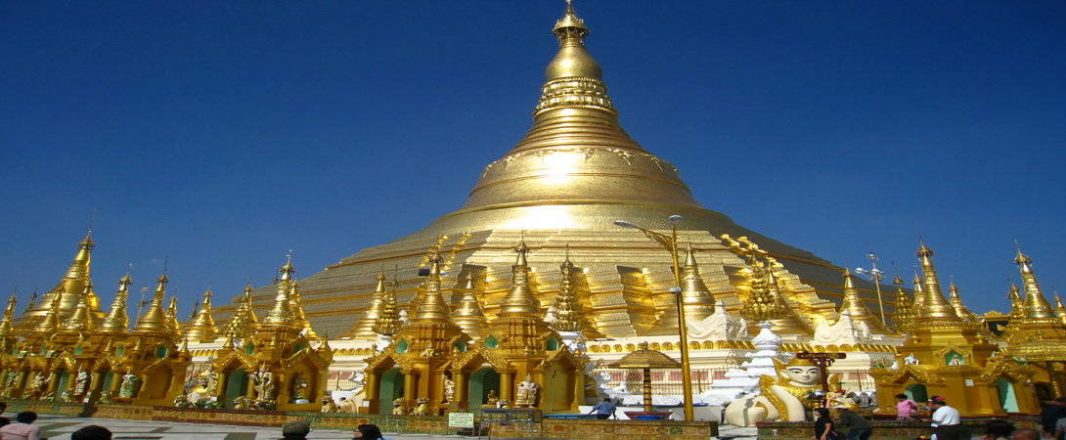
Being bullish on Myanmar is a cliché these days. However, I thought I’d share some notes from a recent trip to Yangon—it’s a good conversation starter at the very least. Beyond the obligatory visit to the Shwedagon Pagoda and happy hour at the Strand on Friday night, I managed to slip in a few conversations with people in-the-know.
 The immediate takeaway is that this country of roughly 60 million people, wedged between two of the world’s economic heavyweights (India and China) has the potential to reclaim its position as an economic powerhouse in South-east Asia. In the 1960s, Myanmar was Asia’s richest country with a GDP per capita estimated at US$670, three times that of Indonesia and twice that of Thailand. Today, it remains below US$900, one of the lowest in the region.
Pictured right: Hawkins Pham
This once isolated country is now one of the world’s hottest investment destinations. However, the road to prosperity will not be smooth sailing, and there are a number of challenges that foreign investors are bound to face while the country’s newly-elected civilian government irons out reforms.
The Genie is out of the Bottle
To say that Myanmar is the flavor of the month in South-east Asia would be an understatement. I have few contacts in the investment community that have not expressed interest in visiting (if they haven’t already).
This wave of interest is evident in hotel room rates in Yangon, which have skyrocketed in recent months as hotels capitalize on the inelasticity of business travelers. In August, the Ministry of Hotels & Tourism attempted to limit price gouging by setting a cap of US$150 for standard hotel rooms—although you can expect much higher rates at the more choice properties, if there is even availability.
The supply-demand gap in the hotel industry is pedestrian, however, when looking at other sectors of the economy. Nearly everywhere you turn lies fertile opportunity for investment. With a notable exclusion of extractive industries, here are a few key sector opportunities:
Financial Services: The banking system is severely underdeveloped and largely cash-based, as credit card systems were banned in 2003 following US. sanctions. MasterCard and Visa only recently got the green light, which will be a relief to all those foreign businessmen flooding into Yangon. ATMs were introduced recently but are a rarity—estimates point to 80 machines throughout the entire country.
The lack of banking penetration will need to be addressed in order to boost the savings rate and, thus, investment. More critical, the bond between banks and state-owned enterprises, a relationship that often results in poor capital allocation, will need to be broken. (Vietnam is learning this lesson the hard way.)
There are 13 private banks in the country, and outstanding credit amounts to a mere 25% of GDP, compare that to Vietnam’s ratio of 120%. There are an estimated 17 foreign bank rep offices, whose operations are highly restricted. Multinational banks are no doubt waiting anxiously. The first to enter through JVs or other structures will likely be from Asia. The usual suspects include Bank of Tokyo Mitsubishi UFJ, Sumitomo Corp, United Overseas Bank, DBS, OCBC, CIMB, etc. In the meantime, domestic banks are pushing to expand their footprint and services in advance of the imminent entry of more advanced foreign operators.
Telecommunications: The telco industry is also a greenfield opportunity, with only 4% wireless and 3% fixed-line penetration. Compare this wireless penetration rate to Singapore (155%), Vietnam (120%), Malaysia (118%), Thailand (108%), Indonesia (92%) or even Laos (50%), and it is evident that Myanmar is one of the region’s last untapped telecommunications markets.
State-owned Myanmar Post and Telecommunications (MPT) is the main operator in the country followed by Yatanarpon, a smaller operator focused primarily on Internet service. There are no foreign operators in Myanmar at present excluding equipment providers like Huawei and ZTE. Expect to see multinationals lining up to gain favor with MPT in hopes that its monopoly will be broken-up. The government has instituted a “privatization commission” to review the deregulation of the telecommunications industry. Bolstering communication among the country’s 60 million people will be a priority for stimulating growth, and the government has reportedly appointed consultants to review sector reform with an aim to increase mobile penetration to 50% by 2015. Hopefully on your next business trip the cost of a registered SIM card (roughly US$150-200) will be less than your hotel room.
Real Estate & Infrastructure: You can count on your hand the number of office buildings in Yangon. Colliers International estimates that the total amount of office space in the city is roughly 62,000 sqm or about half the space available in Bangkok’s largest office building, the Empire Tower. This lack of supply persists across all real asset categories including housing, schools, hospitals, shopping malls, roads, bridges, seaports and airports.
The need for such infrastructure creates immense potential for investments into these sectors. The urban landscape is anchored by the two largest cities: Yangon with 5 million people and Mandalay with 1 million people. These are approximate figures as the last census was in 1983 (they are gearing up for another in 2014). Outside of urban development, one of the key infrastructure developments to watch will be the US$8.6 billion Dawei port in southern Myanmar, envisioned to be South-east Asia’s largest industrial complex with industrial parks and a special enterprise zone. Thailand’s largest construction company, Italian-Thai Development, signed a deal in 2010 to develop the project but has failed to mobilize capital. The Thai government has stepped in to rescue the project and, in turn, has brought in the Japan Bank for International Cooperation to finance the development.
Manufacturing: Myanmar makes for a promising industrial base. It has the population, is at the low-end of the cost scale, and is afforded an abundant amount of natural resources. However, without investment into infrastructure—roads and ports—manufacturers will be put off by the bottlenecks. The US decision to lift the ban on exports from Myanmar will give the country the necessary boost. The sector that will benefit the most is the low value-add garment industry, which generated approximately US$560 million in export turnover in 2011. The country will be playing catch-up to its neighbors, namely Vietnam and Cambodia, which generated roughly US$14 billion and US$4 billion, respectively, from garment exports in 2011. However, Myanmar will have the edge with the Japan External Trade Organization estimating the average monthly wage of a factory worker in Yangon at 61% of that in Hanoi and 83% of average wages in Phnom Penh. It may take some time before we start seeing “Made in Myanmar” labels, but the wait won’t be long with companies like Fast Retailing, the Japanese operator of Uniqlo, short-listing Myanmar as a potential manufacturing base.
Social Infrastructure: Improvements in education and healthcare are also critical for the development of Myanmar’s human capital. Myanmar will need healthy and skilled workers, in order to capitalize on the country’s potential as an export-oriented production base. Overseas Burmese returning to Myanmar will help to fill the gap, but upgrading Myanmar’s education system is necessary to ensure that workers are qualified for manufacturing and service industry jobs. Investments into the country’s healthcare systems will also be required to improve general living standards.
Myanmar’s maternal mortality rate is nearly 5x higher than that of neighboring Thailand at 240 deaths per 100,000 live births. Life expectancy is also one of the lowest in the region at 62 years. Low spending on healthcare from the government has also resulted in low coverage. The WHO places the government’s healthcare expenditure at approximately US$4 per person, one of the lowest in the world. On average, Myanmar is reported to have 1 physician per 2,188 people and 1 hospital bed per 1,667 people.
Getting Exposure to Myanmar
Fervor for investment into Myanmar is perhaps best summed up by the 7x jump in the stock price of Yoma Strategic Holdings Ltd. following the visit by US Secretary of State Hillary Clinton in 2011. Yoma is a Singapore-listed real estate developer whose main operations are in Myanmar and Chairman, Serge Pun, is one of the more successful and internationally respected businessmen in the country. He created his eponymous firm, Serge Pun Associates, in 1991, building it into a conglomerate with interests in financial services, real estate, construction, automotive, manufacturing, healthcare, and agricultural industries.
Outside of Yoma, investors have very limited avenues for getting exposure to Myanmar. Japan’s second largest brokerage, Daiwa Securities Group, signed an agreement with the Central Bank of Myanmar to assist the country with developing a trading system and regulatory framework for securities transactions. The aim is to establish a securities exchange by 2015. In the meantime, there are several companies listed on regional exchanges that have operations in Myanmar, including the construction firm Italian-Thai Development and consumer-oriented firms like Viz Branz, Super Group and Parksons Retail Asia, not to mention the host of oil and gas companies that are chasing after the country’s 101 exploration blocks.
We can expect to see domestic groups take a page out of Yoma’s book by listing on regional exchanges, capitalizing on investor demand for Myanmar exposure. However, a limited number of domestic firms will find this a realistic means for mobilizing capital, as few will pass the regulatory hurdles for filing. One mechanism would be a reverse takeover, which is a strategy that the Max Myanmar Group (MMG) is negotiating with the Singapore-listed Aussino Group, whose share price jumped 2x following the announcement. The acquisition would transform Aussino from a maker of towels and bed linens into a petroleum retailer in Myanmar.
Outside of direct or indirect proxies, the most readily available option at present for financial or strategic investors is the suitcase strategy: putting boots on the ground in Yangon to identify potential partners. Developing relationships at this stage of the game is part of the excitement associated with investing in frontier markets. However, proceeding with caution cannot be overemphasized. One can expect Myanmar’s accounting standards to be subpar compared to international standards, and the existence of multiple accounting books is not uncommon. The prudent investor will likely take a wait-and-see approach. It’s still the dawn of Myanmar’s renaissance, and watching how the political landscape unfolds is of most importance.
A Step in the Right Direction but Nevertheless an Ongoing Story….
As Myanmar reconnects with the world, changes will rapidly accelerate. Certain events will act as catalysts (or deterrents) for investors. President Obama’s visit will certainly be one to boost investor sentiment. More importantly, the finalization of the long delayed Foreign Investment Law in early November has paved the way for increased investment into the country.
The law itself was hotly contested and was a test of wills between reform-minded President Sein and parliament. The original law put forth by Sein was said to have been modeled on best practices in foreign investment, as gleaned from the experiences of other Asian nations. However, parliament sent the bill back with no less than 94 amendments, which were largely aimed at protecting domestic interests. The final version of the law, however, was successful in removing the more restrictive policies, such as the proposal to require foreign investors to hold at least a 35% stake in joint ventures in non-restricted sectors and a 50% cap for restricted sectors, including manufacturing, services, agriculture, fisheries and livestock. Additionally, the requirement for foreign investors to invest US$5 million at minimum has been removed.
The new law gives discretionary power to the Myanmar Investment Commission, which will continue to review and approve all new investment proposals as it had under the previous law. The revised foreign investment law also permits foreign investors to own 100% of non-restricted companies.
Total foreign direct investment in Myanmar amounted to US$3.8 billion between 2005 and 2010. The country reported approximately US$660 million in foreign investment through the first seven months of 2012. With the new law in place, Myanmar has the wind at its back to usher in much needed investment.
The next challenge will be to neutralize the uncertainty shrouding the political landscape. All eyes are on the 2015 elections, where President Sein has suggested that he would step down following the end of his term. If Suu Kyi gets the nod to succeed the president, it will be a strong signal that the military and its cronies that have ruled Myanmar for five decades are ready to hand over power, peacefully.
Myanmar – Facts, Figures and Eye Candy