
Chinese travellers are using mobile to contribute reviews
The role of reviews in influencing Chinese traveller decisions is gaining in importance as more Chinese contribute reviews as well as read them as part of their travel shopping.
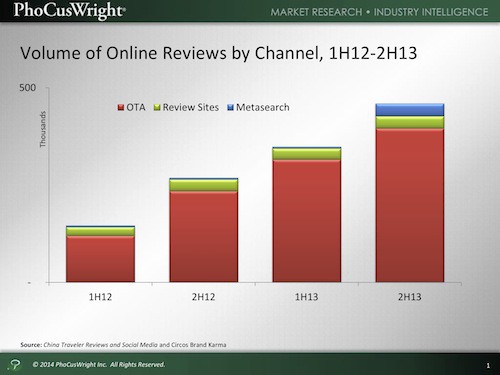
According to PhoCusWright‘s recent Asia Pacific and Global Edition report, Traveler Reviews and Social Media in China, over 800,000 reviews were posted online in 2013, compared to 415,000 in 2012. Almost four in five Chinese travelers read traveler-submitted reviews while they plan at least half of their trips.
While online travel agencies host the majority of traveler reviews, a new entrant is gaining ground. China’s metasearch leader, Qunar, saw review volume explode 420% from 2012 to 2013. In comparison, all other review sites in China increased 95%.
The way reviews are being submitted has also changed. Now, travelers are submitting reviews via their phones.
Qunar has adapted to this consumer behavior trend and accepts and solicits reviews by text message – one of the initiatives that has enabled it to gain ground against online travel agencies.
Deepak Jain, Research Analyst, Data and Analytics, PhoCusWright Inc, shared with WIT the key points from this study.

Deepak Jain
- OTAs contribute a lion’s share of online reviews in China.
- Travel metasearch – driven primarily by Qunar – is gaining share in online reviews. Share of metasearch category rose from a paltry 2% in 2012 to 5% in 2013.
- Buzz is the PhoCusWright metric for the volume of posted reviews per 100 rooms. The average buzz across all hotels nearly doubled in 2013 to 20 from 10.3 in 2012.
- STAI is PhoCusWright’s “Social Travel Advocacy Index” and reflects the aggregate average sentiment of all guest reviews measured in this study. STAI is weighted to take in to account the share of total hotel review volume of the brand and star category.
- It was observed that STAI acts as a mirror to ADR, and this would directly correlate to the classic value equation where value = service or price. As price increases but service levels (or expectations of service levels) remain more or less constant, value (or perceived value) will decline.
In 2013, STAI has increased across all hotel star rating categories, suggesting increased guest satisfaction across all hotel categories – overall STAI improved from 48 a year ago to 50.
The report, Traveler Reviews and Social Media in China, leveraging social data through Circos Brand Karma, is the first of its kind to focus on the Chinese travel market and examine the role and impact of traveler review content on China’s online travel ecosystem, and will be the subject of a free webinar run by PhoCusWright on August 13.
Sign up here for the webinar – http://www.phocuswright.com/webinars-china-reviews-social-081314