“Business thrives in certainty. The uncertainty in Europe, especially with weak political leadership in key nations, is a cause for concern.”
“In 2000, people were saying ‘You’ve reached saturation point.’ We had about 1,200 passengers. This year, we’ll do 200 million passengers,” said Michael Cawley, Non-Executive Director of Ryanair, on the Main Stage of WiT Singapore 2024.
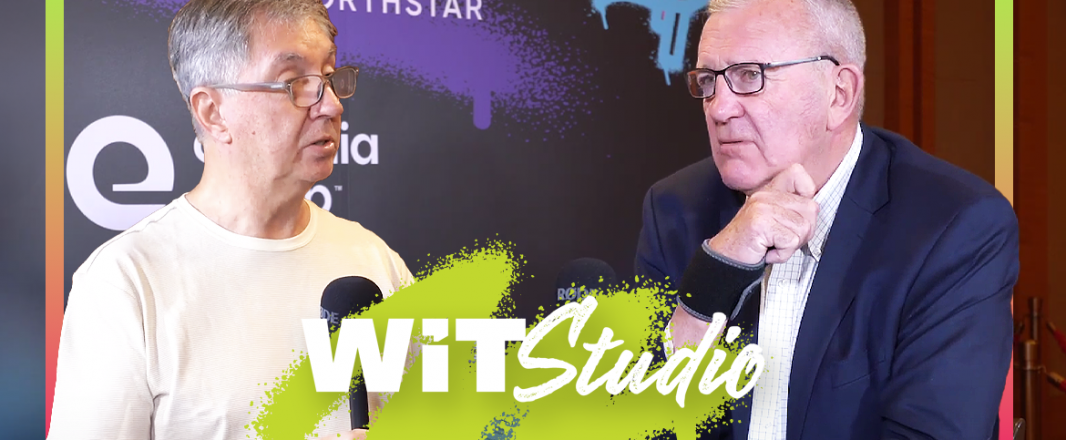
It’s this brand of steely resilience that Cawley has been renowned for over the course of his career at Ryanair, but also, as Chair, Hostelworld and Former Chair, Failte Ireland. With so much to discuss including Europe’s current political climate to post-pandemic challenges facing the aviation industry, as well as Ryanair’s strategic approach to navigating uncharted growth markets, we figured why not extend Cawley’s on-stage interview by inviting him to the WiT Studio to get candid about his perspectives on global aviation and the evolving role of low-cost carriers.
And who better to sit opposite Cawley than aviation expert, analyst and overall ‘travel geek’, Timothy O’Neil-Dunne, Principal at T2Impact.
Watch full interview:
Reflecting on the broader socio-political climate, Cawley expressed both optimism and caution about the post-COVID world and acknowledged that while Western Europe has shown resilience, the geopolitical instability in Ukraine and Israel casts a shadow on business continuity. “Business thrives in certainty,” he said, adding that “the uncertainty in Europe, especially with weak political leadership in key nations, is a cause for concern.” This volatile environment has prompted Ryanair to bolster its strategy to mitigate risks and maintain growth.
Focusing on Ryanair’s home country of Ireland, Cawley voiced his concerns over government policies affecting major economic drivers, notably data centers and aviation. He noted that restrictive energy policies led by green ministers have stifled potential growth. “The Minister for Transport has refused to increase generating capacity, limiting our ability to develop more data centers, despite huge demand from tech giants like Amazon, Microsoft, and Google,” Cawley explained. When asked about the implications of these policies, Cawley warned that they could lead to a competitive disadvantage for Ireland, particularly in the aviation and data technology sectors.
The government’s stance on a passenger cap at Dublin Airport also drew Cawley’s ire: “For an island country, this policy is nonsensical. We have essentially hung a ‘closed for business’ sign, which hampers economic growth and tourism.”
Of course, Cawley and Ryanair have a history of tackling complex challenges.
“We have always fought increased costs,” Cawley stated, describing how Ryanair recently scaled back operations in Bordeaux and Germany due to soaring airport charges and tax hikes. “It’s not just Ryanair,” he added, pointing to other airlines making similar cuts. For Cawley, government measures in Germany have backfired: “Aviation is a vital driver of economic growth, yet Germany’s approach seems to ignore this reality.”
Another trend in Europe is the state’s preferential treatment of national carriers over low-cost airlines like Ryanair, particularly in the Netherlands. According to Cawley, policies such as exempting KLM’s long-haul flights from environmental taxes create an anti-competitive atmosphere. “The idea that long-haul flights should be exempt from taxes while short-haul connections aren’t, is a joke,” he asserted. Such policies, he believes, ultimately harm consumers, as they artificially inflate costs in the name of sustainability. However, Cawley is confident that market forces will prevail. “Consumers vote with their feet, choosing options that offer better cost and service,” he noted, suggesting that Ryanair’s approach will continue to resonate with travelers despite regulatory hurdles.
As O’Neil-Dunne steered the conversation across the Atlantic, Cawley analysed the challenges faced by Southwest Airlines, a longtime model for low-cost carriers. He attributed Southwest’s current struggles to a failure to adapt to evolving customer needs and competitive pressures. “Southwest became complacent,” he remarked. “By sticking to outdated practices, they missed the boat on revenue generators like priority boarding and allocated seating,” Cawley observed, adding that Ryanair abandoned that approach years ago.
Cawley attributes Ryanair’s success to its unique relationship with partner airports and mutually beneficial arrangements that prioritise cost-efficiency. “We deliver extra passengers who spend on car parking, retail, and more. In return, we want low or declining costs because, ultimately, they’re our passengers,” explained Cawley, adding that this strategy allows the airline to bring customers to destinations they might otherwise overlook, creating new opportunities for local tourism economies. “Many people go to places they’ve never heard of, purely because we offer a 50-euro fare. And they end up wanting to go back,” Cawley added.
Of course, no conversation is complete these days without bringing up AI. Cawley shared a cautiously optimistic view of the future, believing that AI could streamline operations and enhance customer experience in ways previously unimagined. “It’s an exciting time for travel.”