Asia Pacific (APAC) airlines, despite achieving significant growth over the past year in the face of intense competition and regulatory policies, are still facing many challenges chief of which safety and health pandemics that often undermine industry development.
These were highlighted at the just concluded 58th Assembly of Presidents of the Association of the Association of Asia Pacific Airlines (AAPA) in Tokyo. More immediately, however, airlines are focused on tackling a number of major challenges said AAPA.
Safety remains the industry’s highest priority. The unprecedented losses of Malaysia Airlines MH370 and MH17 this year have raised issues that include improved practices on aircraft tracking, and governing flights over conflict zones. AAPA said it strongly believes in the need for better intelligence sharing in connection with flights over conflict zones.
(MH17 was shot down over Crimea on 17 July 2014 enroute from Amsterdam to Kuala Lumpur killing all 283 passengers and 15 crew on board. MH370 mysteriously disappeared on March 8 this year on a flight from Kuala Lumpur to Beijing with 12 Malaysian crew members and 227 passengers from 15 nations).

Andrew Herdman: Industry always needs to remain vigilant on safety.
Andrew Herdman, AAPA director general, said: “As highlighted by unprecedented aircraft losses this year, the industry always needs to remain vigilant on safety. It is critical to learn from these tragic events, with AAPA determined to see practical improvements in the way in which intelligence about flying over conflict zones is shared by governments with airlines.”
He added that AAPA carriers operate in a highly competitive environment and are experiencing pressure on profitability and that a lot can be done to improve the regulatory framework for the industry.
“Unfortunately, some governments still have little regard for the burdens that poorly-conceived policies place on the air transport industry. Unjustified taxes and regulations negatively impact the travelling public by making air travel less affordable. Excessive regulation is also a disincentive to innovation by the airlines,” he added.
The assembly adopted new resolutions on these critical issues (listed in full below) together with strong and renewed calls on governments to remove the burden of unfair taxation, distorted regional and national environmental schemes, obstacles to passenger facilitation and excessively burdensome visa regimes that constrain the freedom of individual travel.
Flight safety information exchange
Airlines and air navigation service providers plan the most appropriate flight routings through international airspace, including operations over conflict zones. Subject to published airspace restrictions, airlines are responsible for deciding where to fly based on comprehensive risk assessments and established safety management systems. The present Notice to Airmen (NOTAM) system remains fit for this purpose, but could benefit from further enhancement.
AAPA is urging governments to improve efforts in the sharing of accurate intelligence and information related to flight safety on a global basis and to support the development of an augmented distribution system for the enhanced sharing of conflict zone risk information. It has also called on governments to take the necessary actions to identify and bring to justice those accountable for aggressive acts against civil aviation, as well as strengthen international laws and conventions governing the usage of military weapons such as surface-to-air weapons to avoid future attacks on civil aviation.
Air traffic management and surveillance
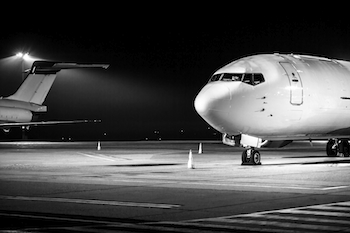
Practical improvements needed in sharing intelligence about flying over conflict zones. (Image credit: annavaczi/iStock)
Recent events including the unprecedented loss of MH370 have highlighted difficulties in tracking and locating aircraft, which have lost contact or are in distress. Airlines and air navigation service providers plan the most appropriate flight routings through international airspace, including operations over conflict zones. Subject to published airspace restrictions, airlines are responsible for deciding where to fly based on comprehensive risk assessments and established safety management systems. The present Notice to Airmen (NOTAM) system remains fit for this purpose, but could benefit from further enhancement.
International civil aviation routinely operates under the direction of ground based air traffic control services throughout all phases of flight, but aircraft operating in oceanic regions and other remote airspace can often be beyond the range of existing surveillance systems, relying on older technologies including periodic position reports made by the flight crew using voice communications. Looking ahead, ICAO has established the Global Air Navigation Plan (GANP) that provides guidance on further capacity and capability enhancements to global air navigation, which will be progressively implemented over the next 15 years.
AAPA has urged governments to collaborate with relevant stakeholders to strengthen and periodically test established procedures to respond effectively to aircraft lost or in distress. It is also calling on aerospace manufacturers to develop improved location and data retrieval systems to expedite the recovery of flight data for accident investigations.
Health pandemics
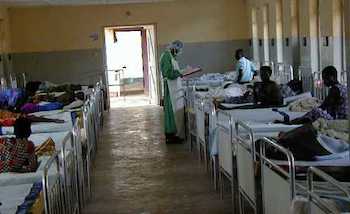
Collaboration and coordination essential in managing potential impact of health pandemics.
In response to the recent Ebola virus outbreak, the World Health Organisation (WHO) recommended that there should be no general ban on international travel or trade, as this could cause unnecessary disruption and economic hardship. However, several countries have imposed measures, such as flight bans and the introduction of more onerous visa requirements by nationals from Ebola-affected countries.
AAPA has called on governments and health authorities to collaborate and coordinate with WHO and other governments in managing the potential impact of health pandemics by focusing collective efforts and resources on fighting the spread of such diseases at source and by properly informing and educating the general public.
Unfair taxation
Airlines and the travelling public today already bear the burden of numerous taxes and charges imposed by governments, as well as those by monopolistic service providers and other agencies. Despite past exhortations, there has been a proliferation of taxes in many countries on air passengers, several of which can be categorised as taxes on the sale or use of international air transport in contravention of ICAO policies on taxation.
AAPA has renewed the call on governments to carefully consider the overall economic effects of putting further financial strain on the travelling public and the aviation industry and to refrain from increasing the burden of aviation levies in any form. The association has also called on governments to adhere to ICAO policies on taxation and ensure all relevant taxation authorities follow such recommendations.
Environment
ICAO is recognised as the most appropriate UN forum for governments to work together and achieve a consensus on an effective multilateral agreement on a global approach to aviation and the environment. As such, governments meeting at ICAO’s 38th Assembly reaffirmed collective aspirational goals and agreed on a comprehensive strategy to progress all elements of the basket of measures: technology, operations, infrastructure and alternative fuels. The air transport industry has also demonstrated its commitment to addressing climate change through a resolution on “Implementation of the Aviation Carbon Neutral Growth Strategy” passed at the 69th IATA Annual General Meeting in 2013.
AAPA urged governments to continue to work in partnership with the air transport industry to develop and implement environmental measures that support sustainable economic growth. The Association also renewed the call to build on the ICAO 38th Assembly consensus and work together to develop a global market based measure for aviation for adoption in 2016 and implementation in 2020. Such a scheme will need to be implemented in a way that is fair and equitable, avoids competitive market distortion, and reconciles the differing interests and perspectives of developed and developing nations.
Passenger facilitation

Cooperative efforts required to enhance travel experience. (Image credit: Tinica/iStock)
Government agencies, including immigration, customs and health departments play a key role in all countries in facilitating the smooth flow of both air passengers and cargo. The development by ICAO of common standards for passenger data, including machine-readable travel documents, has helped expedite the facilitation of international passengers and crew members through border controls.
Cooperative efforts are being made by the aviation industry and other stakeholders to use new technologies, including biometrics and other machine-readable data, to enhance the travel experience and streamline passenger processing. Even with the comprehensive personal information of both crew and passengers transmitted to governments well ahead of travel, airline crews and air travellers continue to be faced with lengthy border processing times on arrival in airports. Several governments have introduced more onerous visa and quasi-visa requirements for passengers, as well as the imposition of additional fees or taxes.
AAPA has called on government agencies to consult widely with the aviation industry in order to maintain a proper balance between national border control objectives and the need for efficient passenger facilitation. Governments need to ensure that sufficient resources are allocated towards both inbound and outbound crew and passenger processing at border controls, taking into account the growth in passenger numbers over time. In addition, governments have been encouraged to extend visa-waiver arrangements, whilst refraining from introducing or increasing visa-related fees, thereby boosting the important contribution of travel and tourism to the wider economy.