In 2050, your self-driving car could go to the drive-through and pick up your coffee as you are just getting out of bed. It could then drive you to the office as you work in the car. You will get an accurate arrival time — because there will not be unpredictable driving with autonomous cars on the road. The car could send your children to school, pick up the shopping you ordered online.
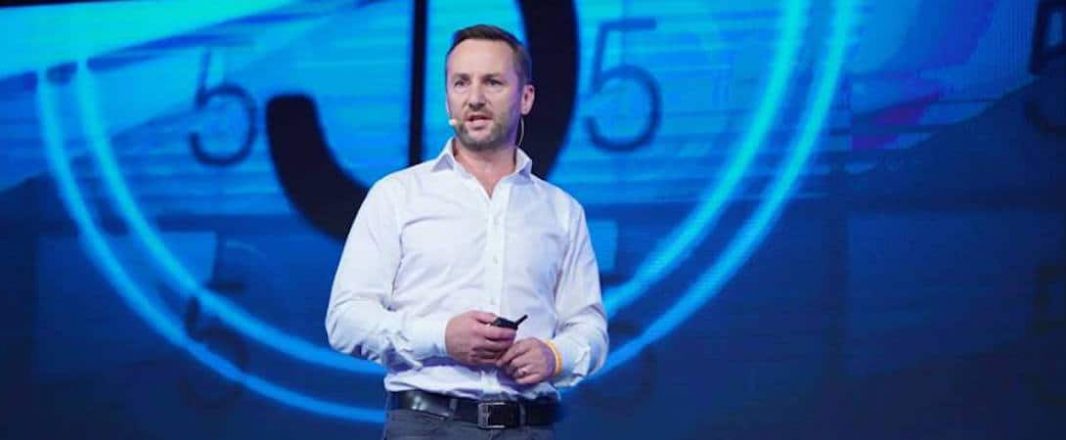
This was the scenario painted by Bobby Healy, CTO of CarTrawler, at day one of the WIT 2017 Conference in his talk on “An Autonomous Future: Will It Create Better Travel?”
“Governments will force the progression of auto driving. Governments will quickly realise it is far better to have these cars on the road,” he said.
These cars will be safer than human drivers, they will not fall asleep behind the wheel and can predict things “a human couldn’t possibly predict”, he said. “For some people, the car could be their homes. This could solve homelessness,” he said. “Teenagers and pre-teens will hang around in autonomous cars.”
Healy rattled off statistics: In 30 years there will be 500 million electric cars globally, that these cars can last longer than current ones, and that by next year, electric cars will be cheaper to manufacture than those with internal combustion engines, halving demand for oil.
Given how autonomous cars will eventually take over the world, Healy said his role is to think about how to protect the overall capital value at CarTrawler and not just to think ahead for the next three or four years.
“Our approach to this is about keeping an eye on technology, getting into all the opportunities that are there. A simple option is an on-demand taxi service,” he said. “Autonomous is coming.”
For example, he said the big bets that were being placed by investors on businesses like Uber or Lyft were not being made on the current business models but in the potential of the data that could be collected, aggregated and used.
“Think in a 10, 20 year time frame how this might affect travel, affect human behaviours. Think about all the possible ways this is going to overlap with airport, traffic, think about how your business would change,” he said.