As a small, independent hotel, it can be quite intimidating to navigate today’s world of hotel marketing and online distribution. What should be enabling can be paralysing for some.
The good news is, as FASTBOOKING details in its latest “Guide for Independent hotels”, “technology is a great facilitator, enabling more control and measurement, giving more access to a greater number of potential guests. Something that only a few could afford just a few years or months ago.”
To help work through the complex ecosystem, FASTBOOKING put together a guide that gives an overview of this ecosystem of partners, systems, software and advertising tools.
“The objective is to provide an overview of the main systems and tools a hotelier can use at the different levels of the online distribution value chain to boost his sales, especially his direct sales.”
WebinTravel brings you an edited version of the guide (Click here for full version)
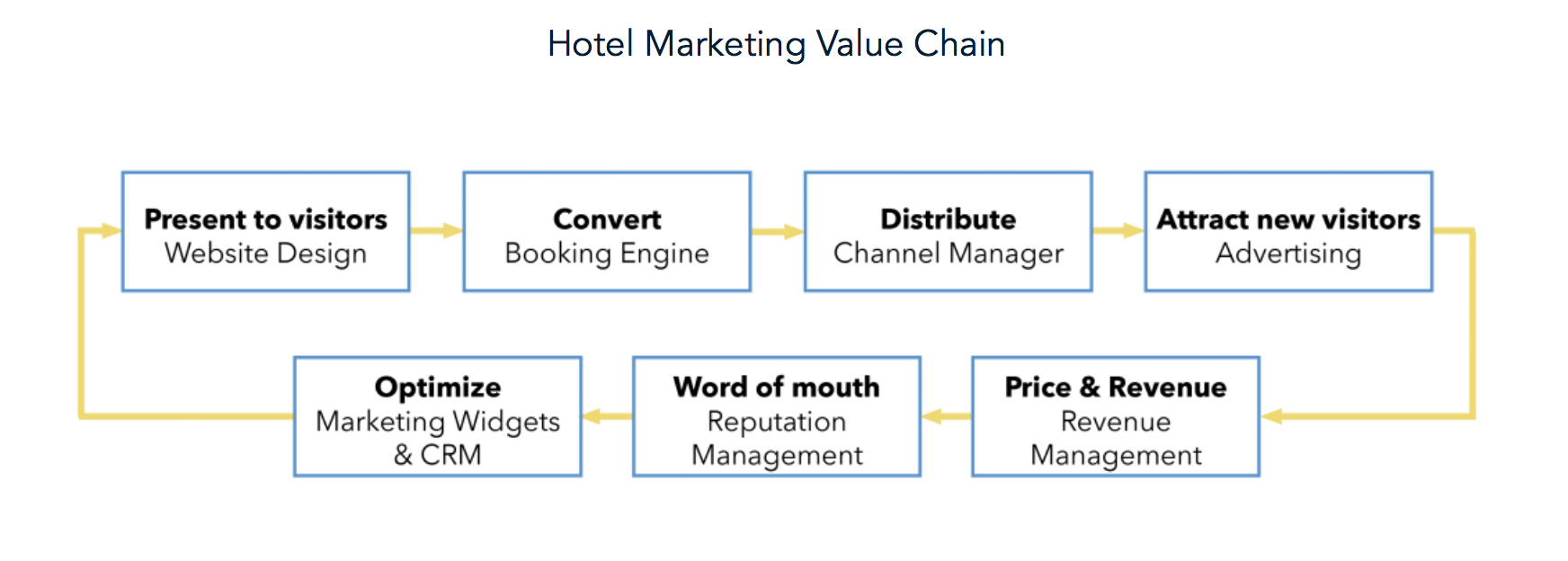
Website design: from visitors to guests
The first step in any hotel marketing strategy, still to this day, is to get a proper hotel website. That may sound redundant but it’s not uncommon to overlook this aspect. What hotels should keep in mind is that the purpose of a hotel website is to generate direct sales, and thus primarily to convert visitors into guests.
As this is one of the (probably) most expensive marketing tool hotels invest in, they have to make sure to have realistic goals in mind when choosing a website design agency. Any website needs to be adapted to new trends and technology every 24 to 36 months, so smaller hotels, hostels or B&Bs with low ADR can consider buying a pre-designed template or choose an online website builder, remembering that changes and updates should be easily and freely done by staff so as not to incur more cost along the way.
Booking Engine: at the end of the funnel
Get the best you can when it comes to booking engines, no matter the size and the prestige of the hotel. There are hundreds of companies out there, so it can be frustrating to find the right one, but the basic feature listed below cannot be overlooked.
Some things you need to look for in a booking engine:
- Frictionless navigation
- Low page load time (we recommend under 2 seconds)
- Integration and 2-way-certified connection with other tools (PMS, Channel Manager, Revenue Management Software, CRS, etc.)
- Security of servers
- Extensive languages and currencies availability
- Metasearch integration
- Optimized UX for mobile devices
- Design consistency with web site
- Easy to create promotions
- Geo-targeted dynamic pricing
Channel Manager: “What is essential is invisible to the eye”
As Channel Managers are pretty much invisible to the final guest, they have no impact whatsoever on conversion, but they’re crucial to correctly distribute room inventory and rates amongst the different channels, including the direct channel. Reliability should certainly be the number one attribute of a Channel Manager as the tool is at the heart of the revenue management strategy of the hotel. Certified connections with both the Booking Engine and the PMS are key factors when choosing a Channel Manager. It could be a good idea to opt for a 2-in-1 solution (Channel Manager and Booking Engine). The system’s reach is another very important factor consider: closely look at the number of connectable OTAs and, most importantly, make sure that those OTAs fit your strategy.
Search Engine Optimisation (SEO)
Search engine optimisation in 2017 is all about pertinence and good practices, so it’s almost impossible to rank better on specific keywords by cheating Google. That being said, SEO is a game mainly played in the code of your website, so when choosing a web agency, it is advisable to check some of their works to understand how they deal with optimisation. Design can look great but that’s not enough to be correctly ranked.
Although slightly declining, SEO is still an important source of traffic for hotels: at FASTBOOKING we have measured that 48% of the bookings coming from search are direct result of a proper SEO strategy.
Search Engine Advertising (SEA)
Search Engine Advertising (Google Adwords, BingAds, Yandex Direct, etc.) is the perfect way to boost website sessions and increase direct revenue for all hotel sizes. Approaches can be very different though, so it’s important to have clear KPIs in mind when working out a SEA strategy. As a general rule, just like with SEO, the smaller the hotel, the more it should focus on basic, high return campaigns: brand protection and remarketing on the countries that generate the highest revenue is a great place to start.
Metasearch ads: Focus on what really works
Metasearch has been the “Next Big Thing” in hospitality for the last five years. On the other hand, it’s easy to lose control of the spending when it comes to this kind of advertising. Smaller properties need to look at acquisition costs more closely. In our experience, Cost-Per-Acquisition (CPA) for metasearch bookings should not be over 12%-15%, unless the strategy is more brand-oriented then ROI oriented, so we suggest to review budget caps and analyse ROI on a regular basis. Almost all booking engines offer native connections to the main metasearch with a little setup fee. Small hotels can stick with TripAdvisor CPC and/or Instant Booking (we do suggest the latest for low ADR properties), Trivago and Google Hotel Ads, while bigger hotels can extend their reach to channels like SkyScanner, WeGo, Hotels Combined and Kayak. For them, a Metasearch Advertising Platform comes handy when one is running campaigns on several Metasearch channels at once, and it becomes essential when one is managing them for a group of several properties.
Revenue/Yield Management Softwares: the right price to the right guest
There’s not much else to say about revenue management, as it’s probably the most written about subject in the industry, but in later years a lot of the human work behind yield has been automated.
Smaller hotels that do not need a full revenue management tool may consider using a stand alone Rate Shopping tool. Easy to implement and easy to use tools will provide them with a good visibility of their competitors pricing strategies and enable them to quickly react to a change of competitive environment and ensure their direct channel is always competitive.
Reviews: Where a booking can be won… or lost
Despite the advent of the Internet and online bookings being one of the biggest sources of revenue for hotels, word of mouth and reputation is still one of the most important factors in hotel marketing. Not all review sites are equal. TripAdvisor is currently the leader and the most influential review site, but that doesn’t mean the others should be ignored.
Small hotels with an average volume of reviews won’t probably need more than the review site back offices and an excel file, so no extra costs involved. But when it comes to bigger hotels a reputation management tool is a very effective and time-saving option. They are usually not very expensive, easy to connect and goldmine for data analysis.