They are small and they are unique. And they are finding their niche in an overcrowded space that sees new and perhaps more unique properties coming up every other month.
However, what makes the Ambong-Ambong Rainforest Retreat and Ambong Pool Villas in Langkawi, and Ren i Tang and SINKEH in Penang stand out is they were built out of a dream to share a part of the heritage of their location with the world.
Ambong-Ambong is a tropical retreat in the rainforest on Langkawi Island with only 11 units and nine private pool villas overlooking the sea.
Ren i Tang, a heritage inn with 17 rooms located within Penang’s UNESCO World Heritage Site, is the result of a two-year long restoration project on the oldest medical hall in South-east Asia with a 124-year history.
The SINKEH guesthouse is a renovated 19th century Chinese house in the heart of George Town with eight bedrooms. It is closely associated with the arts, with performances, rehearsals, lectures and discussions held there regularly. The SINKEH Residences are a bijoux collection of three Straits-Chinese homes set within an enclave of 13 houses within the UNESCO World Heritage Site.
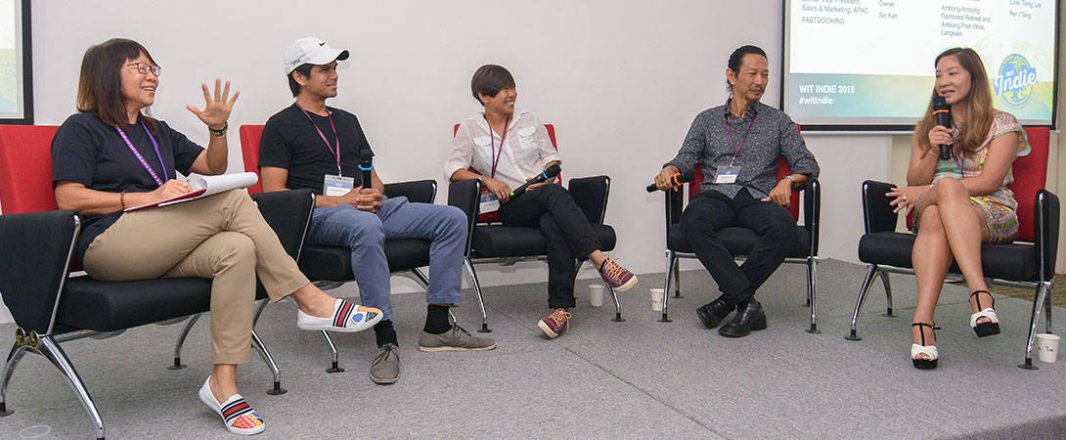
The architects behind these three projects – Amran Ahmed, Low Teng Lei and Chee Sek Thim – were at the recent WIT Indie in Penang to share the story of how they built their dream hotel.
Why they choose what they built
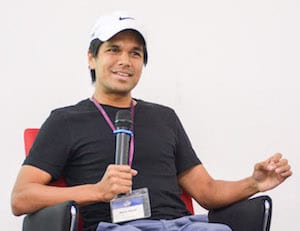 For Amran Ahmed (pictured left) of Ambong-Ambong Rainforest Retreat and Ambong Pool Villas, the family-run business was set up to share his childhood experience with visitors to the popular island, known as the ‘jewel of Kedah’ (northern Malaysian state).
He recalled growing up with his brother in a family that instilled in them, from a very young age, the appreciation of nature in a natural environment. “We grew up living by a river, on a hill by the sea and surrounded by the jungle. This was in the mid-80s. My father had a piece of land in Langkawi, and at that time there was nothing, no electricity supply and we had to get water from a well.”
Thirty years later they decided to share their experience with the world. “Thus Ambong Ambong was born – recreating our childhood experience of Langkawi for travellers, but with water and electricity”, he said with a laugh.
For both Low Teng Lei of Ren i Tang and SINKEH’s Chee Sek Thim it was sharing Penang’s rich heritage and the stories that the properties still carry with them.
Overcoming challenges along the way
 Few dreams can be achieved without obstacles, bureaucracy being one of them.
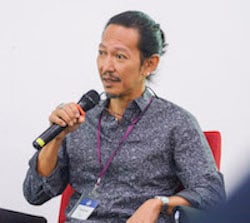
Chee (pictured right), who was involved in the construction of a hotel for the first time, was overwhelmed by the bureaucratic process like getting permits from council to start the SINKEH project. “It took me four years,” he recalled.
For Low, it was the same length of time to get approval for Ren i Tang. “Regulations were the hardest thing.”
Amran, who has both an engineering and banking background, said nothing he learnt from these two industries prepared him for the “shock of actually working hands on at a construction site”.
As Ambong was closely integrated with the rainforest he found it hard to explain the message to the contractors who are used to bulldozing everything at a site. “This part was the most challenging, and I manage to overcome it more or less.”
Doing it their way to fill rooms
While brands spend huge sums of doing research to see if the market want their product, all three did no market research beforehand, clearly believing ‘’if we build, they will come”.
Ambong started out as a hobby, said Amran. “We wanted to build something to share our experience on Langkawi, so it was a learning process as we expanded.”
Low too did not any market research in terms of understanding what the customer wants from Ren i Tang. “We figured it out along the way.”
For SINKEH, it was growing organically. Friends rallied to help and give tips on how to get things going. Institutes sent in bookings with and foundations lent a helping hand. “Everybody came together and started helping out and passed the word around. So we grew organically. It’s the clients rather than us who define what we want to target in the first place,” said Chee.
Biggest mistake made by independent hotels
 On what is the biggest mistake independent hotels tend to make, Christine Tan of Fastbooking (pictured right) pointed out their lack of interest in investing in website or traffic acquisition.
“They have spent some much money building their hotel, getting all the expensive furniture and furnishings but when it comes to investing in website or traffic acquisition to drive traffic to their property most of them will tell you they have no budget.”
She stressed that it was important for small independent hotels to drive traffic to their property, and they need to look at traffic acquisition to do this – a key strategy to increase business.
Selling their dream through word of mouth
All three rely mainly on word of mouth, with a little help from social media.
Amran also sees channels like TripAdvisor as a platform for word of mouth. “It need not have to come from friends or someone you know. Another person who comes across a genuine personal review and the quality of the review on TripAdvisor of our property – that works for me too.”
Said Low, “Guests enjoy the experience and tell their friends about the product.”
For Chee it is the community support, and Airbnb which has worked well for him, as well as his website.
Tan suggested that the best traffic acquisition techniques that independent hotels needs to do – is to be visible on Google search engine marketing (need to come on top), Google Hotel Ad meta-search (use a platform for metasearch to make sure you are on the front page) and Display Ads re-marketing.
Differentiating in this competitive market
Amran cited Ambong’s service standard. “Being a very small hotel with only 11 rooms and nine villas, it’s the level of service our staff provides. Something that comes from within, a sense of belonging our staff have in the place that enables them to deliver that level of service.”
 Low (pictured left) said Ren i Teng itself has a very interesting story. “It’s the oldest medical hall in South-east Asia, the last tenant was there for 124 years. When you walk in, you already have the story. People love stories, they remember the story. We tell them the story and we have them on our menu, they get to know about it, they are curious and want to know more about the heritage.”
She infuses the story into the experiences the hotel provides such as providing herbal baths and herbal soups.
SINKEH infuses arts into the hotel. “We have a season of theatre performance usually at the end of the year for three to four months. We have performances every weekend. In addition, all our staff (three) work in theatre, so we have a dancer, actor and producer who clean the rooms and does work around the hotel.
And to round up their stories they were asked a fun question – “If I were to build the next hotel it would be”:
Ambong’s Amran: Floating
Ren i Teng’s Low: In the jungle
SINKEH’s Chee: One-room hotel
Fastbooking’s Tan: Would love to build a Nikoi-like resort. Think it’s fascinating but I don’t have Andrew’s (Dixon) type of money but it will be like a boutique, a fusion between the new and the old, gives really great technology, internet always working with personalised experience.
•Featured image (L-R): WIT’s Yeoh Siew Hoon, Ambong Ambong’s Amran Ahmed, Ren i Teng’s Low Teng Lei, SINKEH’s Chee Sek Thim, Fastbooking’s Christine Tan