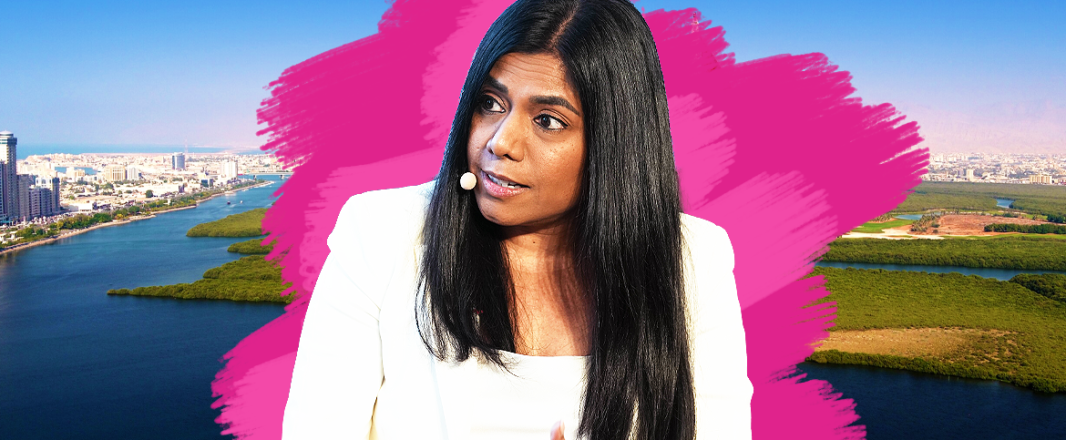
“Tom Hardy, please come to RAK”
In a travel world defined by five-second attention spans, DMOs can no longer afford to simply “broadcast and hope.”
Speaking at Phocuswright WiT Middle East, Alka Winter, Vice President of Destination Marketing & Communications at Ras Al Khaimah Tourism Development Authority, shared how her team is reshaping storytelling, embracing data, and focusing on relevance in an age of short-form obsession and AI-driven behaviour.
Branding the destination like a hotel
Having spent 18 years in hospitality before joining the DMO five years ago, Winter brings a hotelier’s instinct to destination strategy.
“I still consider myself a hotelier,” she said. “The brand is the North Star. Just like hotels build identity and guest trust around a brand, a destination must do the same. Everything – from how we communicate to how we behave – must be anchored in that.”
But she also believes DMOs can do more: “We need to spend more time in-destination, listening to what’s being built – the activations, the storytelling, the transformation. Hoteliers are doing amazing things, and we need to tell those stories better.”
The five-second window
Attention is the most fleeting currency in modern marketing.
“You’ve got five seconds before you’re skippable,” said Winter. “It’s not about long narratives anymore, it’s about relevance and targeting. That’s where AI comes in.”
Her team uses AI to optimize creatives, crafting short bursts of content tailored to individual passions — be it hiking, archaeology, or beach escapes.
She also questioned some of the legacy tools of DMOs. “This might be controversial, but the DMO website is becoming overrated. People don’t dream on a website, they dream on social. They get inspired on OTAs, social feeds, short videos. That’s where discovery starts.”
Still, she sees a role for the website, not as a source of inspiration, but as a structured content hub that feeds AI and search algorithms.
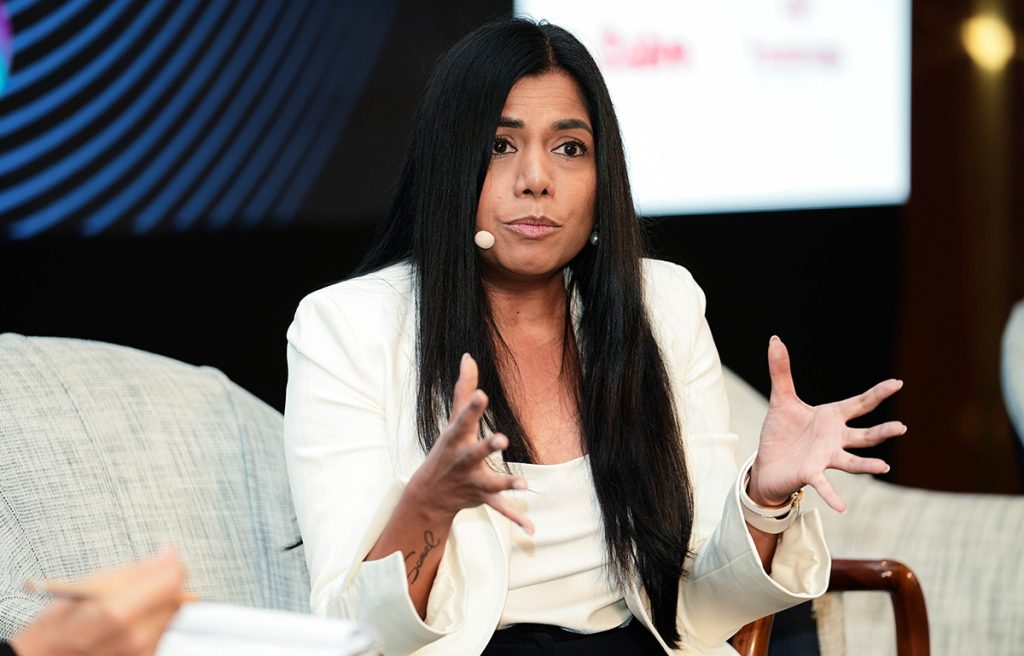
“I still consider myself a hotelier,” says Alka Winter, Vice President of Destination Marketing & Communications at Ras Al Khaimah Tourism Development Authority. “The brand is the North Star. Just like hotels build identity and guest trust around a brand, a destination must do the same. Everything – from how we communicate to how we behave – must be anchored in that.”
Becoming behavioural scientists
One of Winter’s top priorities for 2025? Becoming a better behavioural scientist.
“With AI evolving beyond chatbots into digital agents, imagine building digital twins of your audiences. I want to market to UK couples – what if I could ask their digital twin, ‘What are your barriers? What are your hesitations?’ That’s the next level of insight.”
She acknowledged that most destination data today is still “near-time,” not real-time. Her dream is dynamic targeting based on live behaviours and decisions, not assumptions.
Data in action
Winter shared how Ras Al Khaimah markets in over 20 countries but varies its approach by consumer behaviour.
For example, in India – where travel planning is often short-term – they saw that 81% of visitors book within a month of searching. That insight helped the team run tighter, more efficient campaigns.
In contrast, the Russian market takes longer – up to 2–3 months – influenced by currency fluctuations and HR processes. “So we stretch those campaigns and optimize timing,” she said. “It’s about being precise with limited budgets.”
Influencing with intention
Influencer marketing remains a major strategy, but engagement is the North Star, not follower count.
“MrBeast has millions of followers, but he doesn’t fit our brand,” she said. “We work with niche creators in culture, food, history, people who align with who we are.”
One innovative tactic for summer: inviting past influencers to repurpose old content in exchange for re-engagement, a way to extend value from existing relationships and assets.
On virtual influencers, however, Winter was cautious. “Travel is so visceral, so human. We explored it, but it felt contradictory. I get the ROI, but it’s not for us – at least not now.”
Who visits RAK?
In 2024, Ras Al Khaimah welcomed 1.2 million visitors, the highest ever. The emirate targets families from Eastern Europe, premium travellers from the U.S. and China, and works closely with hotel partners like Ritz-Carlton to shape market-specific campaigns.
And for now, over-tourism isn’t a concern. “We’re under half a million in population, with plenty of space. It’s one of our strengths.”
And if She could invite one influencer…?
“Tom Hardy,” she said without missing a beat. “He loves dogs and we’re a pet-friendly destination. Plus, he’s gritty, grounded, and just cool. I think he’d love it here.”