
THERE is a new dancer in Bali – and it’s not a beautiful Balinese lady performing the Kecak dance.
Launching 17 November, Bali Dancer NFT (non-fungible token) is a digital asset that works as a membership card and assists tourists in premium clubs, restaurants, cafes and tourist spots in Bali. The holder of the card receives privileged bookings, access to exclusive events and special discounts at locations in Bali.
The Bali Dancer community is expected to reach over 8000 ‘explorers’ from countries including Australia, the UK, Canada, Japan, China, India, and Russia.
A Web 3.0 company, Bali Dancer NFT said the $400 digital membership will also provide discounts at more than 300 locations throughout Bali.
Not everyone is happy with travel apps
By Kathryn Walson/Phocuswire
Travel and hospitality apps have room for improvement when it comes to user satisfaction, according to a recent global survey by IT consulting firm Applause. Of the 5,000 respondents, 37% say apps have not been helpful in managing recent travel challenges, such as rebooking cancelled flights and finding last-minute accommodations. Twenty percent report feeling somewhat or very dissatisfied with their app experiences.
“When plans change and travellers need to adjust mid-trip, it’s crucial that apps help them efficiently and quickly manage those changes,” Jennifer Waltner, Applause’s global content marketing manager, says in a blog post.
Survey respondents report having the following problems with apps:
- Being unable to find the information they were looking for (18%)
- Very slow response times (13%)
- Localisation problems (12%)
- Difficulty using payment sources (11%)
When asked what they see as the most important features of a travel and hospitality app, travellers point to the following criteria:
- Helps keep all information in one place: 18%
- Connects well to payment devices: 16%
- Sends texts for reminders, updates or changes (travel times, cancellations, reservation times): 15%
- Provides a seamless, intuitive experience: 14%
- Feels secure; info is protected: 14%
Source: Phocuswire
More than a token offer at HKIA
Hong Kong residents can now complete their entire departure process at different checkpoints of Hong Kong International Airport (HKIA), including immigration departure procedures, by Flight Token.
Hong Kong residents checking in their flights using the Smart Check-in kiosks no longer have to produce their identity documents repeatedly when they pass through different checkpoints at the airport.
Other passport holders can still use the Flight Token except for the immigration departure clearance checkpoint.
A single step towards new airport security design
Monash University’s Design Health Collab in Australia has partnered with Australian tech company Micro-X to improve airport security checkpoint processes across the United States. The US Department of Homeland Security has awarded a contract to Micro-X to create and test a compact self-screening concept which streamlines the security processing into a single step.
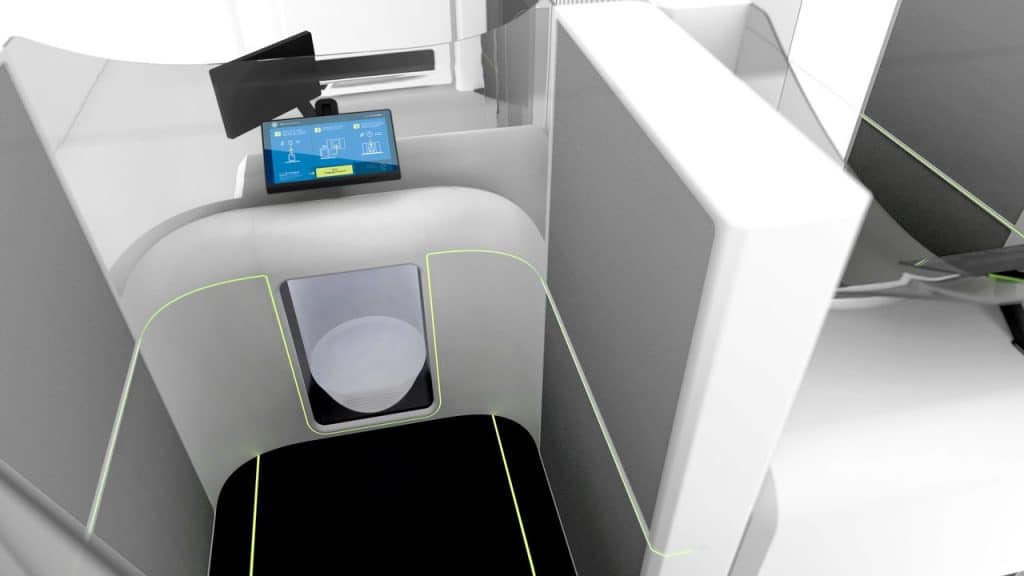
The self-screening security checkpoint being developed by Australia’s’ Monash University.
The integrated system allows the scanning of passengers and their possessions to be conducted simultaneously, while meeting the strict safeguards of travel security. The design also utilises a much smaller CT scanning system than those currently used in airports, allowing more checkpoints to operate, reducing queues and frustrating bottlenecks.
Monash lead design researcher Dr Nyein Chan Aung said the implementation of the new imaging technologies could transform the airport security experience for both travellers and staff. “This new system design reconsiders every element to serve the user, including the industrial design, floor plan layout, lighting, ergonomics, materials and user interfaces,” he said.
The new design will also offer a ‘pre-warning’ prompt that will alert passengers of forgotten objects in their pockets so they can avoid nuisance alarms when the on-person screening is conducted.