Nobody who travels to Bhutan leaves unaffected by the magic of this mountain kingdom in the Himalayas and Singapore-based travel executive Joni Herison is no exception.
Herison first heard of Bhutan in 1997 when he was in Nepal on a university trekking trip to Annapurna. “People on the trip were talking about this place and that was my first understanding of it. It made me want to go.”
In 2008, he got the chance. Then working in banking on the IT side in Singapore, he had a friend who ran a travel agency and he asked Herison if he wanted to start a company focusing on trips to the Himalayas. The pair went on a familiarisation trip to Bhutan and started working on the idea.
“Unfortunately it didn’t turn out. Things went bad and in 2009, I returned to Bhutan to apologise to our partners for the troubles we had caused. Instead of being angry with me, they asked me to continue with the business,” said Herison.
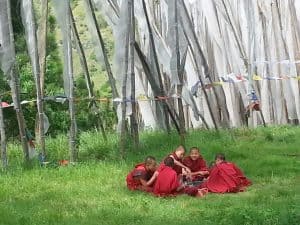
“It’s a very beautiful place, a magical land.”
Already inspired from his first trip – “it’s a very beautiful place, a magical land” – this unexpected encouragement motivated him further. “I thought if I can pay the rent with the business, I’d be happy but if it didn’t, I’d find another way to pay the rent. The ulterior motive was so I could continue to travel to Bhutan,” he laughed.
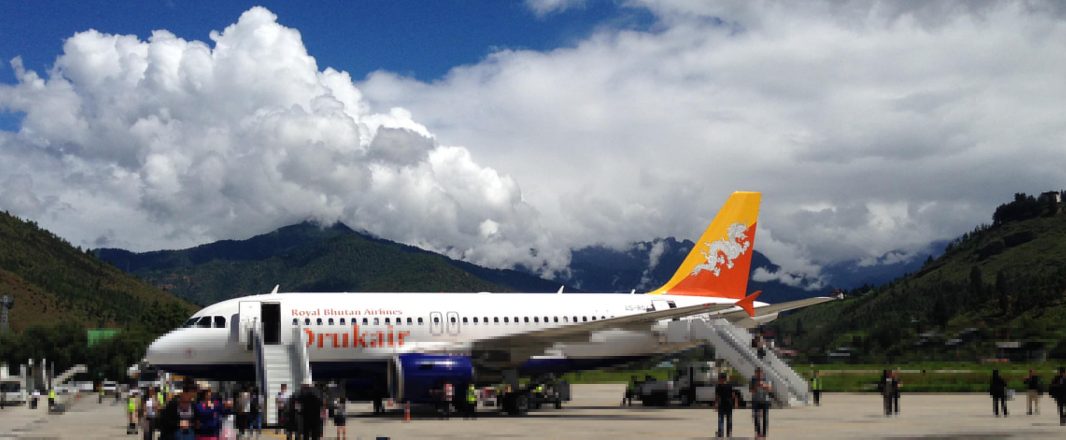
Today, Herison runs DrukAsia, a Bhutan Travel Specialist which is also the Singapore Representative for Drukair, Royal Bhutan Airlines.
His desire is to help Singaporeans travel to this destination called “The Land of Happiness” because of its unique policy of measuring development with a Gross National Happiness Index instead of traditional economic means.
“There’s a general feel of peace there and its scenery is truly majestic,” said Herison. “It’s also a very different culture – very different from Singapore’s yet in so many ways there are similarities. For example, they speak English, they use lahs a lot and they eat a lot of chillies.”
Travel from Singapore to Bhutan is in its infancy – each year, about 2,000 make the trip. He works with travel agencies to promote Bhutan and teaches them how to sell the product.
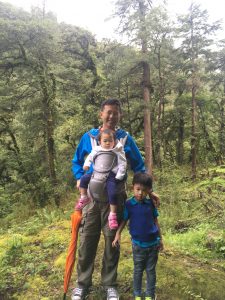
Herison and his kids, Laura and Nigel, hiking in Bhutan.
There are two misconceptions he wants to correct about Bhutan, the first being that there is a limit to the number of visitors. “It used to be 5,000 a year up to 1999 and that limit was abolished. Now the only limit is aircraft capacity.”
The other misconception is that Bhutan is expensive, which Herison says it is not. “The US$250 per day price you pay for a package includes $65 which goes to the government while the rest covers the guide, accommodation and meals, so it’s not that expensive.”
Relative to other destinations, air fares are more expensive due to limited capacity. DrukAir flies three times weekly from Singapore, offering 330 seats a week. Flights achieve about 65% load factor.
It flies daily from Bangkok and Kathmandu – and there are a total of 200,000 seats a year into Bhutan. Compare that with 180,000 seats a day to Changi and 30,000 visitors to Sentosa a day, and you get the idea of how limited the capacity to Bhutan is.
“Technically, any airline can fly to Bhutan but the challenge is the landing, which is totally visual. Pilots have to be trained to land in Bhutan and for our captains, it takes them six months to get used to the landing,” said Herison.
Last year, Bhutan received 48,800 visitors, a drop of 20% largely due to the earthquake in Nepal but demand has stabilised this year, said Herison.

Herison (far right) with Changi Airport and Drukair executives in Thimpu
The bulk of its visitors come overland from India and their numbers often pose a strain on Bhutan’s limited tourism infrastructure especially at popular tourist sites like Tiger’s Nest which can get over-crowded during peak times.
The best thing about promoting Bhutan is the high customer satisfaction score. “We get the best testimonials, a 95% satisfaction rate. Out of the 95%, 40% will write and thank us for arranging the trip. People want to talk about it. The most positive comments are about the guides and drivers.”
Herison’s wish is that Bhutan manages its tourism capacity well and strikes a good balance between international and regional tourists who are not subject to the $250 per day minimum package.
Asked how Bhutan has changed him, he said, “It’s hard to put a finger to it. The people you meet through Bhutan are fascinating. They are all very successful in their careers and very inspiring people. A lot of my customers have become friends and we work on various social causes together. People who go to Bhutan are usually widely travelled.”
DrukAsia has eight staff, two of whom are Bhutanese and that helps to bridge the gap with Bhutan’s “stretchable time” and Singapore’s “fast pace”.
Above all, Herison has great admiration for Bhutan’s GNH policy, which was crystallised by the fourth King of Bhutan. “It’s not just a marketing tool, they really live it. It shows great foresight to have implemented this in the constitution in the 70s before there was talk of climate change and now Bhutan is benefitting from this foresight.”
The four pillars are Good Governance, Sustainable Socio-economic Development, Preservation and Promotion of Culture and Environmental Conservation.
“Where else do you have a country that says 60% of your land must be preserved and every FDI needs to go through the GNH committee to be approved?”
*Destination Bhutan will be featured at the WIT Conference, Oct 17-19, as an example of a destination that has reimagined itself through happiness.