



At the final Travel Tech Thursdays edition of 2025, held at Wego’s Kuala Lumpur office, three industry veterans sat down for a deeply practical (sometimes comedic) conversation about building, breaking, and rebuilding travel businesses.
Over an hour, Chan Chee Chong (CC), CEO & Co-Founder of GlobalTix; Craig Hewett, Co-Founder & Chief Hotels Officer at Wego; and Nicholas Cocks, Principal at Velocity Ventures, traced two decades of lessons including how founders survive, raise money, partner smartly, and prepare for a changing ecosystem.
Starting up ahead of the curve
CC opened with the origin story of GlobalTix, remembering how he came from the airline world where “the air industry ran on digital tickets, so I thought tourism activities would also move to e-tickets. I was about three years too early.”
Convincing attractions to ditch paper wasn’t easy. “It took a lot of effort to persuade all the attractions to use e-tickets,” he said. But when Singapore Airlines adopted their tech, “it really helped open doors in many places,” CC added.
Still, even with a working product, cash flow nearly crushed them. “Sometimes you have business, but you also need to watch out for your cash flow,” CC reminded the crowd.

Chan Chee Chong, CEO and co-founder of GlobalTix: “I refused to give up on my first idea. But if you keep doing the same thing and nobody’s buying, it’s probably not working.”
Wego’s Craig Hewitt had a similar “early market” story. “We started Wego in 2005, our 20th anniversary this year,” he said. At the time, “the ecosystem didn’t exist; no startup scene, no VCs, no cloud, no payment options. Everything was mainframe and desktop.”
They modeled Wego on Kayak, assuming US players would never expand into Southeast Asia. “We didn’t account for the fact that eight years later, mobile apps, cloud computing and global payments would flatten the world,” he admitted.
They also misjudged local readiness. “We brought meta-search into Southeast Asia when there were hardly any OTAs. We were five years too early.”
His key lesson is pretty simple. “You’ve got to understand where the market is.”
The art of stubbornness
How long should founders stay stubborn before pivoting? It’s an age-old question and one that probably has no clear answer.
“I refused to give up on my first idea,” CC said. “But if you keep doing the same thing and nobody’s buying, it’s probably not working.”
Success arrived the moment he reframed the pitch. “Attractions kept asking me, ‘How many tickets can you sell for me?’ So I pivoted and said, okay, I’ll sell 100,000 for you, then you consider my system. Suddenly the business started coming in.”
Craig agreed that stubbornness delayed Wego’s early growth. “We tried to force the Kayak product into Indonesia and didn’t adapt quickly enough. We were too stubborn.”
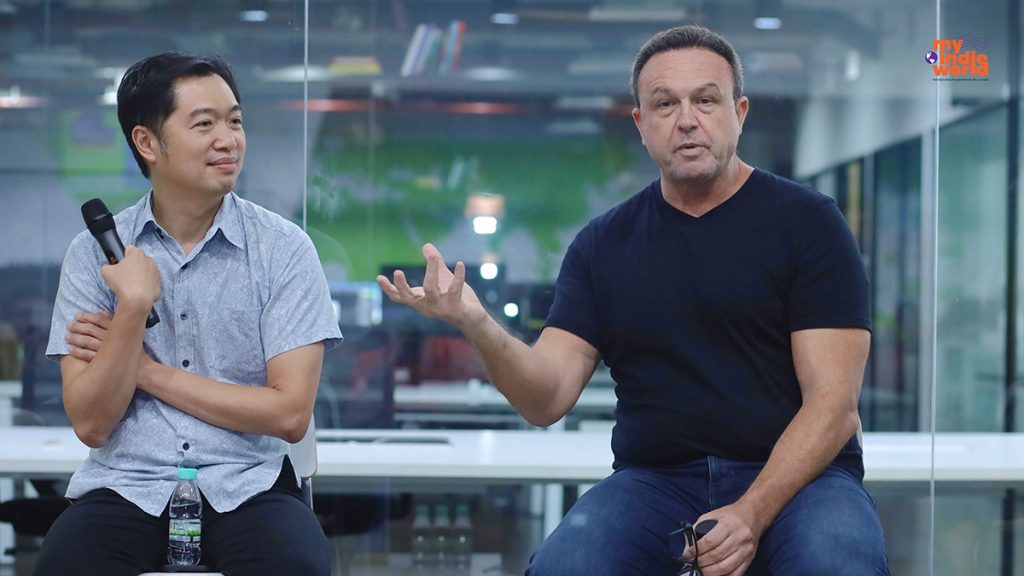
Craig Hewett, Co-Founder & Chief Hotels Officer at Wego: “We brought meta-search into Southeast Asia when there were hardly any OTAs. We were five years too early.”
Traveloka, famously, seized the opening. “They pivoted very fast into becoming an OTA. They understood the market better, and they own Indonesia today,” said Craig.
“The turning point for us is we went against the grain with our investors who had invested in us for Southeast Asia, while we decided to get a double down in Middle East,” said Craig. “We took our marketing span and bought billboards in Dubai to show that we were a local brand. That was a really big investment and a risk for us because we went against the board, but it was the right risk because we’re the founders. We have better intuition.
“Now all our investors are incredibly happy because we did that. We’re a household name in the Middle East, well regarded in Saudi and UAE, and we’re very, very profitable in that region.”
Are we in a fundraising winter?
When the discussion turned to funding in 2026, Nicholas didn’t mince words: “In our industry, there’s only one word and that’s exit.”
VCs, he said, are under unprecedented pressure. “Investors are leaning on us heavily saying, where are the returns?”
The lack of exits in Southeast Asia is hitting confidence. “There hasn’t been enough exit activity to say ‘here are examples of great returns’.”
“There’s been a real liquidity crunch”, said Craig, before emphasising that “this is the worst period in the last seven years.”
“Avoid VCs for now,” advised Craig. “Unless you are a more mature-stage business where you’ve got Predictable Revenue. Otherwise, their terms will be horrendous. Look to angels, accelerators, government grants, tax incentives, high-net-worth individuals and family offices.”
CC echoed that sentiment by saying, “B2B in Asia is almost impossible to raise for, nobody was interested until suddenly Europe and the US made B2B sexy again.”
Meanwhile, Nicholas also warned founders to understand the strings attached. “Think about the hooks that come with the money. Ask VCs when their fund life expires because that’s when they will force you into an exit.”
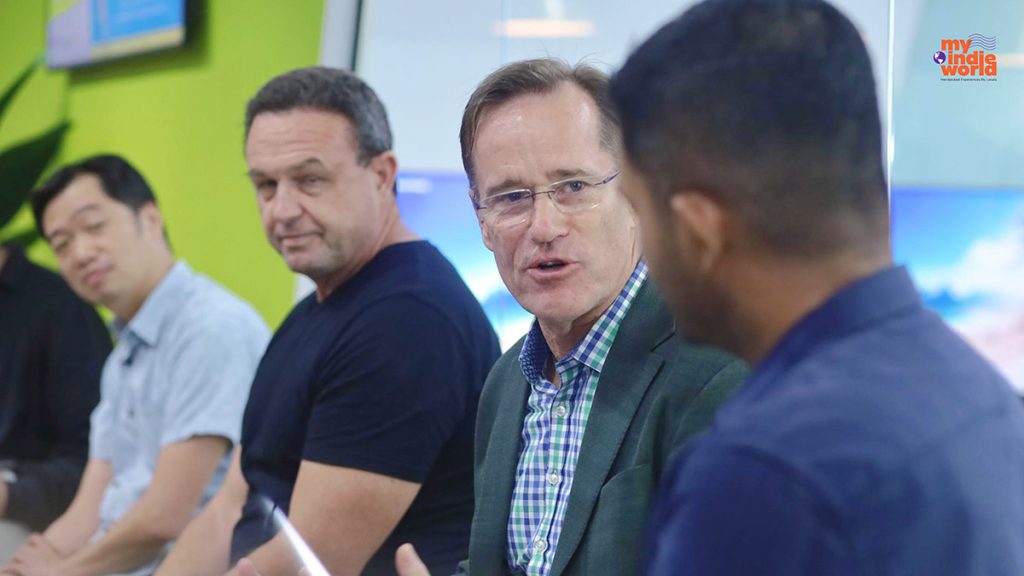
Nicholas Cocks, Principal at Velocity Ventures: “In our industry, there’s only one word and that’s exit.”
Overhyped, underhyped, or just beginning?
You can’t have a conversation about anything these days without factoring in AI. Not surprisingly, AI dominated the second half of the session, especially its role in distribution and discovery.
CC illustrated the impact simply by saying, “I asked ChatGPT about a private onsen in Japan, which none of the OTAs could tell me, even Google couldn’t tell me, but ChatGPT could. It’s underhyped and overvalued, but AI will change the world way more than we think.”
Craig agreed that monetisation models will shift dramatically because “Agentic AI will go direct to supply when it comes to airlines and hotels. Marketplaces and meta-search will be under pressure.”
Nicholas, however, struck a more balanced tone. “AI is about right. Not overhyped, not underhyped. But too many founders are forcing AI into their decks just to raise money.”
Opportunities in day tours, events, social commerce and inspiration
When asked where the biggest opportunities lie in 2026, CC didn’t hesitate. “Day tours remain incredibly messy. If you can compare day tours across OTAs effectively, that’s a huge opportunity.” He pointed out that the demand side is fragmented too. “In China, the number one ticket seller today is Tiktok. Everyone is trying to crack social media distribution.”
Events are another goldmine, and even moreso if someone can solve supply fragmentation. “Everyone wants events and shows but Ticketmaster holds the power, and every mega event is individually negotiated.”
“Partnerships are our fastest-growing business at Expedia and Wego, added Craig, emphasising partnerships and distribution. “Everyone is friends and enemies, or ‘frenemies’, in travel.”
“There’s still a disconnect between social media and booking and that’s a big problem to be solved,” chimed in Nicholas, who also sees the creator economy reshaping inspiration and booking. He used Tripbtoz as an example, a Korean OTA they invested in, saying “Their OTA is 100% user-generated and influencer-generated content with no supplier photos at all.”

For the second half of November’s Travel Tech Thursdays, all three panelists doubled up as judges for an Open Mic Startup Pitch session
Partnerships are the quiet growth engine
Throughout the discussion, partnerships emerged as a recurring theme.
Craig highlighted how Wego built credibility early. “Working with Yahoo, MSN and News.com gave us instant validation… and traffic we couldn’t afford.” Today, Wego partners with banks, OTAs, car rental companies and even rivals. “Everyone works with everyone. Partnerships allow us to scale with low risk.”
CC added that in travel, “everybody is a partner to us.” But he warned about trust in cross-border bookings, highlighting that “Consumers still rely on big merchants of record because they’re afraid of fake bookings.”
“Everyone sells travel now – banks, card issuers, insurance companies, said Nicholas, noting a broader shift. “Access to content via API has changed the game.”
If Travel Tech Thursdays 2025’s final edition had one takeaway, it’s this: the travel industry’s next decade belongs to founders who stay adaptable, stay lean, choose partners wisely and harness AI not as a buzzword, but as a true problem-solver.
Or, to borrow CC’s mantra, “Every time there’s a problem, it’s really an opportunity as well.”


