
David Gunnarsson does not waste words. The CEO of Dohop, the Icelandic travel technology company that has spent two decades solving one of aviation’s most stubborn problems – how to connect passengers across airlines that do not talk to each other – speaks the way he thinks: directly, precisely, with no detours.
“We never give up,” he says, when I asked what characterises the Icelandic entrepreneur. “For better or worse.”
Sharing the story of Dohop, he said that it started off in 2004 as a consumer-facing metasearch business generating about one to one-and-a-half million dollars in revenue, caught between Kayak on one side and Skyscanner on the other, trying to compete at scale from a country with a population smaller than most cities.
He took over as CEO in 2015 and pivoted it from B2C to its current B2B model. “Meta-search is a scale game,” he says simply. “We lost.”
The pivot that wasn’t really a pivot
What it didn’t lose though was actually the core idea behind Dohop, on which its early identity was built – that getting a passenger from any point A to any point B, via any point C, should be technically solvable, regardless of which airlines happened to be flying those routes.
That core capability – building connecting journeys between carriers that have no commercial agreements with each other – turned out to be the foundation of what Dohop is currently doubling down on.
When Gunnarsson took the helm, he saw it clearly. “We figured out we had expertise in building connecting journeys. We knew really well how to create a connecting journey from A to B via C.”
The question was who needed that expertise most urgently. The answer, initially, was airports. Secondary airports, in particular, had a connectivity problem. When a new low-cost carrier arrived, it brought no interline agreements, no codeshare partners, no network.
Passengers were limited in their options, if they wanted to fly onto somewhere else. Dohop offered to build the connective tissue. And when EasyJet became part of that early solution in 2015, it opened a door that changed everything. By 2017, Dohop was building the same infrastructure directly for EasyJet as an airline product.
Today, Dohop has 17 airlines live on its platform, with around 20 expected by end of summer. Its airline partners span continents but are concentrated in Europe – EasyJet, Wizzair, Transavia among them. The company processes around 300 million in searches for its airline partners and has powered approximately one million connected passenger trips in the past 12 months. Revenue is close to $20 million. Last year, for the first time in many years, Dohop ran profitably.
“That has been our goal,” Gunnarsson said. “Obviously we’re still a small business. We’ve got 55 people.”
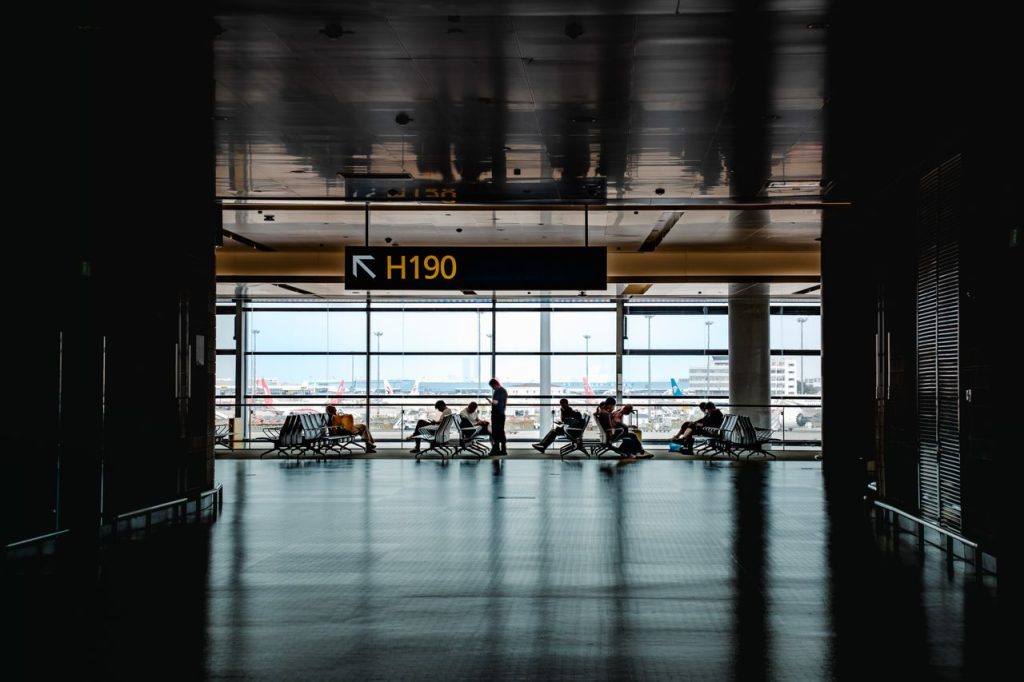
Solving the bag problem
For years, what Dohop was selling was, in its purest form, virtual interlining – connecting passengers across separate airline bookings, but stopping short of transferring their bags.
Dohop spent the last two years engineering its way around the problem. The solution, now deployable, allows Dohop to handle not just the passenger journey but the baggage journey –printing bag tags for the full itinerary across two separate airlines, orchestrating the ground handling, managing what happens when a passenger transits through an airport with no traditional connecting infrastructure.
“Technically, it’s not that hard once you understand what’s required,” Gunnarsson said. “The hardest part is the operational, because a passenger can walk from one aircraft to the other, but the bag needs to be transported, sorted, tagged for the entire journey.”
The complexity multiplies at airports like Gatwick, which have no dedicated connecting facility, or across the fragmented island infrastructure of South-east Asia.
“What we’re working on now – with CityLink and Garuda in Indonesia – is that greater picture, building the marketplace for connected travel.”
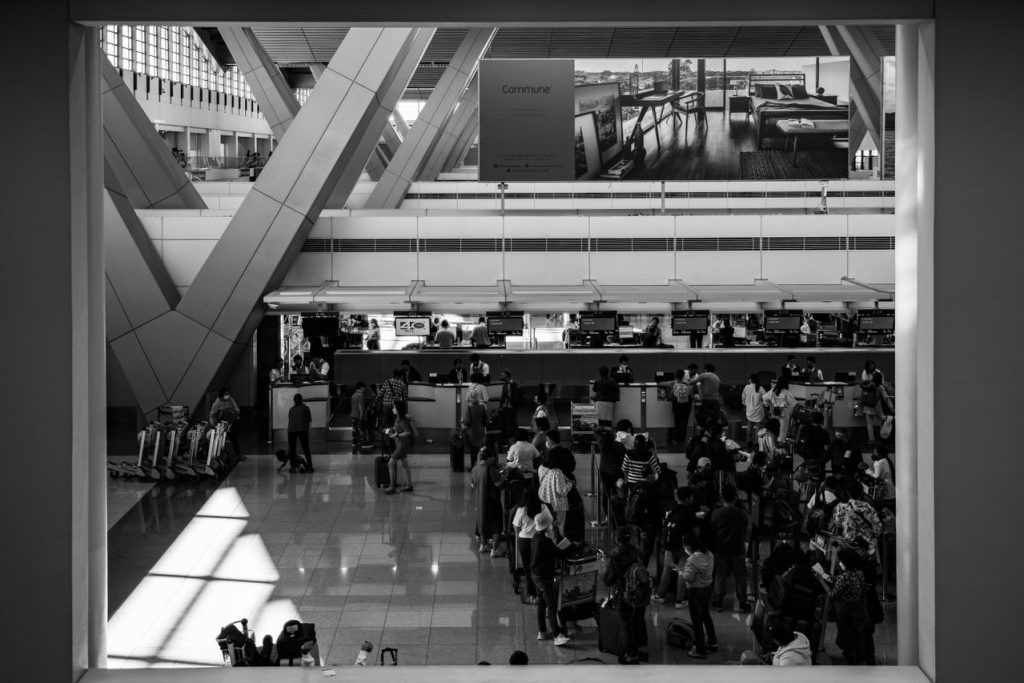
The Asia play, bags and all
Solving the baggage problem is particularly critical for Asia, he said, and armed with the solution, it is now expanding more aggressively into the region, and is due to make several announcements later this month.
The logic is straightforward: low-cost carriers now account for roughly 60% of aviation capacity in Asia Pacific. Most of them have minimal interline connectivity. The region is physically fragmented – island nations, geographically dispersed populations – and therefore structurally dependent on connections, and yet the infrastructure of connected travel remains underdeveloped.
“There are a lot of airlines that need some sort of way into the connected travel market,” Gunnarsson said.
He recognizes the fact that Dohop has to increase its operational and marketing presence in Asia. It currently has one person in Asia, based in Shanghai. “That’s obviously not enough,” he admitted. “We have to figure out how we get the business to the same level of awareness in Asia Pacific that we have in Europe.”
He knows it requires time, relationships, and showing up. “The aviation community is not that big once you get into it. People move between airlines, they know each other, they meet at conferences.”
He mentioned that Dohop signed its agreement to go live with Wizzair after a sales cycle that began in December 2019 – with two years subtracted for COVID. “Two, three, four years. It can take a very long time to sell to airlines. But once you’re in, you’re quite sticky.”

David Gunnarsson, CEO of Dohop: “Technically, it’s not that hard once you understand what’s required. The hardest part is operational, because a passenger can walk from one aircraft to the other, but the bag needs to be transported, sorted, tagged for the entire journey.”
The hidden brand: How to stay relevant in an LLM world
Even though Dohop’s B2B business accounts for two-thirds of its revenue, it still operates a consumer brand called Waya, which sells the connections that airline storefronts cannot or will not. EasyJet will not pair a customer with Ryanair, for instance, but Waya can.
The larger vision Gunnarsson is building toward is a marketplace for connected travel: airlines, rail, bus, any carrier on the supply side; airline storefronts, Waya, third-party APIs, and – critically – LLMs, on the demand side.
“The big change we all see coming is how people start to plan journeys through LLMs,” he said. “We are thinking about that as one part of the demand side of the marketplace. GDSs are not going away. OTAs are not going away. But LLMs are not completely additive – this is closer to a zero-sum game. You’re not creating a market, you’re creating a different way of inspiration, browsing and planning. We must think about how we stay relevant in that context.”

Why Dohop’s mission matters to him
I asked Gunnarsson why – why this problem, this mission, why spend two decades on the plumbing of aviation connectivity?
He said, “The airline world is optimised for passengers going from A to B on direct flights. Airlines used to only decide what places were connected. If two airlines chose not to partner, you couldn’t make the connection as a passenger, and you couldn’t find it in a GDS.
“We’d like to offer passengers the ability to connect between any two points and make their own choices. Not have those choices made by people in network planning. Let’s put every possible choice for a connecting journey in front of a passenger and allow them to choose.”
I suggested that perhaps coming from Iceland – remote, elemental, volcanic, a country where you cannot get anywhere without a connection – might have something to do with it.
He smiled. “That’s probably part of it. I cannot reliably get to Asia without figuring things out. And sixty percent of global aviation capacity is now low-cost. That still needs connectivity in order to enable fair and flexible travel for people across the world.”