
25 years in, Travelstart’s founder is still restless, still betting, and still asking the question: what’s next?
It probably comes from having lived the last 25 years amid the natural landscapes of Cape Town, South Africa. In his interview at WiT Phocuswright Middle East in Barcelona, Stephan Ekbergh described the company he started as “a garden”.
“We can plant any kind of stuff in that garden – it might be apple trees today, but it might be grapes tomorrow,” he said, when asked what he saw as the future for Travelstart, which he and his team have grown into the leading OTA for South Africa.
In actuality, that’s the philosophy that has always guided this entrepreneur – it’s a metaphor for flexibility and recipe for survival.
He called his decision to move from Scandinavia to South Africa an “adventure decision”. “There was nothing strategic about it,” he said. “I owned the business, I could do it, so I did.”
What he found was greenfield, no real tech companies, no established e-commerce infrastructure, nothing to compete with, and nothing to copy from. “Not only did we do travel really well, but we showed the way for all e-commerce type companies there.”
That leap of faith paid off, professionally, and personally.
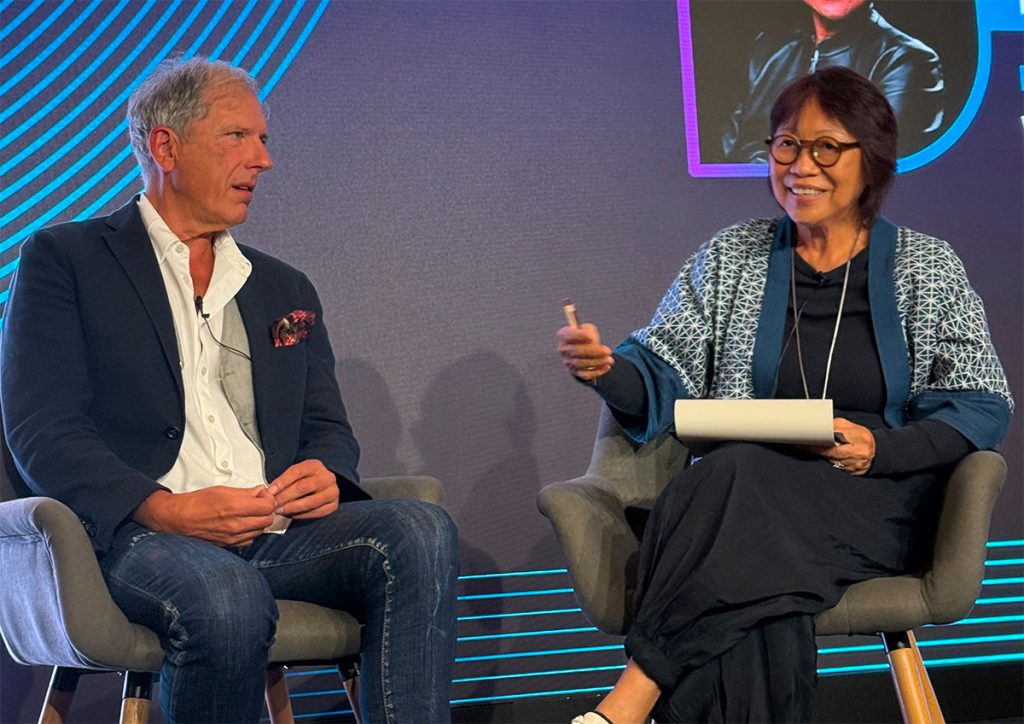
The next leap: Letting go
The leap he has to take now is harder. Travelstart’s next generation is taking over, including his daughters Hannah and Naomi, who are now in the business, and they are asking different questions than the ones that built the company.
“They say nobody is going to book on OTAs in the future,” Ekbergh said. “I mean, we don’t even book on OTAs now.”
The new generation is trying to figure out what comes next. His job, he acknowledged, is to get out of the way. “The biggest leap I have to take now is letting go.”
Browserless, bankless, and the African leapfrog
Africa has a habit of skipping the stages that other markets treat as necessary. It went straight to mobile money, bypassing credit cards. It is going straight to WhatsApp commerce, bypassing browsers. Adebayo Adejiji, CEO of Waka Now, who spoke at WiT Africa in April, had described a browserless future built on conversational commerce.
“When you’re in Nigeria and you have 60 stores, you’re already in a browserless future, because people go straight into their apps,” he said, adding, “I’m praying for a browserless future, because these browsers are just awful.”
Browsers, he believes, are holding business back, and the faster the industry moves past them, the better.
In South Africa too, banks are moving in on travel and launching loyalty programmes around travel, as was shared by Michelle Munemo of Standard Bank at WiT Africa. Ekbergh was pragmatic about that, his company powers the travel offerings of South Africa’s major banks. He sits in their meetings, and what he hears, more often than not, is a conversation about discounting. “I’m not 100% sure I call that loyalty,” he said.
On who wins in 20 years – banks or travel brands – Ekbergh pushed back on the binary. “Both. I don’t think it’s either/or. It can be very distributed.”
His bet is on payments as the binding layer: once payments are properly integrated into travel platforms, the dynamics shift. “When you have this wallet, it becomes very, very valuable. People come back to where their money is.”
Asked which African markets to watch, Ekbergh cited Kenya, Nigeria, South Africa. He likes South Africa because it operates like the Western economies he is used to. Nigeria, on the other hand – “you invest $10, you get zero back. Even if you’re successful, if you’re lucky.” Kenya sits somewhere between the two: high-potential, high-complexity.

Innovation City and the arc of improving ideas
Living up to his philosophy of flexibility and survival, Ekbergh also started Innovation City in Cape Town during the pandemic, when travel stopped. It’s a creative, collaborative hub for tech startups that he has been building for three to four years.
The early days were discouraging. The ideas, he said, looked like startup bootcamp output from 2015: PDFs published online and little else. But the quality is improving, and AI is accelerating development cycles. Some startups have even managed exits. Money is beginning to move through the ecosystem.
The dominant category, still, is fintech. “Most of the stuff in Africa, even in Innovation City, is around payments,” he said. “Unfortunately boring, but yeah, fintech is still the big one.”
Investment appetite for travel startups remains weak, a structural problem he traced to frequency. Travel is a seldom purchase. It doesn’t become sticky the way a fintech wallet or a social app does. The flamboyant heroes who make venture capital chase a sector, the way a few breakout companies can define an entire category, haven’t materialised in African travel. “We haven’t really had those,” he said. His own attempts, he admitted, were “pathetic.”
But his faith in the long arc is intact. Once payments are properly woven into travel platforms, he believes, the stickiness problem begins to solve itself. The wallet changes the relationship, he says.
Startups and the AI confusion
Asked what he’d build today, his answer was direct. “Nothing.”
“This whole thing with AI confuses me,” he said, with the honesty of someone who has built enough to know when he doesn’t know. He described meeting three young founders recently – smart, sharp, building something in travel – and asking how they planned to get traffic. AI, they said. Content? AI.
“I said, no, you’re not. It doesn’t work like that.”
They told him he was thinking like an entrepreneur from the past and that entrepreneurs today think differently.
“I wanted to shoot myself,” he said.

Unearthing opportunities and entrepreneurs in Africa
Asked why the audience should care about Africa, Ekbergh gave the short version first: big continent, growing middle class, youngest population in the world. Good entrepreneurs, because necessity creates them when jobs don’t exist.
Then the longer version: inbound safari travel is booming with essentially no price ceiling. Properties that once charged $300 a day now charge $4,000 to $5,000 per person per night. “Some of them. It’s just nuts.” The luxury destination market is scaling in ways that defy earlier predictions.
And Africa, he said with a smile, is always the next big thing. “They said that about India 20 years ago.” But India is one country. Africa is many, you can find pockets within the continent.
For WiT Africa 2027, which is scheduled for February 24, he predicted more of what’s already coming: AI, browserless commerce, payments. But also, he hoped, more of what excited him most this year – entrepreneurs building things with global reach from African soil.
“That’s our job,” he said. “To unearth those wonderful entrepreneurs. That’s what WiT has been doing in Asia. We’ll do it in Africa.”