The turn of the decade has certainly been pivotal for The Long Run. Founded in 2009 as an initiative of Zeitz Foundation’s international programme, it had been plugging away quietly at the very important business of sustainability and now, well, you could say, its time in the sun has come.
For if there was one pivotal moment that stood out in 2019, it was the climate movement sparked by a 16-year-old girl in Sweden, which led to airlines, hotels, and tourism businesses announcing a slew of sustainability actions in the new year. This week, for example, Delta Air Lines CEO Ed Bastian announced that the company is going “fully carbon neutral” starting March 1, and it was committing at least $1 billion over the next decade to reduce its environmental impact.
In an interview from London, UK-based Delphine King, director of The Long Run, described as “a membership organisation of nature-based tourism businesses committed to driving sustainability”, said, “In the last two years, we’ve seen such a change in the trade and that means consumers are ready for it. We have been trying to push the message for six years and now they are asking for it – this is a huge shift.”
A report, published by Lufthansa Innovation Hub’s Travelandmobility.tech platform and Hopper, points to a surge in Google search queries related to sustainable travel, with figures showing interest has quadrupled over the course of 2019.
That same study, reported by Phocuswire, found that 78% of consumers want to see sustainable travel alternatives and 73% say they are willing to pay for them, but only 1% eventually offset their emissions. Respondents were also asked would they be willing to pay more for a fuel-efficient flight, with 36% saying they would. And, generally, travelers claim they are prepared to pay an extra $42 on an average ticket price.
The idea for The Long Run came about when Jochen Zeitz, wanting to secure the future of his own nature reserve, Segera in Kenya, looked for business models “that could provide a vehicle to sustain conservation in the long run”, said King, who joined The Long Run in January 2016.
When he couldn’t find any grouping out there that met what he wanted, he decided to form his own community of like-minded individuals – together, these nine founding members formed the basis on which The Long Run developed its approach and strategy, which revolves around the four Cs – Conservation, Community, Culture and Commerce.
In 2015, it was incorporated as an independent UK-based non-profit organisationand a registered charity in the UK in 2017, and its mission is to “support and promote the work of its members” and “conserve 20 million acres of biodiversity and improve the life of two million people by the end of 2020”.
Today, The Long Run comprises 40 properties and 35 members – affliliates and supporters – in 33 countries. The highest level of membership is Global Ecosphere Retreats (GER)®of which there are 10 – this standard was granted recognition by the Global Sustainable Tourism Council in 2015.
Membership is open to properties who have control over an area of biodiversity protection. “We have found that tourism vehicles can be a great vehicle for conservation and change,” said King, adding, “Members come to us because they have either read about us or have been referred and they have to demonstrate commitment to pushing boundaries of sustainability.”
As the sustainability movement gathers momentum round the world, The Long Run has ambitions to grow and is actively looking for partners. “We believe that in order for us to have a bigger influence, we need a slightly bigger voice,” said King.
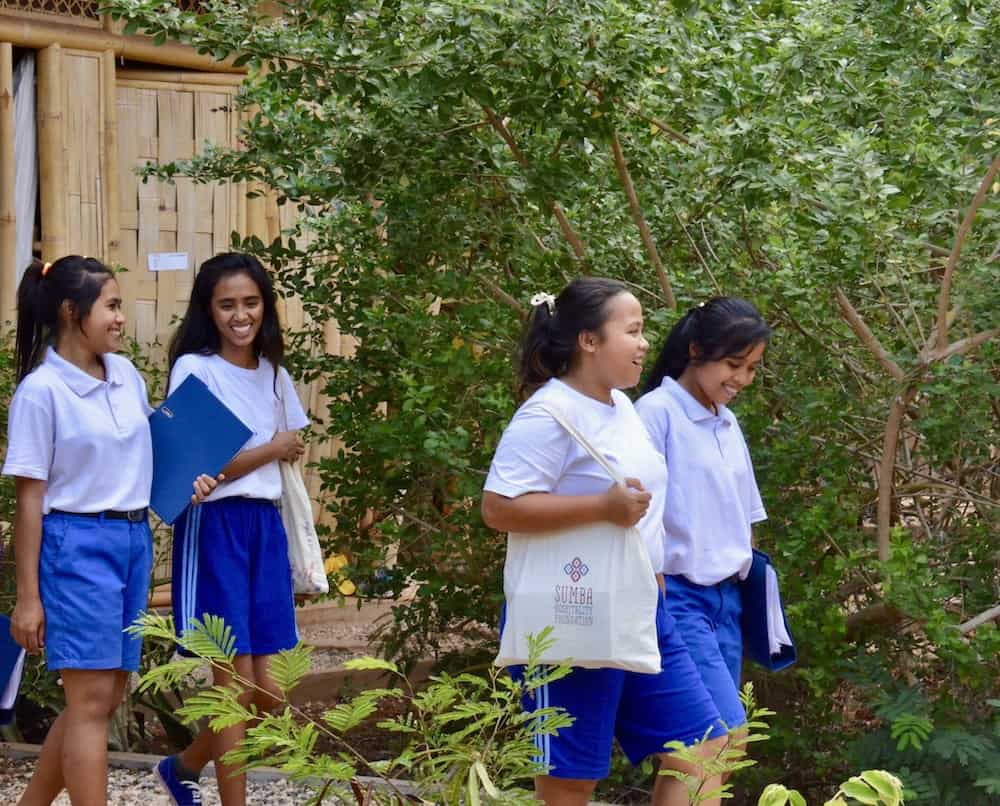
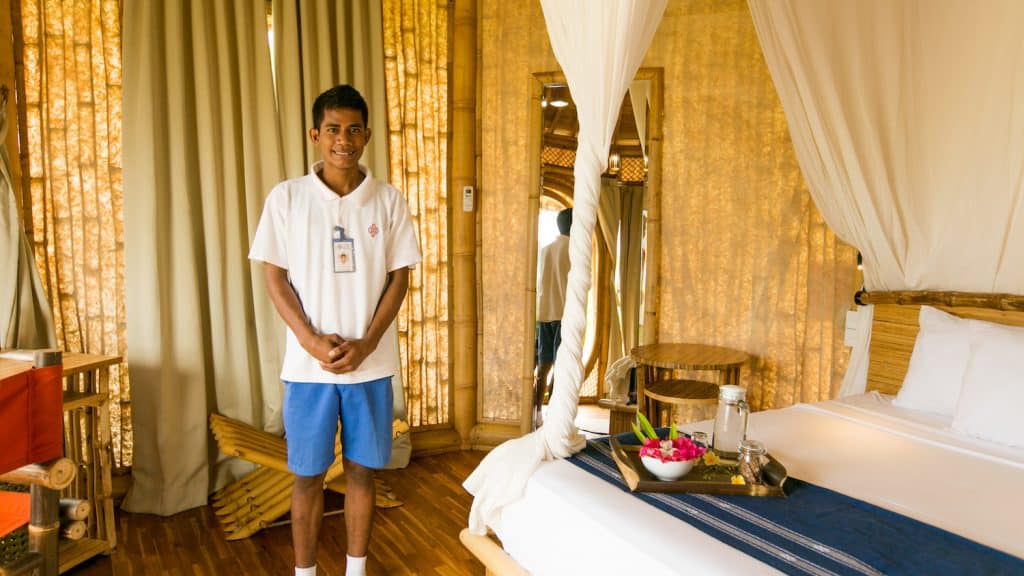
It is keen to expand its footprint globally, particularly in Asia. It has six members in the region and it will hold its second regional meeting in South-east Asia from March 17-19 in Bali and Sumba, at the Sumba Hospitality Foundation.
To become more effective globally, King is mindful that The Long Run, which has a core team of four, has to decentralize some of its functions. While headquarters can focus on advocacy on the global level, regional clusters will potentially benefit from more regionally-based services and cost effective assistance at the local level.
“In Kenya, we have a strong group and they seek to collaborate on things such as buying of goods, carbon reduction schemes, biodiversity monitoring schemes, sustainable packaging. Asia is a much broader region and to get economies of scale, we need to look at geographic clusters and pull together around common areas such as marine conservation.”
Indeed, one of its members in Asia is Cempedak Private Island, which is working to protect an area east of Bintan as a marine protected area. Working with Conservation International, it is helping to draft a management plan for an initial 185,000 hectares (two-and-a-half-times the size of Singapore) that will establish no-take zones and help re-establish fish stocks. Longer term it plans to roll this management plan out to include an area of over 1m hectares of marine protected area further east of Bintan.
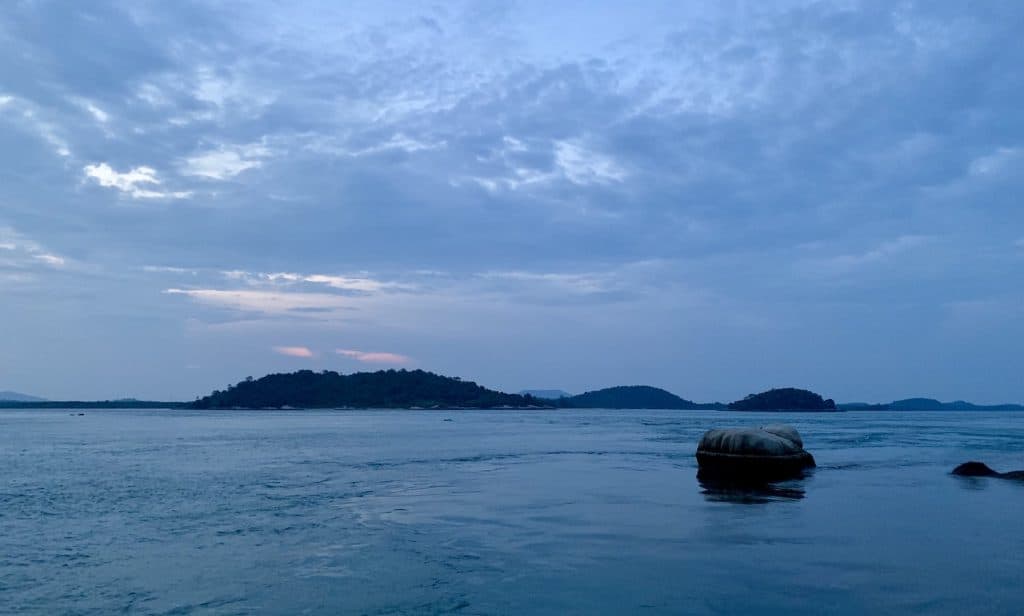
“For example, what you can or cannot do, where are the no-entry zones, no fishing zones or recreational zones. Together with CI wee and an independent consultant we have prepared a three-year work plan to help put this in place,” said Andrew Dixon, owner of Nikoi and Cempedak Islands.
They are also working with local fishing associations to ensure the views of local communities are respected for the mutual benefit for conservation.
King said one of the strengths of The Long Run is the cross-pollination of ideas. “While some practices may not be totally relevant in the legal or social context, it can generate a new way of thinking.”
In exchange for the membership fee, The Long Run provides advocacy, technical support and commerce “through promotion of the work members are doing”. When members join as Fellow Members, they are supported by The Long Run’s team of experts in improving each of the 4Cs to work towards the GER standard.
“We are not here to sell bed nights but to really push their impact and as members become well-known for their impact, that has positive indirect marketing benefits,” said King.
She said the increasing irequests from journalists and travel platforms for content, as well as more requests from travel agents for sustainable travel products, shows that “now sustainability has become sellable”.
She is mindful of the contradictory messages facing the sustainable travel movement in Europe at this point in time. On the one hand, tourism enterprises want people to fly, and on the other, flying’s been targeted as a bad thing to do because of aircraft emissions.
Recent research from the European Investment Bank also revealed travelers planned to fly less in 2020 amid concerns about climate change.
Her thinking is, “You look at your life and ask, what can you do in your daily life to reduce your footprint. Then you look at travel and ask the same question. There are lots of ways to reduce your footprint. Travel less, but travel better. Travel to a place that’s doing meaningful work – not just our members, there’s lots of good work out there. Choose a hotel that demonstrates positive impact.
“Tourism is essential for us not to lose openness. While we are facing biodiversity challenges, we are also facing a social crisis – there’s loss of tolerance and nationalism, based on ignorance.
“We have to look at the costs and benefits and travel meaningfully. Look at your carbon budget and decide what to do with it. I am convinced that there would be no African black rhinos if we didn’t have tourism.”
The Lufthansa study also highlights the techniques that travel companies can use to convince travelers to pay a premium for more sustainable travel. It says that, for example, “side benefits relating to convenience and context” can be offered with sustainable options to help drive conversion.
Further ways to drive action include adding compensation schemes directly into the booking path before a flight is secured. In January, Hopper announced that it was funding the planting of six million trees in 2020, at a cost of $1 million.
On the ground, as a private island operator in Indonesia, Dixon confesses his personal conflict. “There is definitely a lot of interest in sustainability, but at the same time, attracting guests from Europe who need to fly to us is a challenge. So how do we reconcile the two? I am personally torn. We are looking at setting up our own carbon offset scheme by planting trees in some of the islands.”
One thing he is clear about is he doesn’t wish to buy into “some schemes that are totally not related to where we are”.
“We want whatever we do to have a positive impact on our local community and environment.”