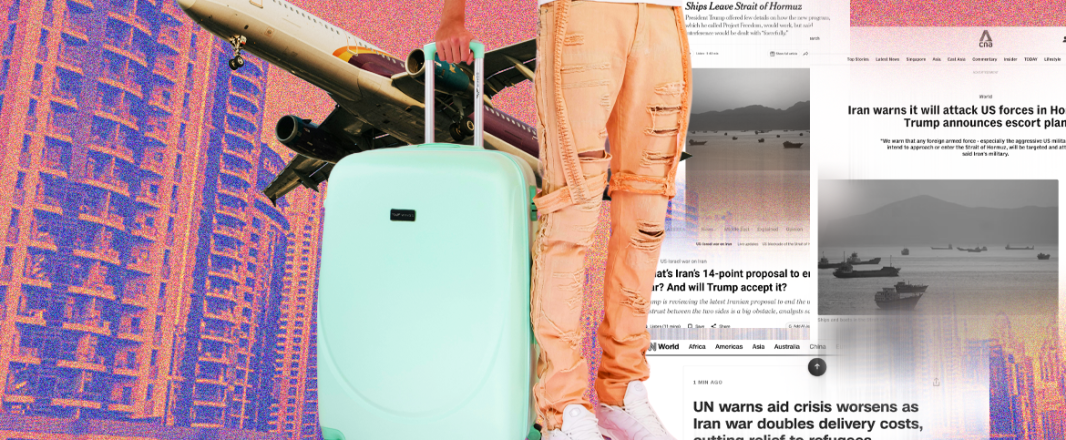
Three months after the first attack on Iran sent shockwaves through the region, I spoke to four OTA leaders operating across the Middle East to get a read on where things stand. What emerged wasn’t a single story but four different ones, shaped by market size, business model, and temperament.
Down, but not out
Ask Ross Veitch, CEO and co-founder of Wego, how business is, and he is direct. “We’re down about 20% YoY on revenue and bookings,” he says, “which is actually better than most people would expect, and well above the worst-case scenarios we stress-tested against.”
He’s adds: “During COVID our revenue went to zero. This is nothing like that.”
Stuart Crighton, CEO of Cleartrip, puts his number at about two-thirds of normal in the UAE. “It doesn’t feel like a settled ‘new normal’ yet,” he says. “It’s a market adjusting week by week, and we’re adjusting with it.”
Albert Fernando, CEO of Travelwings, takes a more forward-leaning view. “I wouldn’t call it a return to normal – it’s a reset, and in many ways a more aggressive one.” Key corridors are approaching 70% of pre-crisis levels, he says, driven by corporate catch-up and leisure demand. “The key insight is that the UAE is still moving on with recovering outbound travel, so demand is not the issue. Today’s constraints are capacity, cost, and airspace efficiency.”
The most bullish voice belongs to Muzzammil Ahussain, CEO of Almosafer. In Saudi Arabia, the ground reality looks different from the headlines. “Our data shows a different story, we have seen resilience in the Saudi market that outperforms global expectations.”
The disruption landed squarely in peak Ramadan and Umrah season, and religious travel with its deep roots and non-negotiable demand barely blinked. Almosafer recorded some of its highest Umrah travel seasons ever.
The hardest thing: Planning when you can’t plan
I asked them, how do you run a business when you don’t know how long the disruption lasts?
For Veitch, it came down to one brutal decision. “You can’t forecast when you don’t know whether the situation resolves in weeks or drags on for years. The hardest decision is whether to cut deep now or hold on and risk running down your reserves. We chose to act early.”
That meant a 10% reduction in headcount, a decision Veitch doesn’t take lightly, noting that Wego navigated COVID without widespread layoffs. Senior leadership also took salary cuts. “Wego is financially stable, and by acting now we intend to keep it that way.”

Ross Veitch, CEO and co-founder of Wego: “We’re down about 20% YoY on revenue and bookings, which is actually better than most people would expect, and well above the worst-case scenarios we stress-tested against.”
He adds that they’re supporting affected employees with an opt-in talent directory shared across their industry network.
Crighton took a different path. Cleartrip restructured supplier and vendor contracts rather than cutting headcount, with senior employees including the leadership team taking salary reductions and deferred variable pay. “Keeping our people in place for the recovery has been the right call,” he says.
Fernando at Travelwings made the same call. “We made a conscious decision early on not to conduct layoffs. Instead, we focused on redeploying talent across markets and opportunities.” In practice, that meant pivoting quickly into charters, where stranded passengers drove a surge in demand and into staycations when outbound slowed.
“Travel is a cyclical industry, and if you cut too deep, you lose the ability to respond when demand returns.”
Almosafer made zero layoffs, says Ahussain. It continued strategic investments in AI, launched a ChatGPT integration (the first app in KSA to do so), and kept hiring in digital and tech. “Our cost management has been proactive rather than reactive,” he says. The Umrah and domestic travel backbone gave the business an anchor that others simply didn’t have.
Winners and losers within the market
Zoom in, and the picture becomes more nuanced. Within the broad category of “Middle East travel,” some segments have barely noticed the disruption and others have been floored.
Religious travel has been, in Ahussain’s words, “virtually shock-proof”. For millions of Muslims, the journey to Makkah and Madinah is non-negotiable. Veitch agrees: “Umrah and Hajj flows have been largely unaffected by the conflict because for millions of people, that journey is non-negotiable.”
Domestic leisure has also held up well across the region. In Saudi Arabia, destinations like AlUla, the Red Sea Islands, and KAEC saw strong Eid bookings. In the UAE, staycations absorbed demand when outbound travel slowed. Essential and business travel has been similarly resilient.

Stuart Crighton, CEO of Cleartrip: “It doesn’t feel like a settled ‘new normal’ yet. It’s a market adjusting week by week, and we’re adjusting with it.”
The harder hit segments are inbound tourism, particularly from Western markets, and outbound leisure, where flight halts and airspace restrictions directly suppressed demand. Fernando notes that local DMCs bore some of the heaviest losses in the UAE, while Veitch flags a structural constraint that he thinks is underappreciated: the supply side. “International airlines that cut flights to the Middle East will need months to reactivate those routes, you can’t just flip a switch on schedules, crew, and slots.”
That constraint, he argues, actually advantages the Gulf carriers. Emirates, Qatar, Etihad – they can serve routes that international competitors simply can’t right now.
He raises a further concern: if the Strait of Hormuz remains blocked, non-Gulf airlines could face jet fuel shortages within weeks, while GCC carriers can use tankering to manage the problem. “Non-Gulf airlines don’t have that option, which could further constrain international capacity into the region even as demand recovers.”
How bookings are behaving
The booking data tells a consistent story across all four operators: shorter windows, less advance planning, more reactive decision-making.
At Almosafer, the surge in last-minute bookings, within a 7-day window, has already begun to reverse as Eid and summer travel planning picks up for destinations like Europe, Turkey, and Egypt.
At Travelwings, the shift has been more structural: bookings within 30 days rose from around 35% to nearly 60%, with demand becoming more volatile month to month. “Customers prioritise flexibility and certainty,” says Fernando, “meaning businesses must be far more agile in how they price, package, and communicate.”
Veitch adds another data point: fares across Wego’s mix of routes are up roughly 50% year on year, driven by fuel surcharges and constrained capacity. “I’d expect international carriers returning to the market to put some downward pressure on that over time.”
He also notes a positive leading indicator: early in the crisis, one-way bookings out of the Gulf surged, but since the ceasefire those patterns have reversed, with residents returning.

Albert Fernando, CEO of Travelwings: “I wouldn’t call it a return to normal – it’s a reset, and in many ways a more aggressive one.”
The perception gap: Travel’s bigger problem
All four leaders flagged the same structural problem: the world outside the region perceives things to be far worse than the reality on the ground. And closing that gap is harder than it sounds.
“The reality on the ground in most of the GCC is that daily life continues – people go to work, restaurants are open, malls are busy,” says Veitch. “But a tourist watching international news coverage understandably thinks twice.”
Fernando is direct about the stakes: “Perception travels faster than facts, and in travel, perception drives demand.”
Crighton is candid about the difficulty of the fix. “My experience living here in the UAE is very different from someone forming a view through social media or news coverage in London or elsewhere. Closing the gap doesn’t happen through a campaign – it comes from clearer communication, more on-the-ground voices, and gradually rebuilding confidence one trip at a time.”
For Ahussain, travel itself is the answer. “Travel is the ultimate bridge,” he says. “When a traveller sees the vibrant streets of Makkah during Ramadan on our social channels, the ‘turmoil’ narrative they see on international news fades away. We act as the ‘boots on the ground’ for the global travel community.”
The good news, as Veitch notes, is that for resident travel, the core of most of these businesses, the perception gap barely exists. “People living here know the reality and they book as soon as the flights are there. That’s why Bahrain and Kuwait snapped back so fast.”
On recovery and the road ahead
In a media interview, Emirates president Sir Tim Clark had said that people have short memories and Dubai will get back in the saddle quickly. I asked the four executives their response to this comment.
Ahussain was unequivocal. “I fully agree with Sir Tim, the region’s fundamentals are too strong to be suppressed for long. People do have short memories, but more importantly, they have an insatiable desire to travel.” He expects the second half of 2026 to be very positive for Almosafer and the broader Saudi travel market.
Fernando echoed the sentiment with data. Over 4 million searches for travel into the Middle East were recorded across Travelwings’ network in the past 30 days alone. “Demand hasn’t disappeared – it’s been paused.”
Crighton is measured but confident. “The fundamentals haven’t changed. Connectivity, infrastructure, the business environment, and the diversification of the economy are structural advantages and they don’t reset because of a six-month news cycle.”
Veitch is the most guarded. He agrees on the demand fundamentals, but sets a clear condition: His optimism rests on one big assumption – that the conflict ends soon, or at least that the ceasefire holds.
If it does, resident travel recovers fast. Inbound will take longer – six to 12 months minimum, he estimates, as perception catches up to reality and international carriers rebuild capacity. His planning assumption: “Even best case, 2026 is a recovery year, not a growth year. I’m planning for a slow climb back rather than a snapback.”
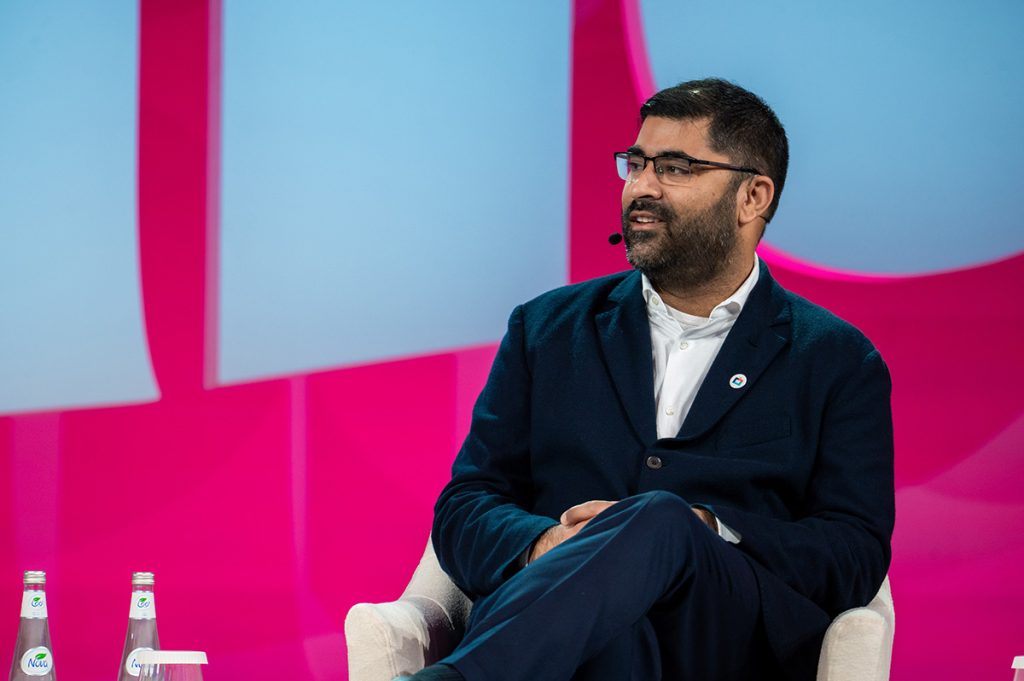
Muzzammil Ahussain, CEO of Almosafer: “Our data shows a different story, we have seen resilience in the Saudi market that outperforms global expectations.”
What this moment reveals
What strikes me most from these four conversations is how differently the same disruption can register depending on where you sit. Saudi Arabia, with its religious travel backbone and domestic tourism ambitions, experienced this as a sharp but manageable shock. The UAE, more exposed to inbound tourism and international carrier dependency, is absorbing a deeper reset. And a company like Wego, serving residents across the region, found its model more resilient than the headlines suggested, even as it made difficult calls about headcount.
Crighton perhaps puts it best when he says: “Disruption in our industry is often treated as an exception, but the reality is it’s happening more frequently – geopolitical, health, economic. The ecosystem isn’t designed for that.”
The companies that come through this best will be the ones that build that reality into how they operate, rather than treating each event as a one-off.
The region’s travel market is resilient. It’s also being tested in ways that will reshape how it thinks about risk, capacity, and recovery. That is a story worth watching.