Sabre aims to solve airline content fragmentation and unlock AI’s potential in the process
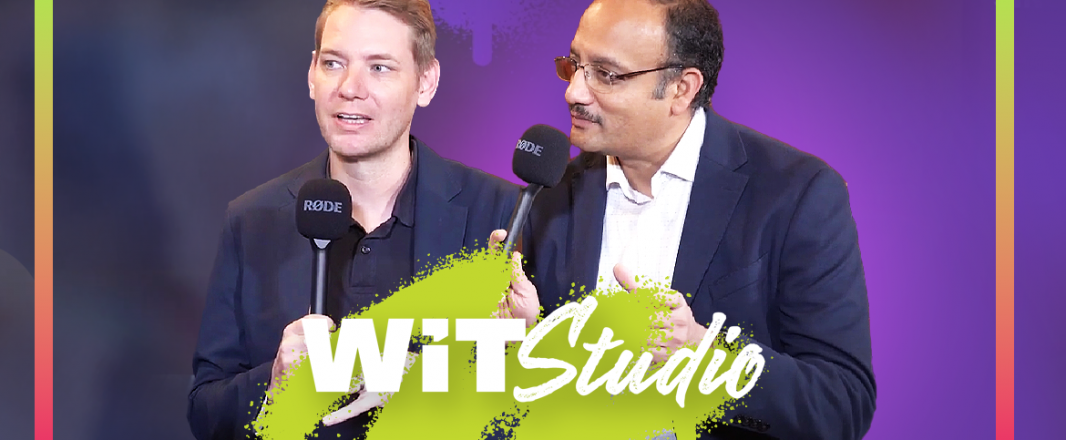
In our latest WiT Studio episode, we chat with Brett Thorstad (Vice President, Agency Sales & Airline Distribution, Asia Pacific, Sabre) and Madhavan Kasthuri (Head of Global Solution Engineering, Sabre Corporation) about how the travel tech solutions provider is focused on tackling one of the industry’s most pressing challenges: content fragmentation.
Watch the full interview here:
As airlines distribute their offerings through multiple channels, ensuring consistency and efficiency in aggregating and normalising this data has become increasingly complex, which is why Thorstad likened Sabre’s role in the travel ecosystem to that of major retail giants. “If you think about what Sabre is at its core, in terms of the GDS business, it’s just a marketplace. The most successful marketplaces in our lifetime – companies like Walmart or Amazon – solved the issue of fragmentation of supply by making everything available in one place. We are seeing the exact same opportunity in travel content. Sabre is best positioned to replicate that model,” he explained.
A significant hurdle in this endeavor is the emergence of multiple standards, particularly in airline distribution. Kasthuri highlighted the challenges posed by the adoption of New Distribution Capability (NDC). “The problem that is not solved now is aggregating and normalizing this newly fragmented content. The NDC standard, which I call the ‘unstandard standard,’ is evolving differently across airlines. It’s a guideline rather than a strict standard, leading to varied implementations and further fragmentation,” he said.
Sabre is investing heavily in modular technology to address these issues. Kasthuri noted that 2023 marked a major milestone for the company as it transitioned much of its technology infrastructure from mainframe to open systems, enabling greater flexibility. “During COVID, when businesses were shutting down, we held the course. We kept more than 80% of our workforce and continued investing in our technology. This has allowed us to build a modular platform that can cater to diverse customer needs,” he shared.
Artificial intelligence is another major focus for Sabre, with the company estimating that AI could generate $28 billion in global revenue for the travel industry. Thorstad admitted to initial skepticism but has since been impressed by AI’s tangible impact. “This last year, Sabre introduced 10 AI microservices that are available for customers to try, with another seven in development. The reaction has been overwhelmingly positive. These tools are not just hype—they are solving real-world problems,” he said.
Kasthuri emphasised that AI adoption is not just a trend but a necessity. “A lot of our customers are technology companies themselves. They use AI in various ways, so their expectations are realistic. As a technology company, our customers rightly expect us to lead the way in AI innovation,” he said.