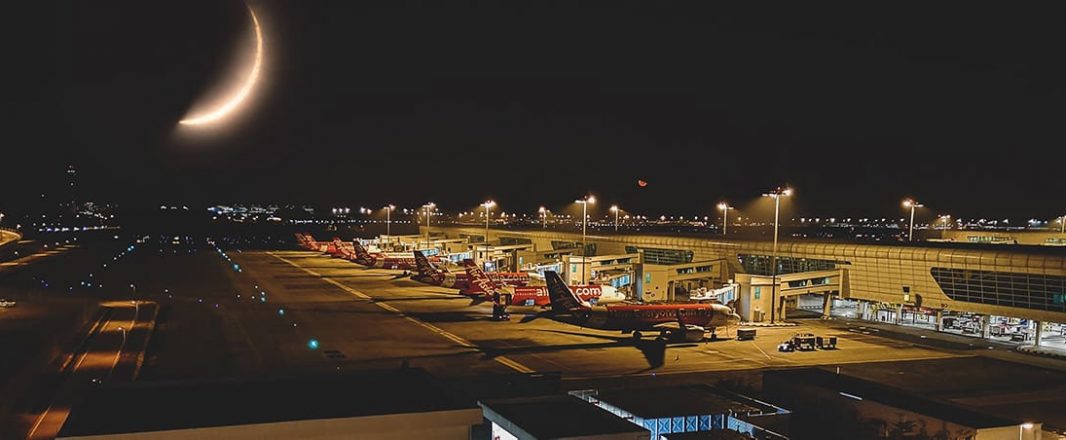
THE Wrap is a round-up of news in the travel and technology sector – new partnerships, product launches, aviation industry updates, innovative solutions, and more …
Malaysia Airports provides touchless journey for passengers with biometric technology

Malaysia Airports has upgraded the passenger experience with the implementation of SITA biometric-enabled self-service touchpoints in two of the country’s main airports.
They provide domestic and international passengers flying from the KL International Airport (KLIA) and budget terminal klia2 with automated and low touch experiences.
SITA, in a release, said the extensive technology deployment features a hardware and software overhaul. This includes the introduction of more than 100 SITA biometric-enabled self-service Smart Path TS6 kiosks, SITA Smart Path Bag Drop and an IT infrastructure refresh.
The TS6 kiosks feature wireless connectivity, and are enabled for SITA Flex and the next generation of common-use API-based services that facilitate a low-touch, fully mobile passenger experience.
As part of the software updates Malaysia Airports has migrated to Windows 10 and upgraded its CORE servers, network equipment, and Baggage Reconciliation System to deliver enhanced speed and secured data communications.
The upgrades are part of the Malaysian airport operator’s broader transition from Airport 3.0 to Airport 4.0, which requires a fully integrated digital ecosystem that provides a seamless passenger journey with the use of business intelligence and the collection of big data.
Apart from improving passenger experience the Airport 4.0 project also aims to optimise terminal use, increase operational efficiency and grow revenue.
“Ensuring fluid passenger experiences while balancing operational efficiency is a high priority for airports globally,” said Sumesh Patel, president, Asia Pacific, SITA. “With this deployment, we’ve delivered on both elements, future-proofing the airport for a touchless journey via enhanced biometric capability while also driving down operational costs and increasing the resilience and agility of IT infrastructure.”
Emirates and Alhosn National Health collaborate to ease travel to EU countries

Customers of Emirates travelling from UAE to EU (European Union) member countries can now use their IATA Travel Pass for digital proof of testing and vaccination for travel.
Through the airline’s expanded partnership with Alhosn National Health System, the readability and recognition of customers’ health credentials with EU verified QR codes, includingCovid-19 vaccine status and PCR (polymerase chain reaction) test results, can be uploaded on the IATA pass.
In July, Emirates integrated Alhosn via the National Cloud in its check-in systems, allowing quick digital retrieval and verification of Covid medical records, regardless of where in the UAE customers completed their vaccination or PCR tests.
The airline’s customers now just have to download the IATA pass, scan the QR code on Alhosn app’s travel pass QR, and load the results back to the IATA app.
Emirates said that with these new enhancements its customers would benefit from the IATA pass and get their “Ok to Travel” prior to their departure from the UAE to any EU destination on the airline’s network.
In the EU travellers can use the Alhosn app to show their Covid health status, enter hospitality and entertainment venues, attend events or enjoy other experiences that require proof of negative test results or vaccination.
Adel Al Redha, Emirates chief operating officer, said: “We’re always looking at ways to expand the functionality of the tools available to our customers like the IATA Travel Pass. Enabling the readability of Covid-19 testing and vaccination QR codes into the app for customers travelling to the EU is a major step to instil confidence and create greater assurance.”
He added that Alhosn “has put in tremendous efforts” in obtaining equivalency for the EU Digital Covid Certificate system, making the UAE one of the few countries to secure testing and recognition status across all EU countries for its citizens and residents.
Emirates was one of the first airlines in the industry to trial the IATA Travel Pass, and is offering the solution to customers flying to 50 cities across its network.
Philippine Airlines allows guests to rebook disrupted flights with self-service tool

Another airline aiming to improve the “travel experience” for its guests is Philippine Airlines.
The carrier is deploying Amadeus Self Re-accommodation, which allows passengers to choose and rebook their itineraries when their flights are delayed or cancelled.
Amadeus said the solution “works to reduce the load on Philippine Airlines’ call centre and airport agents managing re-bookings, ultimately reducing the cost of operations for the airline”.
Part of the Amadeus Digital Experience Suite, the solution comprises a booking engine and user interface.
When a disruption occurs Philippine Airlines’ passengers will receive an alert redirecting them to the airline’s Self Re-accommodation page. There, they can accept the default flight offered by the airline or choose a replacement flight free of charge according to the airline’s disruption policy.
Oscar Enrico Reyes Jr, Philippine Airlines senior vice president for marketing and sales, revealed more than 160,000 passengers with disrupted flights benefitted from the self-service during the first seven months of the solution going live.
“The Self Re-accommodation tool is an integral part of our omnichannel strategy and provides critical information and control for our passengers when they need it the most. Our next step is to give more control to passengers by empowering them with a self-service refund tool, without any penalties, if they are not happy with the alternative flights provided.”
The tool’s implementation is part of a digital deal Amadeus signed with Philippine Airlines, following the carrier’s passenger service system (PSS) migration to Amadeus.
• Featured image credit (View of klia2 from the observation deck near the departure hall): Nax on Unsplash