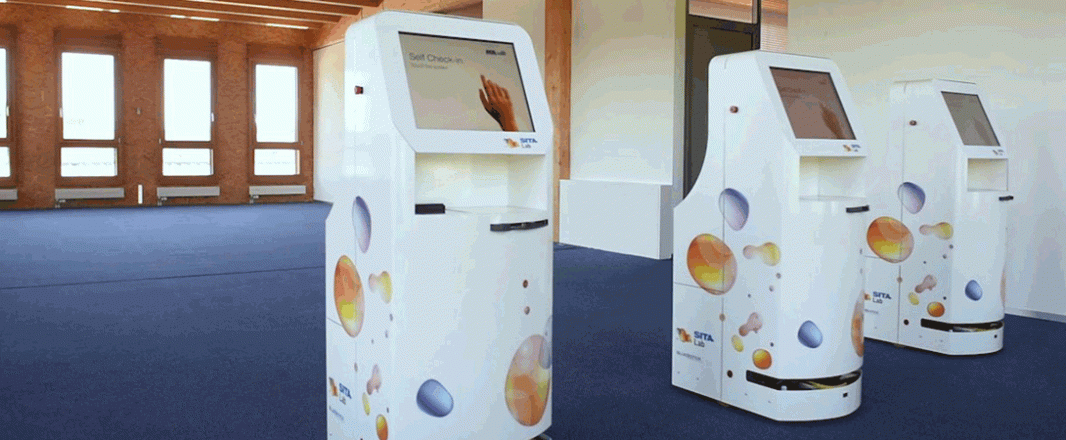
In the news: Robots, interactive guestroom assistants and smart gates grab the headlines this week as airports (Kansai and Dubai) and the hospitality industry leverage new technologies to boost efficiency while enhancing user experience at the same time.
ROBOTICS: Meet KATE, the intelligent check-in kiosk
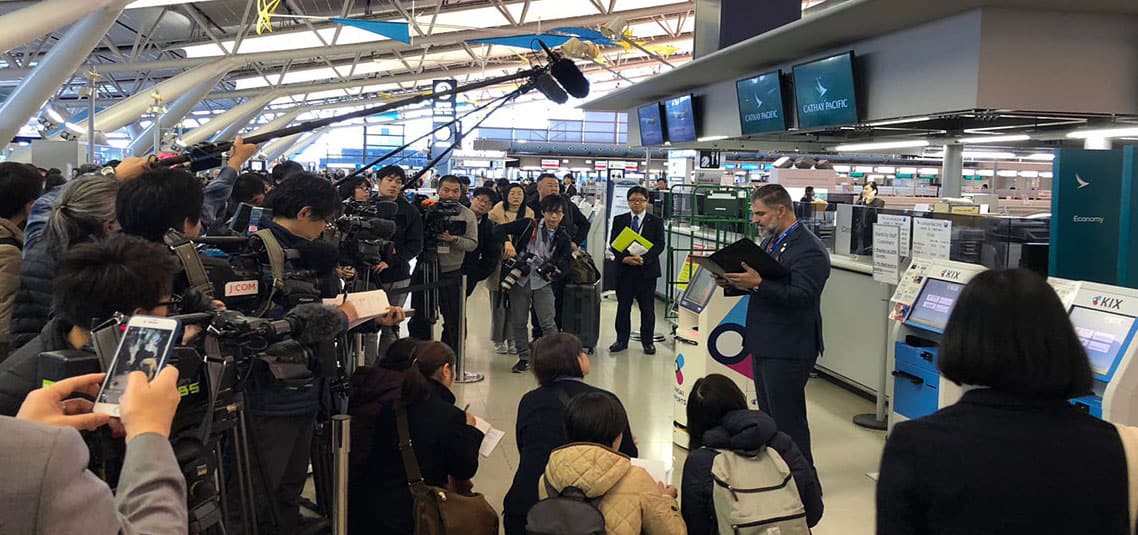
Kansai Airport chief operating officer, Jeremy Goldstrich, introducing KATE to the Japanese media (Image credit: SITA)
If you taking flight out of Kansai International Airport in Japan don’t be surprised to see a roving robot ‘offering’ to help with your flight check-in.
The robotic helper is KATE, the intelligent check-in kiosk from SITA. The multinational information technology company is working with Kansai Airports, the operator of Kansai International Airport (KIX) and Osaka International Airport (ITAMI), to trial the robot kiosk.
KATE is in service at Kansai Airport Terminal 1 for the month of February checking in airlines including Air France, Air China, Cathay Pacific Airways, Japan Airlines, Korean Air, KLM, All Nippon Airways, Asiana Airlines and United Airlines.
Using artificial intelligence and go-navigation KATE moves seamlessly to areas of the airport where additional check-in services is required.
KATE’s collision avoidance technology, combined with various data sources, decides where it should be – whether at a busy area to ease congestion or to a docking station to recharge when power source runs low.
According to SITA, the use of KATE promises “to relegate check-in queues to the past”, said SITA in a statement.
“Japan has always been a forerunner in robotic innovations and intelligent technology. It is no surprise that Kansai Airports is leading the industry with the trial of SITA’s intelligent check-in kiosk, KATE,” said Sumesh Patel, SITA president, Asia Pacific, on the trial.
“We will work with Kansai Airport to evaluate how this new technology is able to provide an even better traveller experience at the airport.
HOSPITALITY: Say hello to Angie, your interactive guestroom assistant
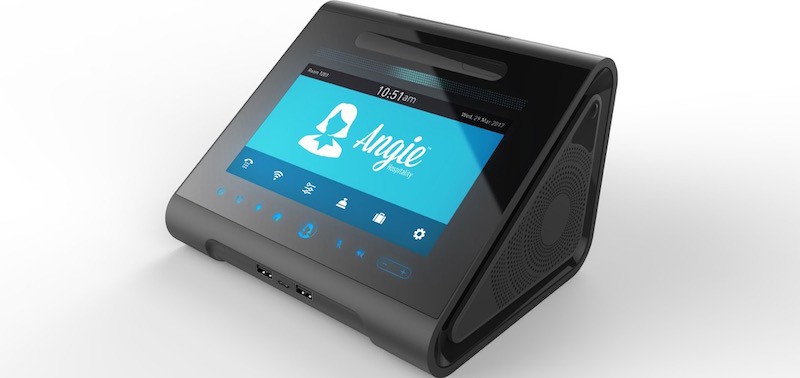
Angie can deliver numerous services to hotel guests (Image credit: Angie Hospitality)
Technology is fast changing the way hotels attend to guest’ needs, with robots replacing humans along the corridors of many hotels. Soon hotels in Australia may have the assistance of another tech helper – Angie.
Its creator Angie Hospitality describes the cloud-powered device as “the world’s first 24-hour interactive guestroom assistant purpose-built for the hotel environment” and ‘specifically developed with hotel guests and staff in mind.”
Angie responds to requests directly via simple voice commands or through its high-resolution interactive touchscreen. It can order room service, make reservations, control room temperature and lighting, and connect devices to secure and customisable WiFi. Using integrated Bluetooth speakers, it can also connect to multiple guest devices to play music or serve as a speakerphone.
The device’s high-resolution touchscreen can serve as interactive in-room digital signage business guests of upcoming meetings and events, as well as encourage guests to use onsite amenities.
Angie Hospitality said Angie can help the property be more economically sustainable as it also acts as an energy management system to recognise unoccupied rooms and control air temperature and lighting, lowering utility costs.
The purpose-built device will debut in Australia at the two-day NoVacancy Accommodation Business Expo trade event in July. It is already offering its services to North America and Europe, with plans to expand to hotels across the globe later this year.
AIRPORTS: Dubai International makes passport clearance quicker for travellers with new smart gates
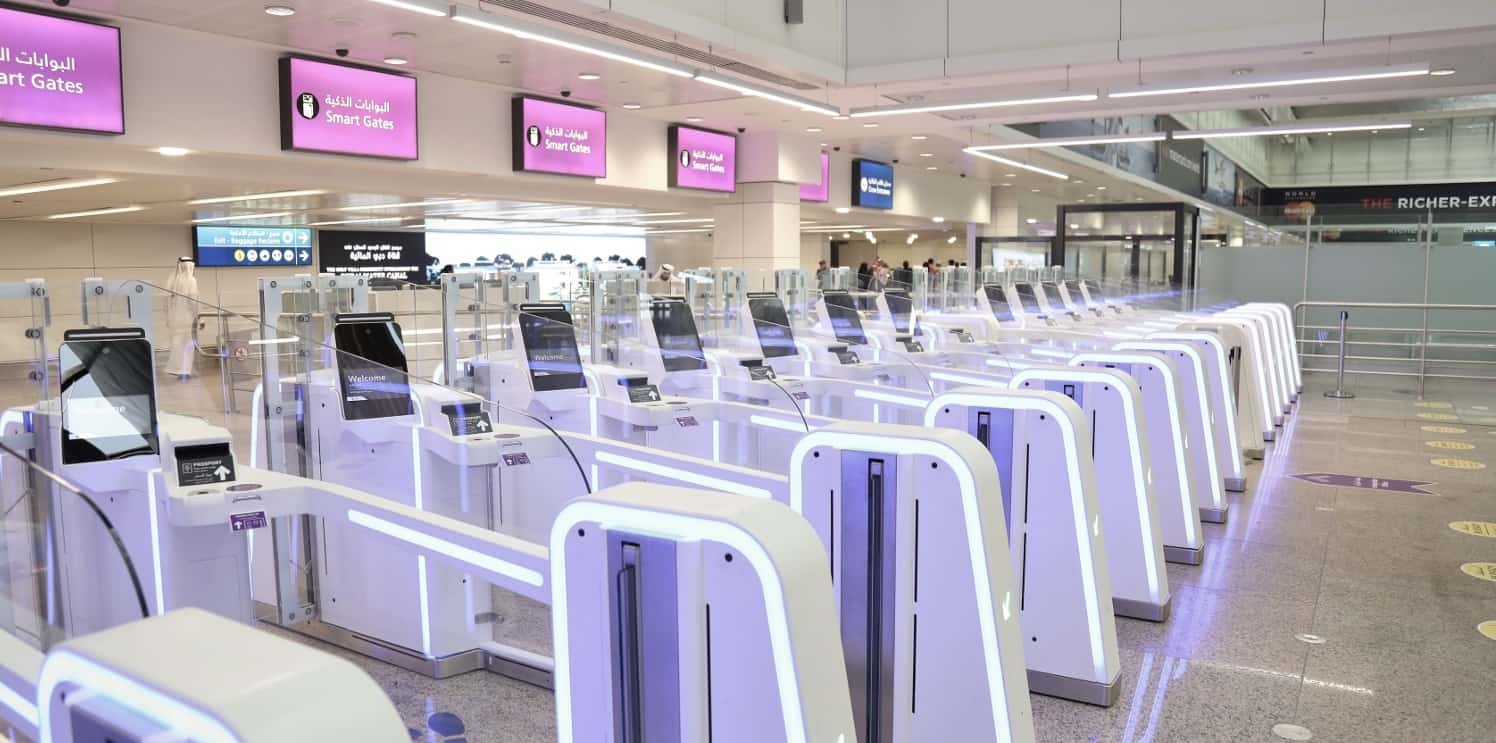
The new smart gates cut passport clearance to just seconds (Image credit: Dubai International)
Going through Dubai International, one of the world’s busiest airports, is much faster with the installation of 20 new smart gates in the arrivals area of Terminal 1 in addition to the 10 installed last year in departures.
The airport now boasts 127 smart gates, helping to reduce average transaction times from minutes to under 10-15 seconds.
The airport said in a statement the launch of the new smart gates coincides with the start of UAE’s Month of Innovation (February 1-28) to celebrate innovators and promote a culture of innovation.
Smart gates do not require a dedicated card and can identify a traveller by either their passport, Emirates ID, e-gate card or a QR barcode generated via the GDRFA smartphone app.
The gates can be used by UAE citizens and residents, GCC nationals and passport holders from a number of countries that are eligible for visa on arrival.
Michael Ibbitson, executive vice president, technology & infrastructure at Dubai Airports, said the gates have made passenger journey smoother and more comfortable “by slashing transaction times to just 10-15 seconds and shortening queues.”
However, not many travellers are taking advantage of this facility. “What’s surprising is that only 17% of our passengers take advantage of the service,” Ibbitson remarked. “If you have a UAE residency card, don’t wait in line, use it. If you have a machine-readable passport, register it with immigration authorities. It will save you time and make your journey even more enjoyable.”
Dubai International was the first airport in the region and among the first globally to introduce automated immigration gates in 2002.
• Featured image credit: SITA