News Roundup: WebBeds’ new destination performance tool launched, SITA’s latest report on airlines and airports reaping benefits from IT investments, mobile app for booking tours and activities in Malaysia, ANA reducing single-use plastics from 2020
Distribution:WebBeds launches destination index in support of Hong Kong’s travel industry

(Image credit: WebBeds)
B2B accommodation provider WebBeds chose Hong Kong last week to roll out its new WebBeds Destination Index (WBDI), a tool that tracks hotel booking trends weekly, as a show of support for Hong Kong’s struggling travel and hospitality industry.
With the city hit by almost six months of anti-government protests that show no signs of abating, tourists are cancelling hotel bookings and retailers are forecasting a sharp drop in sales.
STR’s preliminary August data showed hotel occupancy in Hong Kong for the month plummeted 29.8% to a rare low of 63.9%. According to the territory’s financial secretary Paul Chan, tourist arrivals to the city fell nearly 40% in August, a hefty dive after a 5% decrease in July.
“Adversity is a great driver of innovation, and we are happy to launch the WBDI in Hong Kong,” said WebBeds CCO Sun Kok Sheng. “This insightful and intuitive new tool will allow the city’s hoteliers and tourism operators to cut through the confusion and gain a clear picture of the situation.”
WBDI delivers this by measuring a wide range of key performance indicators including the number of bookings, total transaction value, room nights, and average daily rate; and benchmarking them against a 52-week average. It divides Hong Kong into four distinct areas – Kowloon, Hong Kong Island, Lantau Island and Others – and categorises hotels by their star rating, so each hotel can understand exactly how their sector is faring.
Through aggregating these data WBDI creates an overall Market Index that will benefit the entire travel trade. WebBeds’ in-house data and analytics team have also crafted a series of future projections based on these trends and curated various strategies for execution.
WebBeds CEO Daryl Lee attested to the support, saying the company is standing “shoulder to shoulder” with Hong Kong’s travel trade.
“It is crucial that we all continue to collaborate with one another. Hong Kong is one of the world’s most vibrant and exciting global cities, and I am confident that it will rebound. In the meantime, WebBeds is here to support all our friends and colleagues and support them maximise their performance.”
After Hong Kong, WBDI will be released progressively across selected destinations in Asia Pacific.
WebBeds hopes to work with the Hong Kong Tourism Board to assist in Hong Kong’s recovery.
On August 15, the Hong Kong government announced an economic stimulus package worth HK19.1 billion (US$2.4 billion) to boost the economy badly-hit by the escalating anti-government protests and the prolonged Sino-US trade war. Combined, these events have also led to Hong Kong falling into recession.
Aviation: Airlines and airports seeing benefits from investments in technology, says SITA
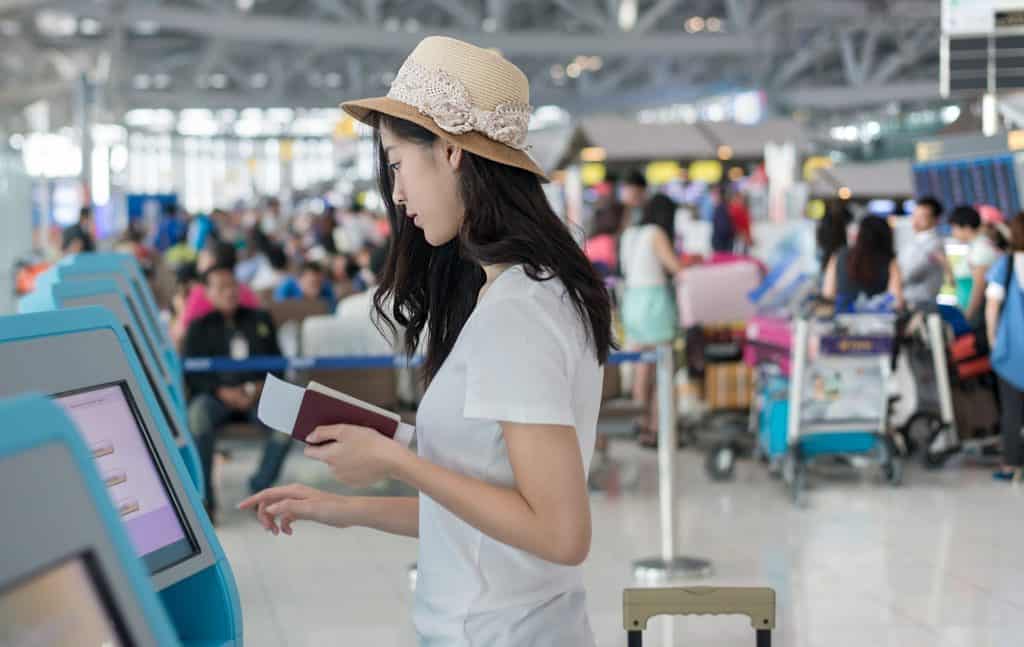
(Image credit: ake1150sb-Getty Images)
Last year airlines and airports spent a record US$50 billion on technology to automate passenger journey and the invesment is paying off for airlines and airports.
The SITA 2019 Air Transport IT Insight released Tuesday (November 5) shows the growing investments have resulted in a significant improvement in both the satisfaction levels for passengers and average processing time, as well as shorter queue.
According to the findings, 60% of airline chief information officers (CIOs) recorded up to a 20% year-on-year improvement in passenger satisfaction. During the same period, 45% of them recorded up to 20% improvement in the rate of passengers processed.
Airports benefitted too. 63% of CIOs reported a year-on-year improvement of up to 20% in passenger satisfaction levels, while 44% recorded quicker passenger processing times.
Both airlines and airports also recorded an improvement in their business performance.
“This is a real success story for automating the passenger journey, particularly at a time when we expect passenger numbers to double over the next 20 years, with physical airport infrastructure struggling to keep pace. Technology is key to alleviating the industry’s capacity crunch and avoiding negative impacts on passengers,” commented Matthys Serfontein, SITA president, Air Travel Solutions.
The report reveals the billions in investment was partly due to a sharp increase in airline IT spend after several years of virtually flat growth. Projections for 2019 show investments will continue to grow.
Serfontein attributed the increase over the past year to larger airlines “which continue to invest to speed up the pace of digital transformation. Investments in business intelligence and cloud services have emerged as priorities.”
SITA notes that the investments by airlines and airports are also to streamline their operations, allowing them to manage everything from baggage and passenger flows, to aircraft turnaround and the allocation of key assets, such as parking stands and gates.
“Overall, we can see that the industry is focused on improvements to its operations to make it more efficient and facilitate better collaboration with partners and other stakeholders in what is a highly integrated industry. This in turn is having a profoundly positive impact on the service they are able to provide to passengers,” added Serfontein.
• Download the full report here.
Mobile Technology: Wonderfly unveils mobile app in time for Visit Malaysia 2020
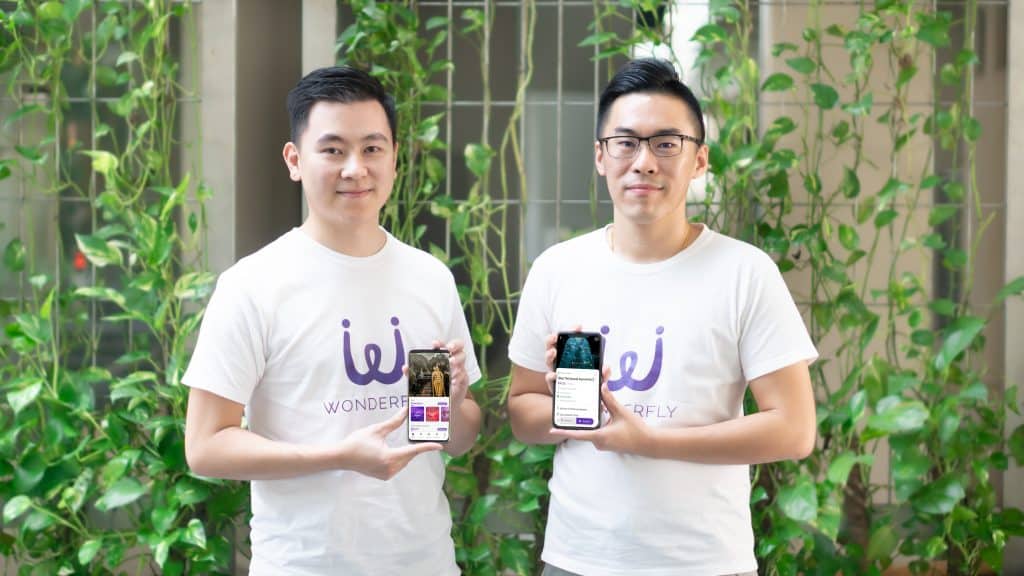
Kuala Lumpur-based Wonderfly Holdings Sdn Bhd (Wonderfly) has released its mobile app that that allows users to discover and book attractions including museums and theme parks in Malaysia.
Its co-founder and CEO Triston Puah said the release of the app was in time for Visit Malaysia 2020 so travellers, both local and from overseas, can enjoy attractions throughout the country.
The latest in the series of the Visit Malaysia campaign, 2020 has set a set a target of 30 million international tourist arrivals next year and RM100 billion (US$24.1 billion) in tourist receipts to the country.
Puah stated another reasons for launching the app was the company, which has a website for travellers to book attractions since 2017, found that 82% of the bookers were mobile users.
The app will make bookings a much more easier and convenient process for users, he added. The e-ticket feature, for example, allows users to download tickets to attractions to a tab, with access to them even if the phone is offline – doing away with paper tickets to gain entry. Addtionally, payments can be made on the app.
Customers of Boost (Malaysia’s homegrown e-wallet) and GrabPay who make bookings on Wondefly can earn extra rewards.
Puah said the company’s goal is “to digitise the supply chain” in tours and activities.
“There are many things to do and places to visit in Malaysia but many attractions still operate offline, and their visibility in the market is low. At Wonderfly we don’t only run an online booking platform, but we also provide services to help offline operators to embrace online marketing,” he added.
The app, available in English, Malay and Chinese, is for iOS and Android devices and free for download at the Apple App Store and Google Play.
Environment: Japan’s ANA to reduce single-use plastics in cabins and lounges

(Image credit: SherSor/Getty Images)
All Nippon Airways (ANA) has joined the growing list of airlines banning single-use plastic inflight. From 1 February 2020, the Japanese carrier will reduce the amount of single-use plastics inside cabins and lounges and replacing the plastic straws, stirring sticks and cutlery used in these areas.
In place of plastic straws will be reco-friendly bioplastic or paper straws, while the new stirring sticks and cutlery will be made of wood.
The airline currently uses about four million polypropylene straws, 10.5 million polypropylene stirring sticks and 1.8 million polystyrene cutlery sets per year.
The ANA Group, on 1 January 2019, adopted emission mitigating practices as part of the Carbon Offsetting and Reduction Scheme for International Aviation (CORSAIR) as part of its efforts to improve sustainability,
“ANA is committed to building on its strong record of environmental leadership by adopting policies that will prepare us to meet the next generation of challenges,” said Ito Yutaka, executive vice president of ANA Holdings.
“We have already made significant stride in our efforts to make ANA a more sustainable company, and reducing the use of plastics is another crucial step that we can take to keep moving forward.”
Apart from reducing the use of plastics, ANA is implementing the use of sustainable aircraft fuel. The airline has collaborated with LanzaTech to develop more effective biofuels. Currently 75.9% of the ANA group fleet consists of fuel-efficient aircraft models.
• Featured image credit (Hong Kong harbour): TerrySze/Getty Images