
THE Wrap is a round-up of news in the travel and technology industries, and to keep track of developments in these sectors as businesses adapt and reset to meet challenges in the era of coronavirus.
Stop calling countries “high risk”, focus on individual travellers instead: WTTC
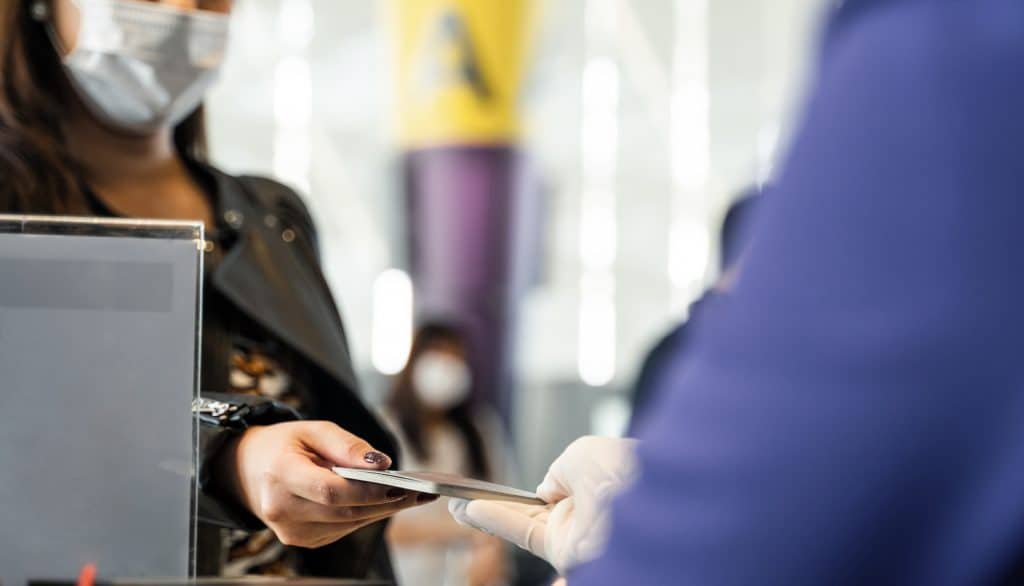
Entire populations are not infected and so countries should not be labelled as “high-risk”, but instead focus on how individual ‘high-risk travellers’ are treated at borders.
In making this call, the World Travel & Tourism Council (WTTC) urges governments around the world to shift their focus from whole countries towards individual travellers instead.
The tourism body rationalises that assessing individual traveller’s risk through testing and use of technology will avoid exporting the virus and revive international business and leisure travel.
“Combined with a common international consensus on the metrics used to assess risk, and a laser-like focus on a cost-effective, comprehensive and rapid departure and arrival testing scheme for all travellers could pave the way forward for the meaningful return of travel,” it added.
It would also ensure only those affected are forced to isolate, while travellers who test negative can continue to enjoy safe travels through observing hygiene protocols and mask wearing.
“Risk based on entire countries is neither effective nor productive. Redefining risk towards individual travellers instead will be key for unlocking the door to the return of safe international travel. We need to learn from past experiences and crises such as 9-11,” WTTC president and CEO Gloria Guevara stated.
“We cannot continue labelling entire countries as ‘high-risk’, which assumes everyone is infected. While the UK is currently seeing high levels of infections, clearly not all Britons are infected; the same goes for all Americans, Spaniards or the French.”
The reality is much more complex, she added. “Not only does it stigmatise an entire nation, but it also halts travel and mobility when many people who test negative on departure and arrival could safely travel without exporting the virus.”
Guevara said a comprehensive testing programme will be less expensive than the economic cost brought on by blanket quarantines and lockdowns.
“We must learn to live with the virus, as it will take time for the global population to be vaccinated”, pointing out that is the reason behind WTTC’s advocating the introduction of a comprehensive and cost-effective test on departure and arrival for all international travellers to prevent those carrying the virus from spreading it.
“As always, there is a crucial balance to be struck between the priority on public health with the need to sustain economic activity. As well (as) ensuring people are safe and healthy, we also need to secure the health of the global economy – and revive the 174 million travel and tourism jobs affected by this devastating pandemic.”
According to WTTC’s 2019 Economic Impact Report, travel and tourism contributed US$8.9 trillion, or 10.3% towards the world’s GDP. It accounted for one in 10 global jobs, giving employment to 330 million people through the sector.
SITA introduces a new solution to share health data information

SITA has rolled out Health Protect, a new solution to help airlines, airports, governments and passengers safely and securely share information on health tests or vaccinations needed during travel.
According to the airport technology company, a key benefit of the solution is its ability to integrate with multiple travel pass schemes including AOK, CommonPass, IATA and SimplyGo, bridging the gap between these schemes and aviation and border processes.
The solution also allows airlines and passengers to submit required documents, such as PCR test results or vaccination history in line with specific government requirements. Passengers without the required documentation, or are considered high risk, will be not be able to check in for their flight, ensuring they do not travel to the airport.
“By incorporating Advance Passenger Processing the solution enables authorities to make an informed decision on whether a passenger can travel at the point of check-in, improving the safety of all passengers and avoiding costly return flights,” said IATA when announcing the solution’s launch.
At the airport, Health Protect integrates with the existing airport passenger processing systems to verify the health status of the passenger at each point in the process using SITA Flex touchless passenger flow monitoring technology.
David Lavorel, CEO of airports & borders at SITA, said Health Protect has the potential to “bridge the gap between airlines resuming normal operations and governments’ strong focus on keeping control of Covid-19.”
Successful trials of the solution have already been undertaken with travellers to the UAE, and will soon start at Milan Malpensa Airport.
Rex expands collaboration with Sabre to fuel its expansion

REX Airlines, Australia’s largest independent regional and domestic carrier, has expanded its long-term SabreSonic passenger solutions suite (PSS) agreement with Sabre.
Under the amplified agreement, the carrier is able to have access to new and enhanced including an expanded range of IT capabilities across SabreSonic inventory, reservations, ticketing, ancillaries and check-in to support its expansion in fleet and operations.
Rex, which is servicing 60 destinations across Australia, will fly to Melbourne to Sydney in March and to Brisbane from Easter with delivery of the first of six Boeing 737s.
Rex deputy chairman John Sharp said the airline has “strong ambitions” to be a sizeable domestic airline operator with an expanded fleet within the next four years.
He added the airline aims to grow as the market recovers. With Sabre as its technology partner as travel restrictions ease, “we look forward to playing an increasingly important part in the recovery of Australia’s domestic and regional tourism market.”
• Featured image credit: petovarga/Getty Images