
Government measures establish GCC countries as a ‘hot bed’ for travel and tourism
Online travel agents and the aviation sector will be the biggest beneficiaries of the surge in travel demand predicted for Middle East countries and their neighbours as Covid restrictions are wound back across the region.
New research by Videc, a boutique research and analytics firm focused on the travel sector, indicates the Middle East is “uniquely poised” to lead the global travel industry’s growth story, “driven by a combination of a young demographic, a thriving population of nearly 160 million, and a thrust on big-ticket domestic and regional investments”.
Videc also cites the region’s proven ability to leverage its location to connect the East and the West as another trigger to drive travel demand.
Other important drivers are the region’s coordinated effort to boost investments by liberalising foreign investment, along with steps such as enhancing visa regimes via Premium Residency or Golden Visa programmes and business environment reforms. These measures have “established the Middle Eastern region as the hot bed for the next giant leap in economic development and, consequently, a hub for travel and tourism,” Videc added.
Further, the research firm says, “The interplay of these factors is enabling the GCC countries (Bahrain, Kuwait, Oman, Qatar, Saudi Arabia, and the United Arab Emirates) and Egypt to position themselves as one of the genuinely last untapped markets with abundant growth opportunities.”
As part of Vision 2030, Saudi Arabia plans to increase the number of tourists to 100 million a year, and the number of religious visitors to 30 million a year by 2030. Carrying many of those tourists will be Saudi Arabia’s proposed new flag carrier flying alongside Saudia.
The aviation sector will gain significantly from this incremental growth in regional travel and tourism. The Middle Eastern Total Air Market (TAM) stood at US$80 billion in 2019, before the pandemic caused a 68% decline. It recovered to US $41 billion in 2021 and is projected to reach US$111 billion by 2025.
Traveller behaviour: How it’s changed
Videc says the pandemic transformed fundamental traveller behaviour in many ways, including the adoption of DIY and digital channels in shopping and booking. In the Middle East, other factors building up strong momentum for the tourism sector are policy-level changes with a focus on IT services, and exceptionally high internet penetration with 98% of GCC citizens having access to the Internet inn 2021.
“Considering the region’s young demographic, this potent combination makes it a fertile ground for the online travel category,” Videc says. So much so, Videc says, as consumers get comfortable with the idea and experience of online channels, they are unlikely to go back to the traditional model, except for complex and high value bookings.
Saudi Arabia, thanks to its domestic demand generated by a population of 36 million, increased its share of the region’s OTA air AO (Addressable Air Opportunity) bookings to 68% in 2021, as other markets in the Middle East slumped during the pandemic. However, as the international capacity recovers to pre-pandemic levels, and additional supply comes into the mix, the UAE and the rest of the Middle East will regain their respective pre-pandemic share in the region’s OTA air AO.
Who’s doing what in the Middle East OTA space
Videc says the OTA landscape in the Middle Eastern online travel space has been growing since 2012, “a transformational year” as upstart OTAs looked for opportunities outside India and South-east Asia. Wego from Singapore and Cleartrip from India, both entered the Middle East in 2012. Wego began as a marketplace in Middle East with the launch of www.wego.ae, an Arabic-language version of their platform. Middle East Venture Partners (MEVP) invested in Wego in 2017. Soon, more than half of its revenue was coming from the region.
Cleartrip started its OTA operations in UAE in 2012 and became the top air OTA in quick succession. It went onto acquire Flyin in 2018, Saudi Arabia’s leading online travel agency, to strengthen its footprint in the region. Wego acquired Cleartrip’s Middle Eastern business in 2022, including Flyin.
In 2015, Saudi Arabia-based Al Tayyar Travel Group (rebranded as Seera Group in 2019), created a digital travel brand, Tajawal, as a corporate travel offering. Around the same time, it acquired Almosafer. As of today, all of Seera’s consumer and business travel units are rebranded under Almosafer. Saudi Arabia’s sovereign wealth fund, the Public Investment Fund (PIF) invested US$1 billion in Almosafer in September 2022.
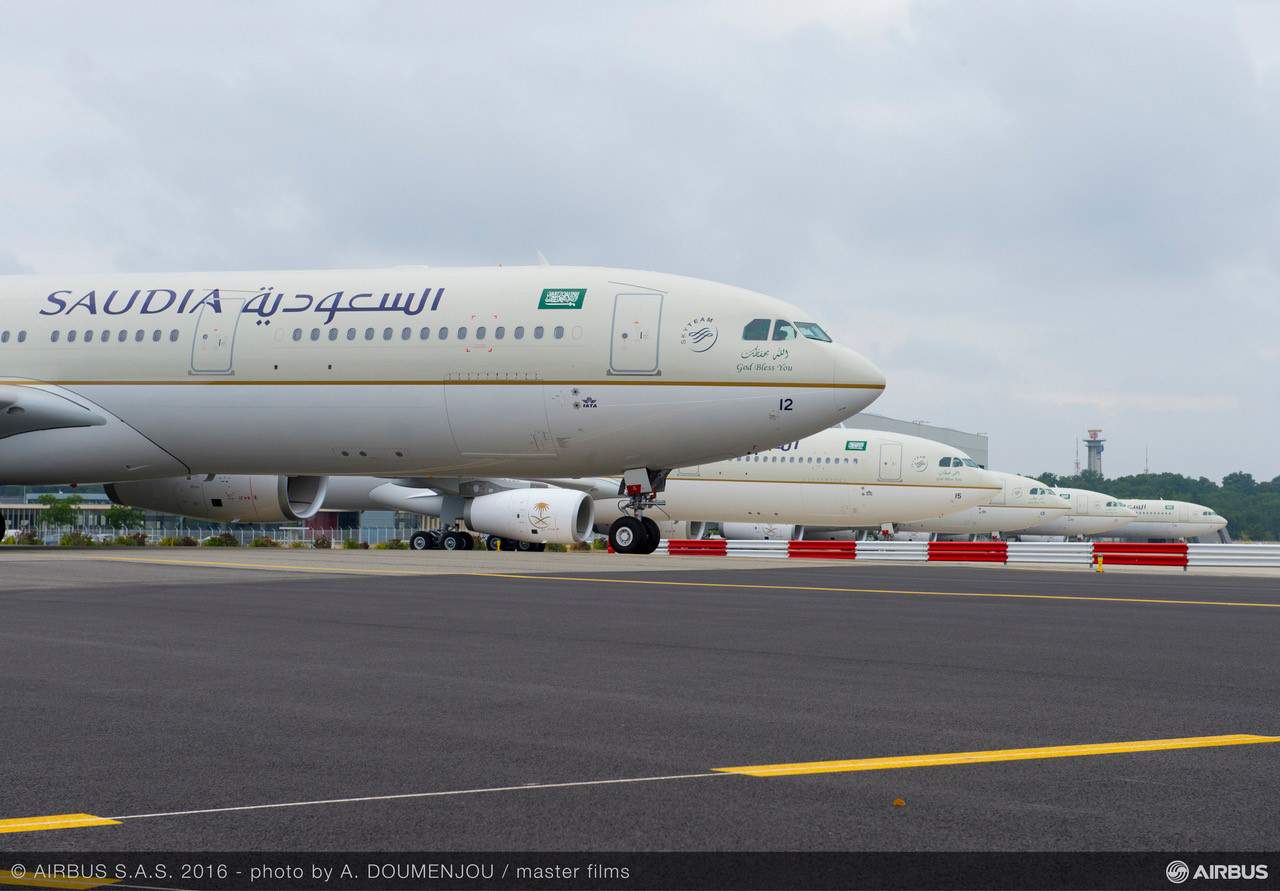
Saudi Arabia will launch a new flag carrier flying alongside Saudia to meet demand for extra air capacity
MakeMyTrip, the leading Indian OTA, announced its foray in the Middle East region beginning with a full-service product offering in Saudi Arabia in 2020. A large Indian expat population in the region will be to its advantage, Videc says. Also active in the region, Kuwait-based Rehlat was founded in 2014. After building its presence in its home market and Saudi Arabia, it’s now expanding to the broader Middle East region.
Musafir was founded in the UAE in 2007, later expanding to India and Qatar. It has since also built upon its business travel division. HolidayMe, another UAE-based OTA founded in 2013, is primarily focused on servicing the travel and tourism demand for Saudi Arabia.
Videc believes following trends from the US, Europe, China and broadly Asia, the next five to 10 years in the Middle Eastern region will witness significant consolidation in online travel distribution.
Source: Videc’s Middle East Air Market Opportunity. Written by Virendra Jain and Deepak Jain.