The business travel landscape is changing as employees have greater freedom and want a travel culture that combines productivity and personalised experiences. This includes the rise of bleisure (business and leisure) among employees in Asia Pacific – a trend that is growing in popularity as work-life boundaries blur.
Travel management companies and corporations have to evolve from their traditional approach to embrace this change in behaviour while continuing to provide high quality travel experiences.
To discover what is driving change for corporations, Amadeus has published the Future of Corporate Travel, which looks at the top five trends currently impacting the corporate travel industry. It has also gathered expert views on each of the trend.
Voice is the next frontier

(Image credit: metamorworks/Getty Images)
There’s a major shift happening between human and computer interaction particularly with voice technology across Asia Pacific. As travel companies continue to invest in voice technology businesses will have quicker access to the traveller’s profile, real-time alerts and in-flight amenity checks within a single natural sentence. This means that travel consultants and travellers won’t have to go through multiple screens; they will soon be able to achieve the same goal much more quickly – using voice.
I personally think voice will be the differentiator moving forward. If you think of it, talking to one another is the most natural thing humans do. Typing, swiping and other forms of interaction are all just intermediate steps, as we are unable to efficiently talk to a machine. This will change, and companies that devise the most efficient way of selling high value and high engagement products via voice will lead in the future. ― Nishank Gopalkrishnan, chief business officer, Musement
The rise of super apps
(Image credit: vector_s/ Getty Images)
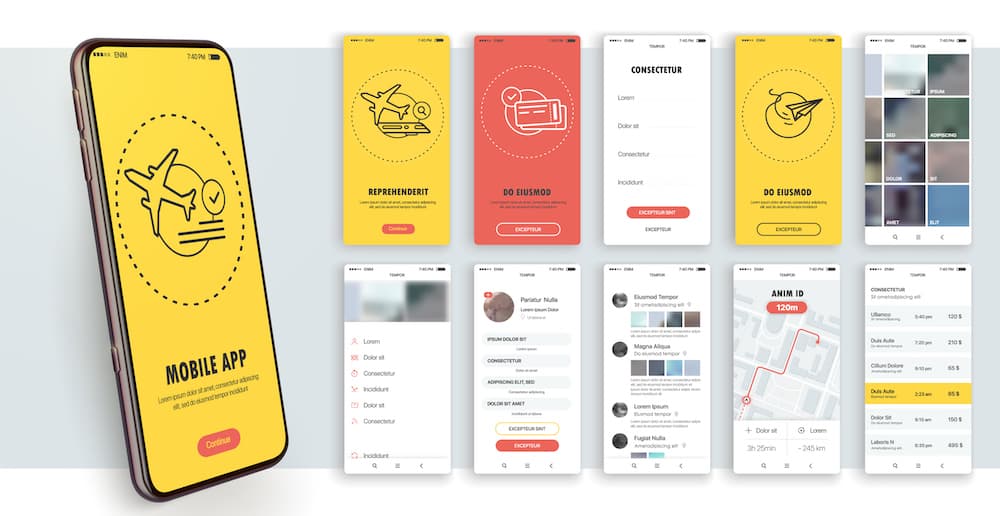
Corporate travellers are juggling so many apps (airlines, travel agencies, hotels etc.) that the super-app concept is very appealing as it gives them the ability to book, make changes, get an itinerary, claim expenses – all on one single app and the ‘all-in-one’ solution. It is one of the top trends among big players in the mobile space. Much like WeChat has done for years in China other companies in Asia like LINE, KakaoTalk, Grab, and Go-Jek are expanding to other verticals adding functionalities and content to their apps, from mobility options to food delivery, media, payments and travel, targeting more business travellers.
Moving forward travellers will expect everything to be easily accessible to them through one simple-to-use app. Corporations need to bear this in mind when reviewing their solutions that they make available to their employees.
Artificial Intelligence is already impacting and benefitting the travel industry. More travel management companies and airlines are using chatbots to service their customers and support them in their shopping, information requests and complaints processes. For me the next big chatbot? One that can answer our questions around our Corporate Travel policy when we are traveling and on-the-go. ― Nadia Yahiaoui, head of corporations, Asia Pacific, Amadeus
Feeling the impact of 5G
(Image credit: Evgeny Gromov/Getty Images)
Faster networks through 5G are now being deployed across Asia Pacific and are enabling other technologies to take off, changing the way that travellers move around their own cities and travel to others. Thanks to the increased speed and amount of data there will be more advanced connected devices – from smart homes to self-driving cars and smart cities – and increased personalisation through artificial intelligence (AI).
This greater connectivity will allow travel companies to provide a seamless travel experience in which a business traveller can go door-to-door from their home to a hotel with little hassle and a truly personalized service. The frictionless experience will continue at their hotel with 5G smart hotels – offering faster connection speeds for smartphones and connected devices. With 5G the end traveller is going to be better connected than ever before. Businesses need to be ready for this and ensure they best equip their employees to take advantage of 5G hyper-connectivity.
Business travel is no longer just about getting to and from home. It is a series of experiences that demand an intuitive, streamlined management, which is driven through mobile. I’m convinced that the 5G rollout will completely transform the corporate traveller’s mobile experience. For starters, access to unlimited data will allow for more informative and productive business trips while on the other side corporations will be able to provide better guidance for their corporate travellers in terms of access to hotel, transfer and destination services in virtual reality format. ― Edgar Vega, commercial head of Asia Pacific, mobile, Amadeus
Mastering security with a seamless travel experience

(Image credit: metamorworks/Getty Images)
The security of corporate travellers will always be the number one priority for corporations and travel management companies. However, maximum security doesn’t always mean a smooth travel experience. One trend to look out for in the near future is how the travel industry will master security alongside a seamless travel experience.
Innovation in this space is already well underway and biometrics are playing a huge role in making this happen. Long queues and scanning passports will become a thing of the past as travel becomes frictionless. Amadeus is working with several airports in line with IATA’s One ID vision to use biometrics to reduce wait times and move towards a remotely-hosted biometrics solution for the industry. By providing a seamless travel experience business travellers will be able to spend less time waiting in queues and spend more time focused on the job they are there for. This is crucial for those that travel regularly for work especially in terms of keeping job satisfaction levels high.
In business travel there are two goals that corporations need to consider – security and seamless travel. The tricky part is applying them in such a way that one goal isn’t achieved at the expense of the other. Better yet, technology needs to evolve that can improve both sides of the equation. For business travellers there are some opportunities in credentialing that could help authorities in risk profiling and crowd management. ― Faisal Ariff, founder and CEO, Borderpass
Duty of care
(Image credit: ArtMassa/Getty Images)
In most countries employers have a legal and ethical duty of care to their employees when they travel, which means they should take all reasonable steps to ensure employees’ health and safety. In the near future, we expect to see companies evolving their duty of care approach to a real-time one that uses mobile technology and instant messaging to keep track of their employees’ well-being minute-by-minute. This will allow companies to provide real-time assistance and disruption management to tackle any issues directly and without delay.
In any industry, the safety and security of employees traveling for corporate travel is a company’s number one priority. For us, it’s essential that we have a trusted travel technology partner that will help us focus on operations and then cost optimisation. This will ensure we always undertake the right duty of care priorities and help us continue to give our employees the highest quality experiences whilst they travel for work. – Jun Noguchi, senior manager, head of HR systems, health & safety Fuso, human resources, Mitsubishi Fuso Truck and Bus Corporation.
• Featured image credit: Tero Vesalainen/Getty Images