How a summer holiday in France led to “Scan, Split, Tip, Pay” and expansion beyond Dubai
IT was during a summer holiday in France when Sameer Poonja and his two mates used the Sunday app, the French payments app for restaurants, and a light bulb came on.
The Dubai-based Poonja, who formerly worked with Emirates on innovation, has been involved in fintech projects the past few years, first with Visa, working on a digital communal funding programme and installments, and later with Roland Berger in the financial inclusion services area.
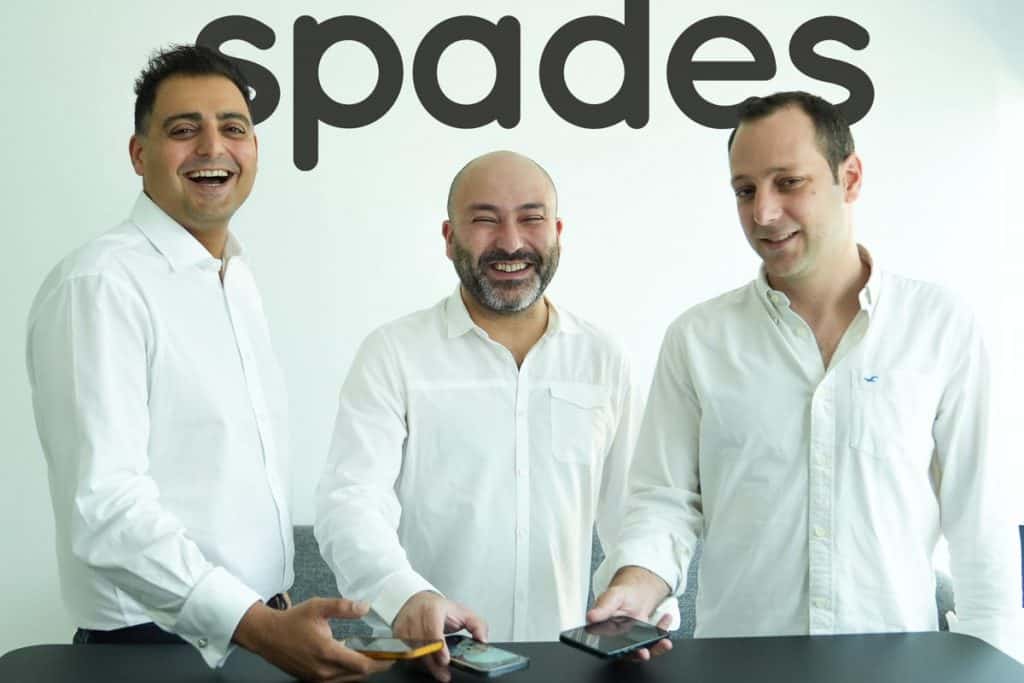
Sameer Poonja (centre) with Adnan Haque (left) and Mehdi Chraibi: After raising $2.5 million, the trio are looking to raise another round to scale beyond the Middle East.
Given how the pandemic had not only disrupted travel but also corporate careers, Poonja and two friends, Adnan Haque and Mehdi Chraibi, were looking for something new to get their teeth into, specifically a startup around payments and travel/lifestyle in the Middle East.
“I come from travel, hospitality and payments, Adnan from investment banking and travel and Mehdi from the telco side, and we were exploring the plan, party and pay stages of dining,” said Poonja. “When we came across the Sunday app, we realised we could skip the plan and party party, and get straight to pay. I did my own research, went to their restaurants, tried it, spoke to managers and the wait staff. It was so easy, scan, pay and go.”
Inspired, he returned to Dubai with the idea and the three partners invested their own money ($100,000 each) into building a product. “It was tough, of course. We had to take a huge salary cut,” laughed Poonja. “We called in every single favour.”
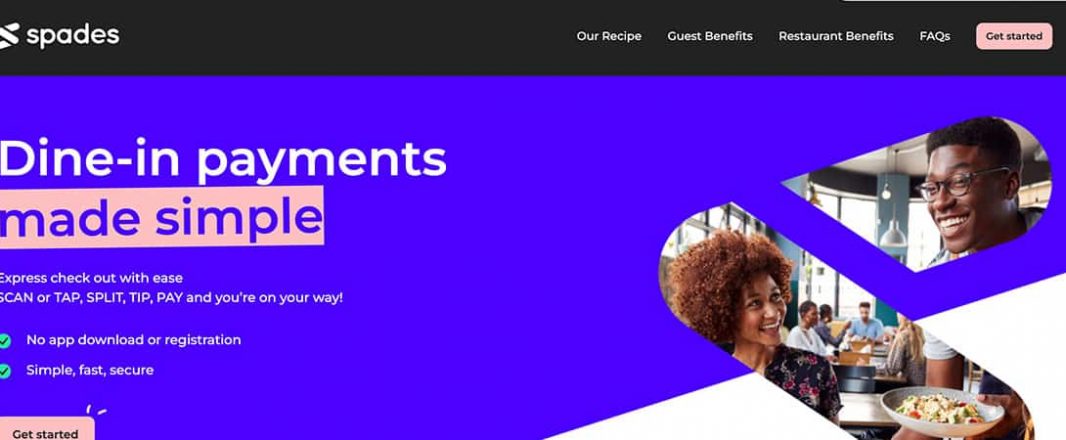
In December, they launched Spades, a payments app that allows customers to “Tap (or Scan), Split, Tip, and Pay”.
Three months later, it closed a seed round of $2.5 million from angel investors who include prominent European business angels, such as Thibaud Elzière, the founder of Fotolia & eFounders; Eduardo Ronzano, the founder of KelDoc and managing partner of Secret Fund; as well as Yan Hascoet, Othmane Bouhlal, and Omar Benmoussa, the founders of Chauffeur Privé – Kapten – which was acquired by Free Now.
The angel funding round was closed with early investments from global and regional VCs such as Nordstar and Impact46.
With the funding, Spades now wants to expand from the MENA region to South-east Asia. Its team of 75 people are spread across Sri Lanka (a tech team of 48) and in Dubai and Saudi Arabia. It recently opened an office in Singapore.
Lessons learnt from teething problems at launch
Poonja recalled its launch in Dubai when it rolled out its first restaurant customer, Nola, a popular social eatery. “At the peak of service times, we crashed their system for 45 minutes which, you can imagine, was not fun. Staff went back to having to take orders manually.”
The lesson learnt? “We are definitely in a good tech space but it’s a space that is extremely reliant on human capital. Dining is the last industry to adopt digital tech and what we have seen is, once they adopt digital, they become so reliant on it it’s impossible to go back. Now if you give some restaurants cash, they don’t know what to do with it. So anything you can add that’s of value to them will remain for a good period of time.”
In that way, the pandemic was a blessing in pushing dining online. “When QR codes came in, they had to adopt. People were already scanning to read the menu, now we just had to complete the loop,” he said.
To deploy Spades, establishments install what a Spades Puck which has the embedded QR code and NFC. “At the start, we locally sourced it but they were costing 30 dirhams per puck. Now we make them inhouse for less than two dirhams a puck, by getting most of the stuff from China”
The biggest tech challenge is the fragmented POS landscape of restaurants, which Spades has to connect to for seamless payments. Poonja said that in the UAE alone, there are over 200 POS and Spades covers 65% of them. “We have teams just focused on payment and POS integration integration.
“We also force a tip which has been well-received. Tipping is not a thing in the UAE, people assume tips are included. Salaries of wait staff are pretty low and our system keeps a tally on tips and directs them directly to the staff. Our biggest advocates are the staff.”
To get restaurants to onboard, it matches whatever fee the banks were charging. The average ticket size per person is around 360 dirhams (about $100), said Poonja.
Poonja said that the consumer take-up rate has been encouraging – it reached 33% repeat user rate in six months. It’s also found good response from restaurants. “We have full view of who paid what, who’s split. We help restaurants turn around tables faster – there’s a figure in the UAE that says 10 million minutes a year are wasted in table turnover – and they don’t need to invest in payment terminals because every table becomes its own payment terminal.”
Launching in Saudi Arabia, Singapore; venturing into hospitality
Currently, there is no set-up fee for restaurants but eventually once Spades builds up enough data to help restaurants get smarter about their customers, it may explore a subscription service, said Poonja. Right now, it makes revenues in the margins which he admits are thin. “It’s about volume.”
It currently has 250 restaurants in UAE and has launched in Saudi Arabia with MJS Holding, a chain with 20+ restaurants.
It is also moving into hospitality which sees potential use for Spades in its restaurants, with brands such as Dusit Thani and Raddison Red. Poonja said hotels had also asked Spades if they could cover room service as well as room checkout, and it is also exploring opportunities with hotel loyalty programmes.
“People are just wanting to see how they can solve payment hassles for themselves and for customers,” he said.
Along with expanding to Singapore and South-east Asia, It is looking to raise a bigger round of $8-$10 million. “We are almost halfway there,” said Poonja.
For the three founders, Spades, being their first startup, has come with huge lessons. Other than the salary cuts, they’ve learnt to execute fast and manage with lean resources.
“The advantage is we have a better understanding of how organisations and groups work. By having this understanding, we have an advantage over startups that are run by younger people. We have the maturity not to make the mistakes new fintech startups make. We know that it’s not just about taking a restaurant live – but it’s about adoption. We have 52% adoption across the group.
“The biggest lesson I learnt from working with companies like Visa is that you should be able to do payments in multiple ways. Face is payment today, for example. Everyone wants to get to that utopia of Amazon’s one-click payment.”