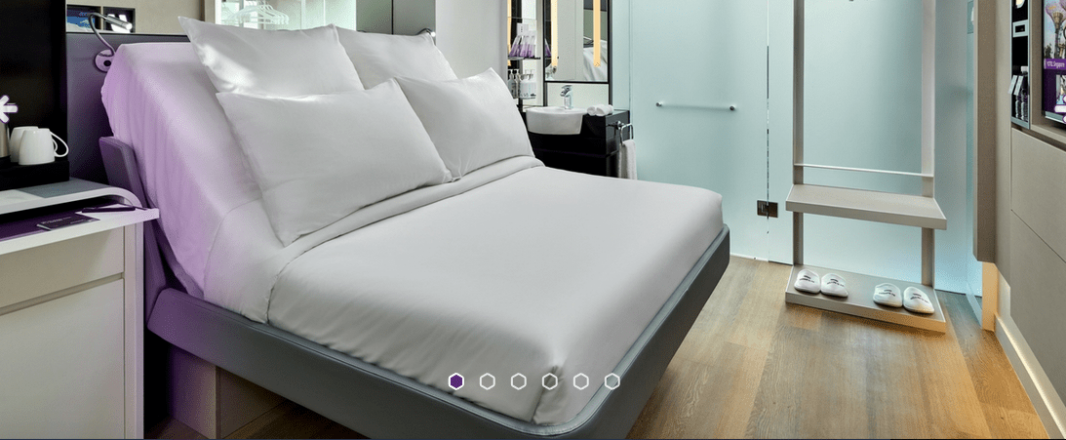
Walk into Yotel Singapore and you could be forgiven for thinking you’ve stepped into the mission control of a space capsule. The look and feel is white and minimal with splashes of purple.
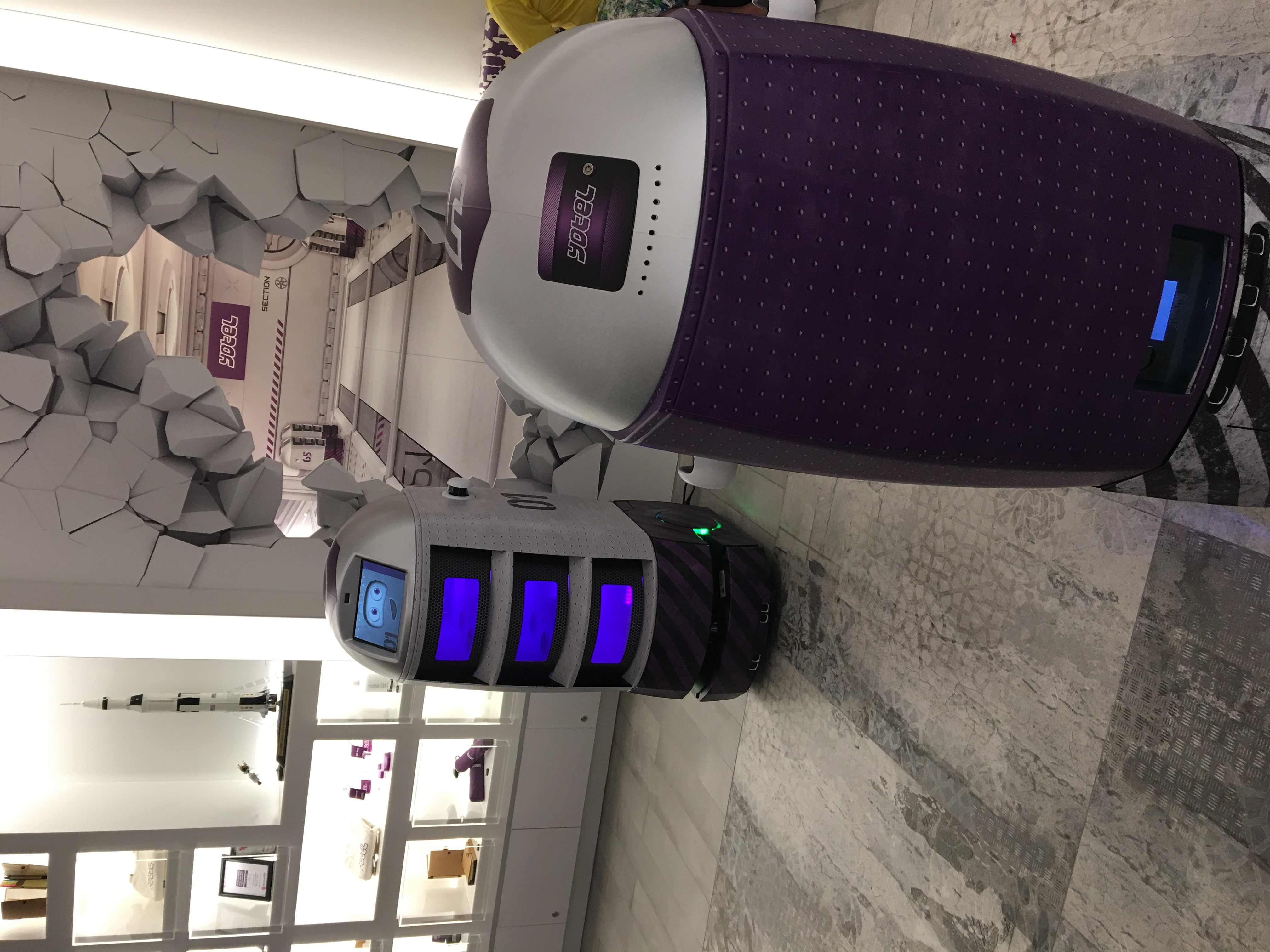
Yobots at work
Two Yobots, one male and one female (distinguished by her eyelashes), catch the eye. Wifi-enabled, these robots deliver amenities and services to the room when summoned. Check-in and check-out are fully automated and your room key is self-generated. In the smart cabins, smartbeds adjust themselves into sofas when required and there’s mood lighting at hand.
The day I was there, there were lots of guests (young Asian families) and just a couple of staff to help where necessary. For its 610 rooms, it employs 110 staff, a very efficient ratio in labour-starved Singapore.
Jasmine, who gave me a tour of the hotel, is typical of the staff demographic – early 20s – and exudes an air of confidence and animation. A hospitality student, she did her internship at W and decided to join Yotel because she wanted to try something new and what she likes about her new role is that “I get to do everything”.
“We call ourselves Mission Control and Crew and we do everything, from concierge to billing,” she said. “There are many new things to learn. This way, I get to figure out what I like doing.”
Nikhil Manchharam, managing director Asia, told me later that the majority of his staff do not come from hospitality. “We are looking for ‘alternative’ people who do not want to do just a job but want to be part of something new and different, people who want a style and identity.
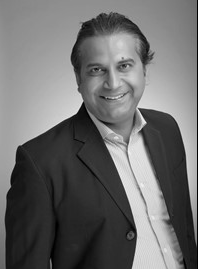
Nikhil Manccharam: “The idea is to create a place where customers can live, work and play in a destination, and where local communities can integrate with transient travellers.”
“We have artists, performers, dancers among our crew. We want to create an environment where they can be themselves and which fits their lifestyle. That way, you bring out the personality.”
Beyond personality, Yotel has positioned itself as setting an innovative style in hospitality through the use of technology and new thinking.
It’s clearly a leading player in the Singapore Tourism Board’s Smart Hotel Technology Roadmap rolled out late last year to “identify the next-generation system capabilities such as facial recognition at check-in and payment wallets that typically define a digitally-driven smart hotel”, according to STB.
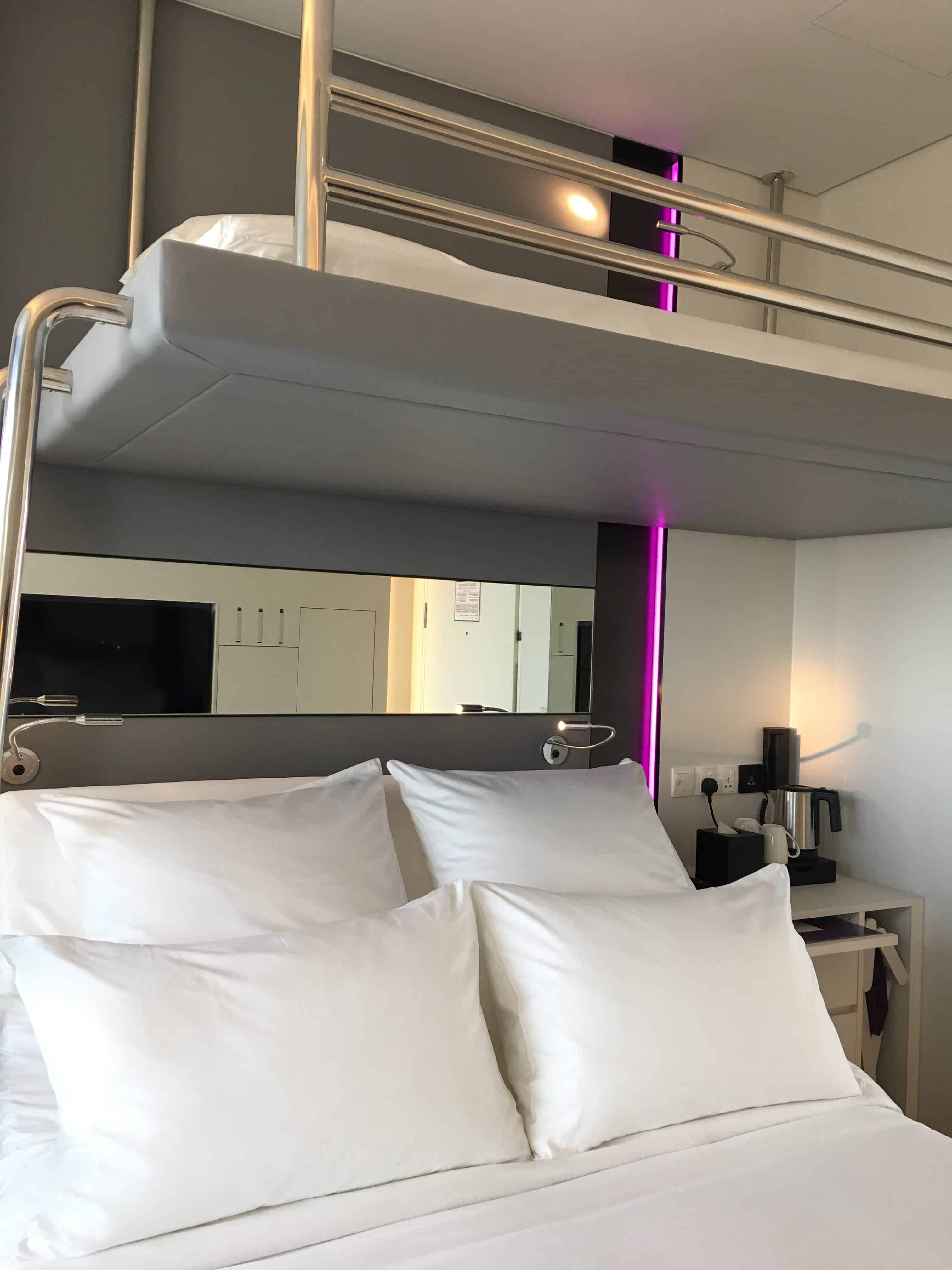
Bunk beds for families
The hotel has an innovation budget to invest in startups working on hospitality pain points such as guest services. The “Yobots” fall into such startups.
“We don’t want to replace jobs but our business needs a rethinking of systems and processes. The margin of human error has to be minimized,” said Manccharam. “In the Singapore context, it’s very difficult to find people to work in the service business and with the quotas, we can’t fill certain jobs such as concierge, housekeeping and guest services.
“Our Yobots can make coffee or tea,” he smiled.
He admits they still have some way to go in areas such as AI and machine learning “but we will invest in those areas”.
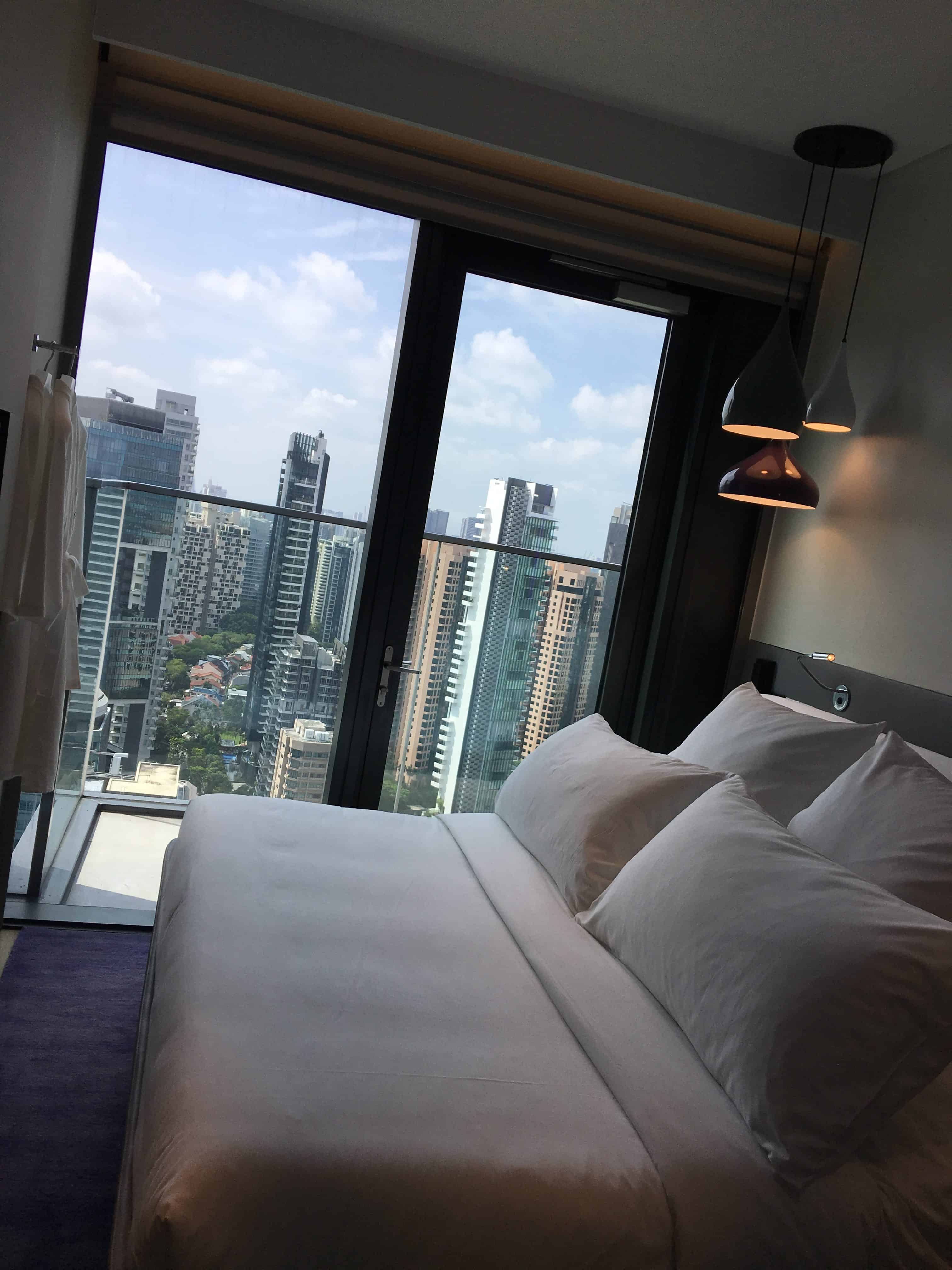
A smart cabin with a smart bed that doubles up as a sofa, with a view of Orchard Road
“We are not out to create technology for technology’s sake but we want to be more efficient and use technology to improve the returns on our expenses.
“The idea is to create a place where customers can live, work and play in a destination, and where local communities can integrate with transient travellers.”
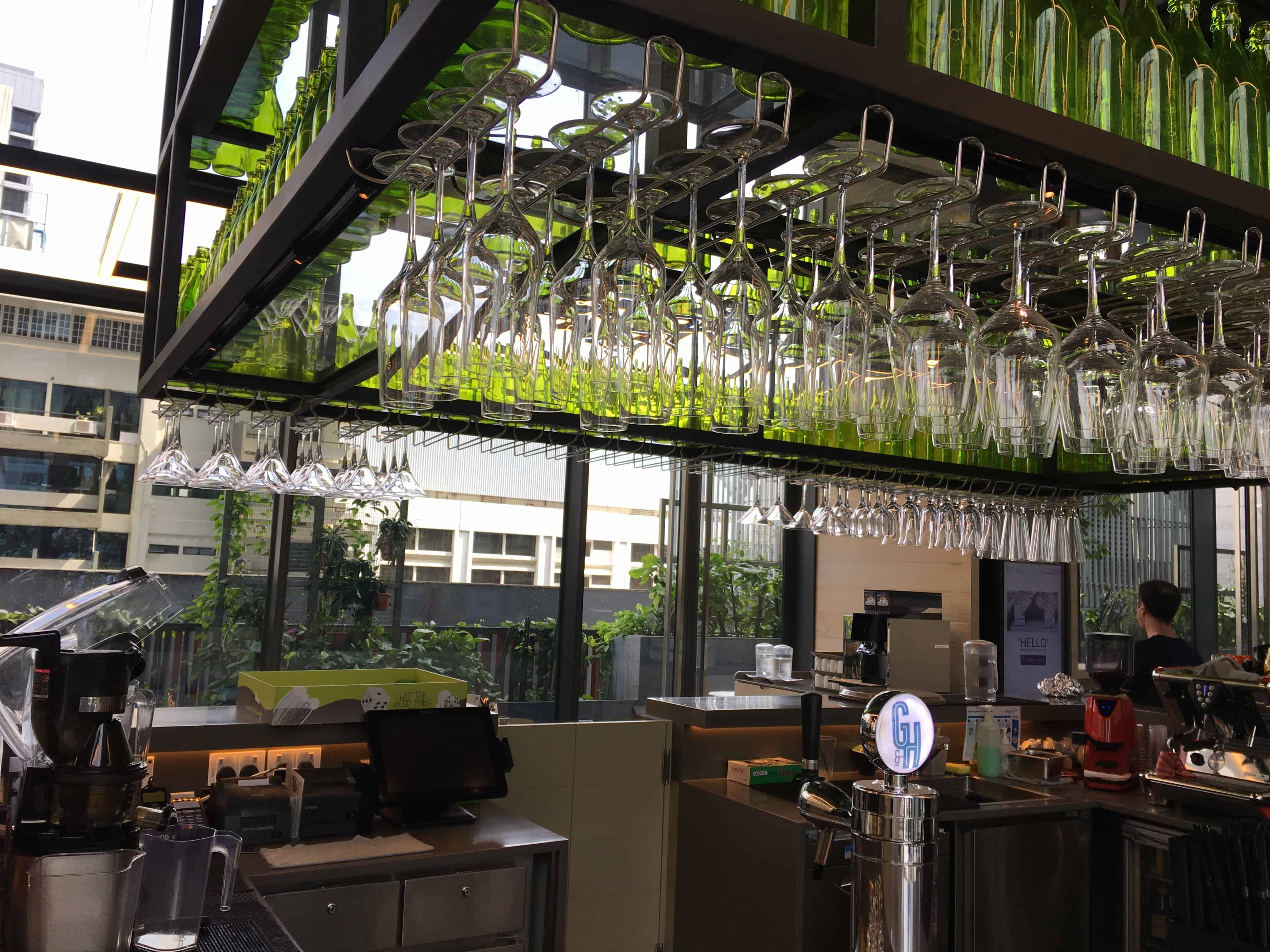
The rooftop area which serves as bar, cafe and other spaces which can be used for co-working studios and events
The rooftop has a bar and spaces which can be transformed for multiple uses – events and co-working studios for instance.
It is collaborating with groups such as the Lo & Behold Group (known for its food & beverage concepts) and Ce La Vi which will be involved in the activation of the common spaces and local community building.
“This is the new economy and we are redefining what a hotel should be,” said Manccharam.
Having spent 18 years of his career with Starwood Hotels & Resorts where his last role was vice president, development & investments/asset management for APAC, Manccharam signed a partnership with Yotel to expand the brand in the region.
Globally, he said, the goal is to have 60 Yotels by 2022, of which 12 to 15 would be in Asia. Singapore is its first property in Asia and it is clearly designed to be the flagship and prototype for future properties in key gateway cities. It is developing the second Yotel, with 130 cabins, at Jewel Changi Airport.
With an average room rate of S$170 and its location on Orchard Road, Yotel is getting good ratings on TripAdvisor with a 4.0 score, and travellers rating “excellent” and “very good”. Its business mix is 50/50 leisure/corporate and it is evident it has a brand.com strategy to drive direct bookings as much as possble given its younger customer demographic.
The Yotel brand was started by Yo Sushi founders Simon Woodroffe and Gerard Greene in 2008 and the idea was to build quirky capsule hotels targeted at “digital naturals” who are always online. From the start, the founders wanted to create a seamless experience for its guests, from check-in to check-out. The thinking also extends to its concierge service, Shaggy, a standalone app launched in 2015. At the time, Fergus Boyd, Yotel’s digital and IT director, said, “We embed digital as part of the core customer proposition, the physical product and the online journ
Since then, the brand has clearly evolved and it is evident it will adapt its strategy to Asia through its local partnership in the region. Manccharam, who said he wanted a change from “big corporate culture”, joined Yotel in January 2017 because “I want to create a destination with a sense of purpose for what people want to do”.
He said, “Yotel is the first hospitality brand that is about time. We don’t want to waste your time because it’s so valuable and we want to help you make the best use of your time by helping you do what you want to do when you are staying with us.”