It’s hard not to paint a bleak picture of the in-destination experiences sector. Tom Jenkins, CEO of the European Tour Operators Association, called the tour operator business “a bloodbath in the jungle.”
Rezgo CEO, Stephen Joyce, who spoke at WiT Indie 2020 earlier this month, predicted Covid-19’s impact would result in “a mass culling of the long tail” as more cash-rich operators manage their market share while smaller operators struggle to stay in business long enough for travel demand to finally return.
“As things settle down, we may see a return of some operators to the space, but because of the financial impact this crisis will have on many individuals, there may be a large number of operators who decide to return to the work force and leave entrepreneurship, and its associated risks behind,” said Joyce.
The crisis serves as a bitter reminder for a notoriously offline industry of the critical need to go digital, if their brand is to survive once some level of normality resumes.
“At this point, staying in business is the number one priority… In the short term, they should make sure they have the basics taken care of like making sure they have a website and their Google profile is updated.” He also recommended focusing on marketing locally, shifting their attention to targeting domestic travellers who are looking for something to do closer to home.
According to BeMyGuest CEO, Blanca Menchaca, “the ability to endure this situation along with the regeneration of our industry will be dependent on keeping costs to a minimum and automating the essential sales process…[A] colossal spotlight has been activated, shining directly on the massive inefficiencies of manual processes in our industry… The current crisis has only served to further highlight the critical need for automation throughout the attractions, tours and activities industry.”
While an unfortunate way to learn a lesson on the power of digital, Menchaca argued that the dramatic downturn in travel could be an opportunity for experience providers to upgrade their offerings and processes in the long run.
“Operators who were confident in their flourishing business believing they had no need for technology are now bearing the very real costs of resource excess. It’s time for agents and operators to take a serious and realistic look at their operations and leave the old ways behind them. If nothing else, the Covid-19 situation has shown us how critical automation is to saving time and money.
“This is a great time to prepare for the path back to recovery with a complete overhaul of outdated, manual methodology, [and get] ready for the upturn, which we all know will eventually come.”
Fortunately, many technology providers are working to develop online tools to help operators manage this time, in an effort to help the industry get back on its feet. “Going forward we’re giving our full commitment to further tech innovations to directly help the industry bounce back,” said Menchaca.
BeMyGuest is helping facilitate cancellations and maintain refund records. Rezgo is crediting cancellation fees back to suppliers, to eliminate any additional costs. Klook is implementing flexible policies and processes as well helping reschedule activities to also minimise operator costs.
Klook is also working closely with tourism organisations and various recovery taskforces, relaying information between governmental bodies and independent merchants, to ensure they get any support offered.
Within the company, Klook is focusing on learning and development for its staff and improve its core competencies. Said Marcus Yong, vice president, marketing, APAC, “Our strong financial health will enable us to weather the storm and give us the luxury of focusing on the growth of our employees. For instance, we have started developing learning improvement programmes for our people.”
Those that can weather the storm could see smoother sailing eventually
While the entire industry is in unchartered waters and it is easy to be pessimistic, those that make it through will be in a new position of strength, so long as they use this time effectively.
“The businesses that do last through this crisis will be stronger because of it. Once the climate improves and demand returns, these companies will be a great position to gain new business and return to a growth phase,” said Joyce.
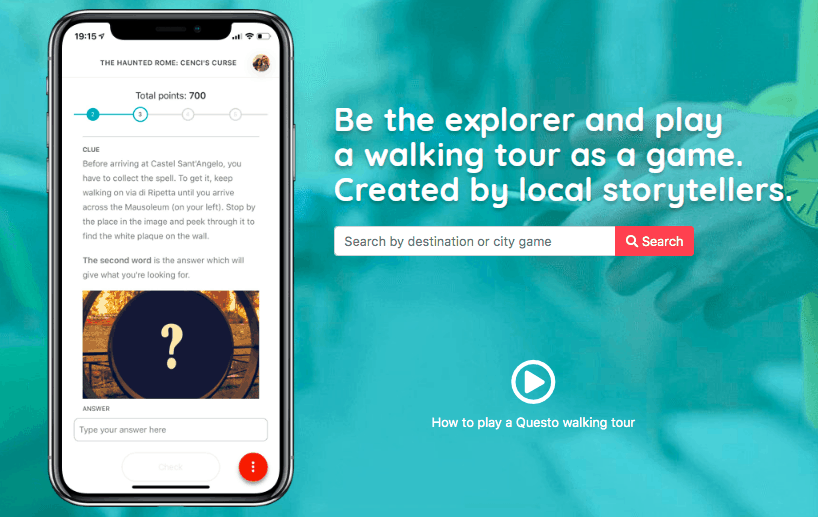
For example, Questo – a real-world exploration game that combines mobile gaming with self-guided tours – has undoubtedly seen cancellations and a dip in sales, but is using the lull to develop more ‘quests’ in preparation for the rebound.
“As a marketplace for tours as games, our demand side is driven by supply, and so the more tours we offer, the more our users will play…This way, once this crisis [is] over, our users will have more content to explore. Sales-wise, we might focus a bit more on short distance travellers,” said CEO, Alex Govoreanu.
Admittedly, as Questo toes the line between mobile gaming and in-destination experiences, its digital operations inoculate it from the broader consequences of the pandemic faced by others in the sector. Its digital-first approach has naturally let it overcome the hurdle of running in-destination experiences in just one place.
“Being available in multiple destinations is hard, but it’s a great advantage in times of crisis because it makes the company less fragile. I will advise anyone to analyse their company for finding the true things that could transform their business into an anti-fragile one,” said Govoreanu.
Lead image: Getty Images