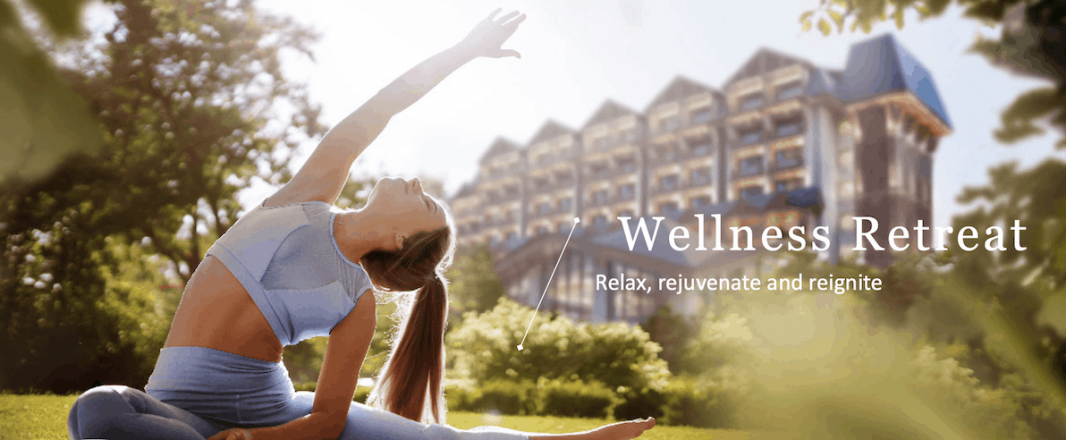
AS the pandemic wears on and takes alarming twists and turns around the world, it is clearly taking its toll on mental wellbeing and wellness and there is no denying that when travellers get back on the road, travel is in a unique position to address this need – from wellness retreats to immersion in nature, as well as just the sheer ability to create bonding moments for people.
Findings from Mastercard’s inaugural Experience research, shared this week, reveal that people are willing to invest time and energy in experiences that leave them feeling uplifted long after the moment ends. They prefer experiences that they can do with family and friends (81%) and want to visit new places so they can see and do things they’ve never done before (71%) while being open to cultural influences and learning about new cultures (66%).
People increased their focus on tech enabled wellbeing (22%), rest and balance (29%), and soothing activities (30%) during the pandemic. Their proactive focus on self with an eye toward increased resilience lead them to prioritise mental wellbeing (85%), emotional wellbeing (83%) and physical wellbeing (83%).
A McKinsey study, “Feeling Good: The future of the $1.5 trillion wellness market”, in April 2021 also reinforces this trend, stating that 79% of consumers said they believe that wellness is important, and 42% consider it a top priority. The report identifies three trends – self-care, digital health and e-commerce.
Cognizant of this trend, businesses on the island of Sentosa, Singapore, are prioritising nature and wellness in their offerings both for the local market and for the international market, when it returns.
And it starts with self. During the panel at the WiT Travel Roadshow last week on “Finding Wealth in Health, Wellness and Nature”, panelists Mira Bharin, divisional director marketing & guest experience, Sentosa Development Corporation and Lim Mui Kim, assistant vice president of business innovation, Resorts World Sentosa, talked about how this period has made them more aware of their own wellbeing.
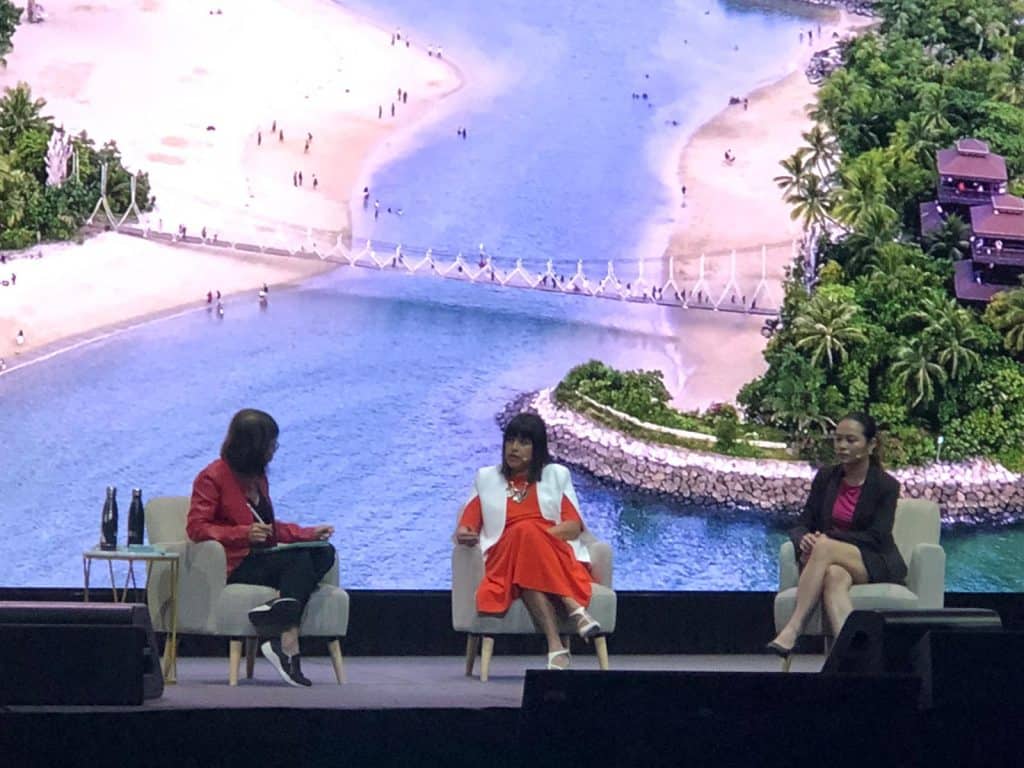
From wearing fitness trackers and devices that measure quality of sleep as well as sugar intake, to brisk walks and meditation, they are representative of a large and growing segment of increasingly health-conscious consumers.
Certainly within Singapore, where the 5.5m population has largely not been able to leave its borders in the last 18 months, wellbeing is top of mind. A survey conducted by SDC in November 2020 showed that 91% of residents said mental wellbeing was a key motivation for leisure, relaxation and destressing.
“What we are seeing is homes are no longer being seen as a sanctuary, it’s become a multi-dimensional space, working, studying. People need to venture out for wellbeing,” said Bharin.
At the height of the pandemic, when people were largely confined to their homes, the SDC launched Sunset Therapy on Instagram stories – where people could take a mental break and decompress to sunset scenes – and it also launched two playlists on Spotify.
Resorts World Sentosa’s advantage is its sprawling, open spaces at a time when people might be afraid of crowded places. It is keen to forge new partnerships to offer wellness retreats, with an emphasis on preventative health such as TCM (traditional Chinese medicine). Lim said, “We want to create an ecosystem of wellness programmes.”
She also sees the emergence of a new “bleisure” segment in which business travellers are looking for relaxation and breaks during their trips, and the resort can offer customised learning courses as well as outdoor activities with its suite and villa stays.
“We also want to change the perception that Universal Studios Singapore is just for kids – we want to maximise unconventional spaces for possible set ups such as galleries, exhibitions, business dialogues.”

Lim said one product that has done exceptionally well during this period is its PADI Open Water Dive Course which is fully booked till end of 2021. Students can make their first open water dive in its Open Ocean Habitat, home to over 40,000 marine animals. She said customers tended to veer young, from early 20s to mid 30s.
Bharin said tours that had done well on Sentosa in general are the Sentosa Insider Tours which give hands on experience with nature and heritage, Behind The Magic tour of Madame Tussauds where you learn about wax paintings and hair insertions, and Yoga By the Beach Series – where SDC partners with businesses on the island to do a package, yoga and breakfast.
With food a big pillar of wellness as well as sustainability – for example, Thailand has launched its organic food platform to the international traveller with the reopening of Phuket – Bharin said, “We observe the same trend – there’s a consciousness about food, food sources and carbon footprint. We see an opportunity to make a difference and are exploring with various establishments on Sentosa. Some resorts have their inhouse gardens for example, Shangri-La’s Rasa Sentosa, Sofitel and Resorts World.”
Resorts World recently won the Special Award for Sustainability at the Singapore Tourism Awards 2021. Other than sustainable procurement practices, Lim said, “We strive to set benchmarks on our responsible sourcing, as well as establish fair and ethical business processes. For instance, our culinary creations at Ocean Restaurant feature sustainable seafood. In 2020, we established a comprehensive yet easy to follow set of sustainable seafood guidelines for internal procurement when purchasing ingredients for Ocean Restaurant.”
Waste management is another focus area – “to improve our ecological footprint, we have installed food grinders and biodigesters in the resort’s kitchens to significantly reduce the amount of food waste to landfill. We have also deployed smart bins where these energy-saving solar powered larger capacity compactor bins are able to compact trash,” said Lim.
In many ways, despite being urban places, Singapore and Sentosa are well-positioned to offer nature offerings. For example, the country’s National Parks has 350 parks, gardens and nature reserves under its care and in 2020 46.5% of Singapore’s land was covered in green space, with a tree canopy percentage of almost 30%. Sentosa boasts 40 hectares of protected nature areas, more than 20 heritage trees and over 100 recorded bird species
Said Bharin, “Earlier this year, SDC declared carbon neutrality by 2030, sustainability has been part of our DNA all along. We want to protect assets for the future and make it easier for guests to immerse themselves in, for example, guided tours to ecologically sensitive areas like Tg Rimau, where we are taking extra care refreshing wayfinding and interpretative signs along the coastal nature trails, for example, scan QR code to learn more.”
Resorts World has added a new immersive zone to its S.E.A Aquarium, extending the visitor journey from tropical rainforest and intertidal coastal terrains, to underwater cities of coral reefs.
Said Lim, “We are privileged to have 2.9 hectares of protected secondary forest and more than 100,000 marine animals that call RWS home. We do have an opportunity to offer customised learning courses in this area, adapted similarly to what we have offered at Universal Studios Singapore. This is our way of promoting sustainable tourism.”