
The majority of travellers, both global and from Asia Pacific (APAC), say that “enhancing perspective” and “liberation” are the main motivation for travel, according to the latest TripBarometer from TripAdvisor.

Travellers want enriching experiences.
The TripBarometer: Psychology of Travel report, conducted by independent research firm Ipsos, examines the motivations behind travellers’ vacation choice, traveller emotions at the various stages of a vacation and the post-trip impact of travel.
We produce the findings from the report (infographics below):
Motivation for travel
- “Enhancing perspective” is the primary motivation for vacation choices for the majority of travellers (global 71%, APAC 67%), followed by “liberation” (global 62%, APAC 66%).
- “Order” and “harmony” are the least important motivations for travellers, with only 21% falling into these categories globally, and only 22% and 19% in Asia-Pacific travellers falling into the two categories, respectively.
- Travellers from South Africa, UK and Italy lean towards “harmony”, Brazilians, Thais and Chinese seek out “liberation”, while Russians are more keen on getting “luxury” from their vacations.
Hoteliers were also asked to select statements, which best matched how they wanted their guests to feel as a result of their stay. 71% of APAC hoteliers want to provide their guests with a sense of “harmony”, compared to 73% of global hoteliers. The Asian respondents are also keen to provide an experience that offers a sense of ‘immersion” and “liberation” at 49% and 47% respectively.
Barbara Messing, chief marketing officer, TripAdvisor, said the report showed that travellers want their vacation to count. “it’s about broadening horizons, feeling immersed in local culture, and sharing the experience with loved ones.”
Feelings of travellers at various stages of a trip
- 54% of travellers, both globally and in APAC, report feeling “excited” at the booking stage. Japanese travellers tend to be the most excited leading up to the vacation, while Thais and Indonesians tend to be among the least excited at the booking stage.
- Excitement is also the predominant emotion for most travellers on arrival at their destination (global, 55%; APAC 56%), with 34% of APAC travellers also reporting feeling “energised” at this stage.
- During the stay, the majority of travellers (global 45%, APAC, 42%) feel “relaxed”. This is also the time when travellers begin to feel more “liberated” (global 26%, APAC: 32%) and “closer to their loved ones” (global 24%, APAC 24%).
- Travellers feel “fulfilled” both on departure from their vacation (global 47%, APAC, 47%) and when they are back home (global 45%, APAC, 43%).
- 36% of global respondents and 35% of APAC respondents also feel “relaxed” following a vacation.
- Indonesians are among the nationalities most likely to feel “fulfilled” on departure from their holiday, while Thais are among the least likely to feel ‘fulfilled’ both on departure and once they’re back home.
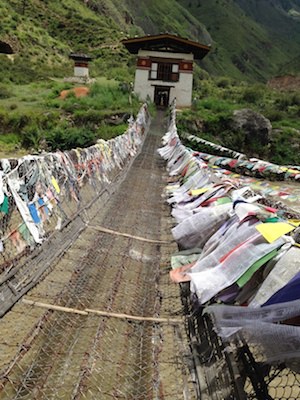
Liberation is a motivation for travel.
As part of the study, hoteliers were asked what actions they took throughout the traveller journey to relate to their guests. Half of APAC hoteliers (49%) say their main priority is to ensure a smooth and efficient process at booking, and 37% are keen to minimise any potential stress leading up to arrival.
Effects of vacation experiences on everyday life
- 66% of global travellers and 61% of APAC travellers report that returning home from a trip has prompted them to plan another vacation.
- Over a third (38%) globally and 32% of APAC travellers also introduce new foods into their diets. However, Thais and Indonesians are ranked among the least likely to introduce new food and recipes into their regimes.
- APAC travellers are less likely than others to become more open minded and tolerant of others (global 45%, APAC 41%), but more likely to learn something new (global 37%, APAC 40%) as a result of a holiday.
- Indonesians (61%) and Malaysians (60%) are most likely to become more open minded and tolerant of others than travellers from other countries.
- Thais (49%), Indonesians (48%) and Malaysians (48%) top the list of travellers most likely to learn something new as a result of a trip, while Indians are among the least likely (29%).
- 35% of APAC travellers also say they have become more environmentally friendly upon returning from a trip, compared to 31% globally. Indians (49%) and Thais (44%) are among the most likely to become more eco-friendly upon returning home from holiday.
- Malaysian and Thai travellers are three times more likely than the average global traveller (4%) to start a family post-vacation, with 12% of Malaysians and 11% Thais reporting that they have started a family as a result of a holiday. The Japanese, on the other hand, are the least likely to start a family post-vacation (1%).
- Millennials are more likely to learn something new (42%) or start a new relationship (10%) as a result of a trip.
- Travellers with no children are more likely to introduce foods they have tried while travelling into their daily diet (43%).
- Families are the most likely to prioritise more time on relationships with friends and family (31%) upon returning home from vacation.
Over half of hoteliers (global 57%, APAC, 55%) encourage their guests to write online reviews following their stay, and to recommend the hotel to family and friends. Those hoteliers who see a guest return rate of between 76% and 100% are more likely to prioritise “beginning to build a lasting relationship” (34%) during the lead up to a guest’s stay.
Marc Charron, president, TripAdvisor for business, said the results of the report e highlighted that hoteliers could stand out from the competition by providing unique and enriching experiences.
“And while it’s no surprise that travellers tend to be excited when they book and prepare for a trip, hoteliers are missing an opportunity to capitalise on that excitement and begin building a lasting relationship with their guests. Only a minority of hotels are currently making this a priority, but those who do also tend to receive more repeat guests,” he added.
• The TripBarometer study is based upon an online survey conducted from 17 July to 5 August 2014. A total of 53,804 interviews were conducted in 32 markets, spanning seven regions.
Download the global report here.
• Featured image (Terraced rice fields in Vietnam) credit: ©JimmyTran/Shutterstock