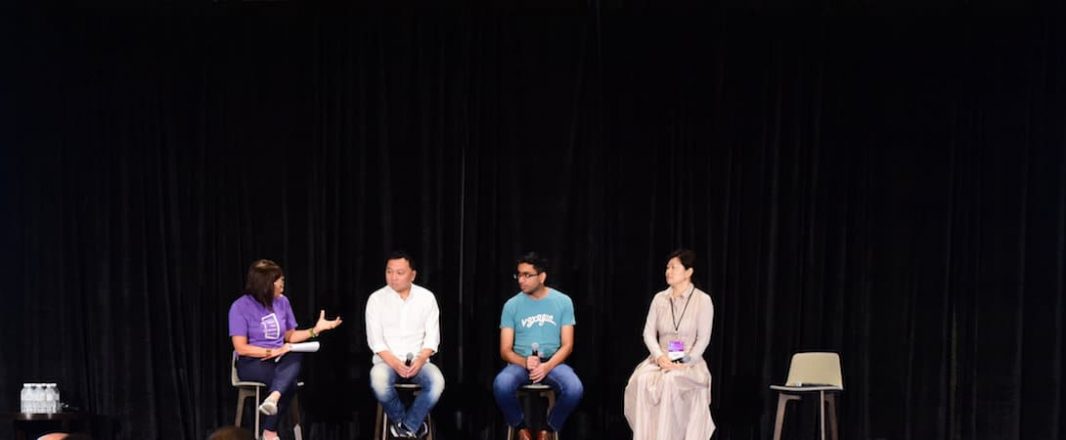
We remember Tushar Khandelwal, COO & co-founder, when he first pitched the idea of Voyagin at a WiTNext event aimed at future leaders. Since then, the tours & activities startup has gone places, been acquired by Rakuten and claims a solid footing in the most exciting space in online travel. In this interview, he shares his journey, lessons learnt and some of the thinking that drives him.
Q: All good stories start at the beginning … with Once Upon A Time …
Once upon a time, we saw that flights, hotels, and taxis were easy to book when travelling, but especially in Asia, it hard to discover and book things to do.
Information was scattered, often in a different language, and it was hard to filter out quality. The best ways to discover and book things to do in Asia were through a Lonely Planet guidebook – those books were heavy!
We felt like this experience could be disrupted by making it more mobile, searchable, and bookable directly (back then, you had to call phone numbers listed in the book)! That’s when we started Voyagin to discover unique experiences in Asia; over time, we slowly shifted the strategy to encompass all the best things to do (attraction tickets, tours by companies, and more) rather than just be a P2P platform for unique things to do.
Q: All good stories must have a hero (you) and a villain – who or what was the first/biggest/baddest villain you encountered in the first years of your startup?

Tushar Khandwelwal: Biggest adjustment is “keeping the culture, one that is a startup culture even though we’re part of a larger company.”
Shortly after we launched Voyagin, there was another South-ast Asian startup in the same space that copied our experiences word for word, picture for picture. We love competition because it validates the space, but ripping off our content was still a shock. Still, they say imitation is the sincerest form of flattery…
We brainstormed several options to respond to them, but then just decided to put our heads down and focus on the execution of our idea. A couple months later, both of us were at a pitching event at Marina Bay Sands and even though we went after them, we were able to floor the judges with our presentation and traction, securing us a US$500,000 funding round from local investors. That was a win for us.
Q: All good stories must have a saviour – in your case, an acquirer. Tell us about the first approach and what went backstage to make the deal happen?
After great traction following our seed round, we were raising our Series A round late 2014. At that time, we were looking at strategic partners that we thought could add value not just in terms of funding, but in terms of advice and connections to help us grow in the space – being the heavyweight in Japan, Rakuten Travel was an obvious choice. We first approached them to invest in us, but after looking at the deal, they were interested in acquiring us to drive home the vision for tours and activities in Asia together. There’s always two sides to every acquisition, but we saw more room for dreams as part of the Rakuten group than not.
Q: All good stories must have a review score/rating – scale of 1-10, how happy were you with the deal you achieved, 1 being least happy, 10 being most happy. Anything that you felt could have been done differently? Can you share a dollar figure of the deal?
8 and I should caveat that by saying that’s actually great. 10 is when you’re living in a bubble and life just can’t get better.
With Voyagin being not just a Japan-inbound branch, but a platform to book tours and activities in Asia, I think earlier understanding about Rakuten’s global vision would have helped ease the transition. That being said, we work in this industry because it’s fast-changing, and I expect our parent company to change fast too. So, while it’s disappointing that they pulled away from a global play and shut down marketplaces that they had launched across Asia, I can also understand that and appreciate their support in letting Voyagin continue to be an Asia-focused play.
We’re still under NDA, so we can’t share a dollar figure.
Q: All good stories have a sequel – some of us are looking forward to Crazy Rich Asians, Part 2, for example? First, how crazy or rich are you? Scale of 1 to 10 for both.
My team would say I’m 11 on the crazy scale; I definitely push them to push the boundaries more than any of us should be comfortable with, but if you’re comfortable in a startup, then it’s not a startup.
On the rich scale, it’s not about the money for me. It’s about building up the industry and creating a new way for people to book travel online.
Q. Second, all 3 of you chose to stay with the acquiring company – most people say exit, and goodbye. What was the biggest adjustment you had to make post-acquisition? How has staying made you a better entrepreneur?
Keeping the culture, one that is a startup culture even though we’re part of a larger company. We’ve worked hard on making sure that we as the management team get bogged down with the bureaucracy that comes with a larger company while letting the team continue the amazing growth track that we’re on as a startup.
When you’re a private company and not acquired, there is a lot of freedom. You answer to investors, but most are happy to trust in you at least in the growth stage. Staying at Rakuten has taught me how to push the boundaries within the confines of a larger company and given me a different perspective. It’s also taught me how to convince corporates of the impossible.
Q: All good stories have different narratives and this is where your paths diverge – you are still with Voyagin (3 years after) and you remain COO of Voyagin. What’s the motivation for staying? What’s the most exciting development happening in your space?
Hands-down having the ability to grow the entire space. Less than 2% of all tours and activities are being booked online right now; that’s despite the intense competition in this space. Being able to hire the best talent, build a team, and nurture a culture that has helped us grow into one of the biggest tours and activities players in Asia has been an amazing ride.
Q: All good stories have a superhero – other than you. You were bought by a company with a charismatic founder – Hiroshi Mikitani. Describe your first meeting with him and the biggest lesson you’ve learnt from them.
For us, it wasn’t Mikitani-san, but Takeda-san who is the head of the life and leisure (now commerce) division at Rakuten, including Rakuten Travel. He flew down to Bali and hosted our South-east Asia team for a dinner there at the Ayana resort. The biggest learning from that meeting was their vision to push into luxury experiences which guests were asking for and that have a higher profit margin, which fostered our own push into the luxury market. That has grown into its own vertical at Voyagin – we now partner with 150+ Michelin-starred restaurants in Japan, host exclusive tours to Jiro in partnership with Mitsukoshi-Isetan, and most recently partnered with Lexus to promote luxury pop-up dining events such as the one happening in Okinawa next month with the executive chef who catered the recent G7 summit in Japan.
Q: All good stories (Hollywood ones anyway) have a happy ending although real life is messier. What’s the happy ending you want for the business you’re running today?
We were one of the earliest in the space, starting out 7 years ago. Since then, this space has come a long way. For me, our happy ending is to keep doing what we’re doing – to help introduce technology that makes it easier for travelers discover and book things to do – the last mile of travel, the reason why they travel.
Let me tell you a story – one of the top things to do on Voyagin is booking the Robot Restaurant show in Tokyo – when we first started, we were faxing their bookings (we didn’t even have a fax machine in the office, so one of our team members would go to the 7-11 across the street to send the fax every time a booking came in!). We were the first to help them digitise this and also the first to introduce seamless, instantly confirmed bookings for travellers to book the show (before they had to call or visit in person).
It’s things like that – making booking attraction tickets easier, connecting travellers with the best tour guides, and helping people discover whole new cultural experiences that dive us every day. Continuing to do that with everyone in the space, making that more seamless, and educating people that booking tours and activities online is possible is the happy ending I want.

The Robot Restaurant show in Tokyo – one of the top things to do on Voyagin. (Image credit: Voyagin)
Q: Since we are talking good stories, what’s the best book you’ve read that made you a better entrepreneur/person?
The Hard Thing about Hard Things: Building a Business when There are no Easy Answers by Ben Horowitz. For those who don’t know, Ben Horowitz is the co-founder of Andressen Horowitz and also an early product manager at Netscape.
There are so many gold nuggets in that book, but the best to me was: Take care of People, Products and Profits (in that order). Early on, I used to be involved in everything, but every company is nothing without its team, so I spend most of my time thinking about the culture, hiring, motivating, and leading our team. They take care of the rest – the magic that happens at Voyagin. My proudest achievements at Voyagin have always been the team that we’ve built and been able to retain.
Q: Finally, if there was a movie made about your life, who would you want to play you?
Matthew McConaughey – I think he’s one of the greatest actors in recent times. And his work in Interstellar, Dallas Buyer’s Club, True Detective, the complexity of characters he plays, the way he reels you in, the way he makes you believe, it makes him an actor that I truly appreciate watching.
Interstellar is one of my favorite movies of all time and he reminds me of an entrepreneur every time I watch it – how he has to sacrifice everything, how he has the laser-sharp focus on Miller’s (planet) yet silently suffers the loss of being away from his family, how he is so determined and never quit – another great lesson from The Hard Thing about Hard Things.
• Featured image: Founders’ Fireside Chat at WiT Bootcamp (from left): WiT’s Yeoh Siew Hoon, Skyscanner China’s Steven Pang, Voyagin’s Tushar Khandelwal, Mystify’s Mary Li