This is a guest blog by Timothy O’Neil-Dunne, managing partner at T2Impact and co-founder of Air Black Box.

Timothy O’Neil-Dunne
We all know there is supposed to be someone competent upfront when we fly. A lot of what I do is about travel technology, and I spend a lot of time looking at the issues of how technology powers the world of travel. I also often consider some of the stuff under the covers of the ‘appliances we take for granted’. In this article I am going to look at the issue of a very important function – the airline pilot.
There has been a growing issue of not enough pilots to go around to meet the demand of the massive backlog of aircraft that have been ordered. That demand has fuelled a shortage of skilled pilots in the right places at the right time. It is a global problem. The U.S., for example, needs to essentially replace itself in the next few years. The enormous growth in China and the Gulf is also fuelling, but is not the only cause of demand.
I fly a lot – last year more than 200,000 miles on a wide variety of airlines. I am what is known as a right turner (people who sit in the nice seats on wide bodies are known as left turners). That means I spend more of my time sitting in coach rather than in those nicer seats.
I sit next to all types – fellow business folks and people going on holiday, visiting friends and relatives, yes! all types. We all hope that the guys sitting up front are more Tom Hanks rather than Adam Sandler. I smile each time I hear a female pilot’s voice, but don’t even think about it when I hear the pilot being male. I am not trying to be prejudiced – it’s just that sense of reassurance that is ingrained after flying for more than five decades.
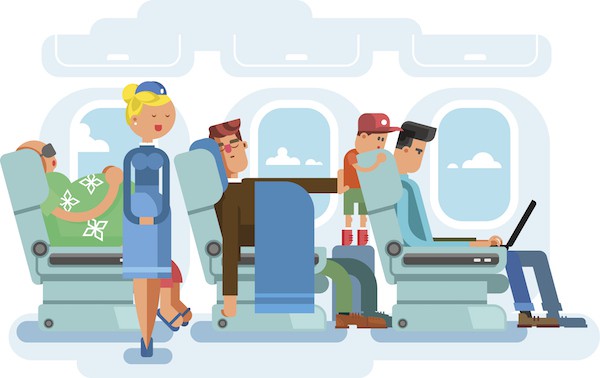
A fascinating mix of air passengers (Image credit: jossdim/iStock)
Like many other supply chains – the factors affecting demand and supply are varied. On the supply side many of the former generations of pilots came from a feedstock that was the military, which are people who flew for their respective country air forces were a major contributor to the supply.
Manned flying for the military in most countries is a declining force. For the UK in for example 2006 the pilot supply problem was highlighted in this article. The UK’s Royal Air Force will be reduced in 2020 to just six front line squadrons of 12 aircraft each with about 50% of these aircraft being available at any time, but even with the significant drop in need – there is still not enough pilots.
For an interesting calculation of the rate of pilot demand read here. There is not enough supply, straightforward supply from regional airlines and private pilots who want to fly commercially is also just not up to the challenge.
The first ever study on pilot demand has just been published. It makes for some sombre reading. The current requirement says that worldwide we will need an extra 255,000 pilots by 2027 to sustain the current growth and sadly the industry is not moving fast enough to fill the demand for both captains and co-pilots. We are headed for a quite big problem.
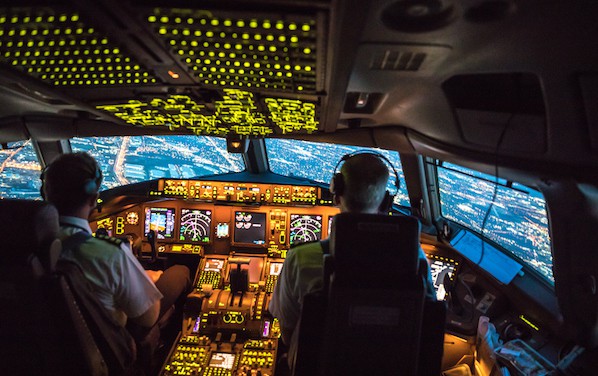
Pilots wanted! (Image credit: Rathke/iStock)
Is that problem acute? Sadly yes.
Just this past week one of the largest North American regional airlines, Horizon that flies under the Alaska airlines brand, announced a significant cut back in schedule. They have now put in place a 6.2% schedule cut across the board in August 2017.
Dire warnings of the impact of the shortage are also being sounded by the CEO of Skywest, the largest regional airline in the world. Smaller airlines struggle to hold onto their pilots as the bigger airlines come poaching – earlier and earlier.
Is there a technology answer?
There just may be. In one of Michael O’Leary’s, CEO of Europe’s largest airline Ryanair, more inspired rants, he suggested that co-pilots were unnecessary. But he has a point – airplanes can essentially fly themselves. If we can have self-driving cars why not self-driving planes?
Chinese drone maker EHang announced in January 2017 a deal with Dubai’s taxi authority to commence trial flights this month. That announcement in January has had no further information coming from either party since then.
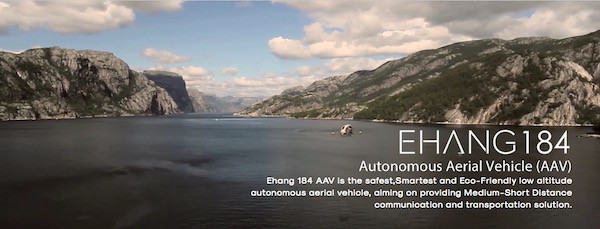
EHang’s in a deal with Dubai’s taxi authority
More realistic is the enhancement of autonomous capabilities of the conventional cockpit and the real next generation of aircraft. In this the role of the pilot is diminished. Clearly this is already happening where the percentage of unmanned flown missions in a military capacity is rising rapidly.
The ‘dull, dirty and dangerous’ missions are now transitioning to UAVs (Unmanned Aerial Vehicle) based missions. It is only a matter of time before this comes across to the civilian side. After all aren’t all daily flights designed to be just that – dull? Unless of course, you are Sully Sullenberger.
• Featured image credit: SIphotography/iStock