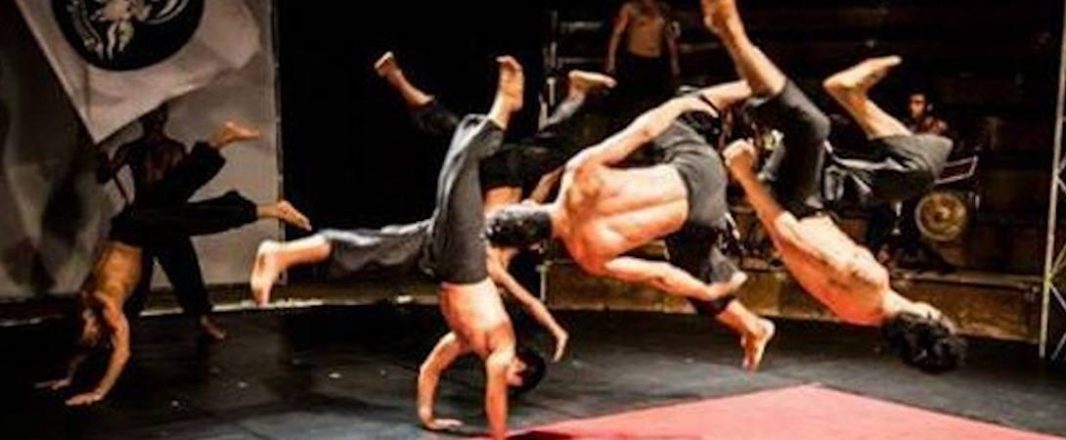

I met Dara Huot the weekend I was in Siem Reap, right after I had watched Phare, The Cambodian Circus. I was curious to find out the background of the circus as well as the man who’e been charged with turning the circus into a self-sustainable social enterprise. After hearing his story, I invited him to come to our WITNext Summercamp last Friday to share his story as our “mystery guest”.
As a boy growing up in Battambang, Cambodia, Dara Huot remembers running to the bomb shelter a lot whenever he heard explosions or gunfire. This was, after all, the frontline in the war against the Khmer Rouge who continued to fight on in the northwest of the province, suspending hostilities only in 1996.
Dara, 30, had moved with his parents from Siem Reap where he was born to Battambang where his father had a business. “It was a tough and frightening environment to grow up in,” he said. “You never knew what was going to happen, you didn’t know if there would be a tomorrow.”
One impression stayed with him though – when he was a teenager, he volunteered with thePhare Ponleu Selpak (which means ‘the brightness of art’), an organization in Battambang which takes in kids at risk and trains them to become artists and performers.
 Said Dara, “It was started in 1994 by eight young Cambodian returning refugees from the camps of Thailand. They used street art to help people get over the trauma in their lives and to spread messages.
“For example, after the Khmer Rouge left, the province had landmines, dengue fever and malaria and they put together performances which educated people on how to be aware of these dangers in a fun and entertaining way.” .jpg) (pictured below)
(pictured below)
Dara moved on to build his career – he joined the airline industry, worked with Vietnam Airlines and Asiana Airlines in sales and marketing roles. He had a brief stint with Naga World Resort.
Then a few months ago, he was approached by Phare and asked if he would run Phare, The Cambodian Circus. The organization wanted a commercial eye to turn the nightly performance (since February 2013) into a self-sustainable social enterprise to support the activities of its parent organization.
“They remembered me from when I was a volunteer and they recalled that I had brought them some clothes to wear. I had forgotten about that but to them, it meant something.
“So I said yes and said to myself, I must do what I can to make this a social enterprise. Our objective is to become self-reliant through ticket sales, merchandising, sponsorships and private performances.”
.jpg) The Phare organization runs the PPS School of Art and Social Centre in Battambang which sees 1,400 kids coming in daily to learn visual arts, dance, drama and music. The organization pays the salaries of teachers “to make sure they don’t ask money from the kids”, said Dara.
The Phare organization runs the PPS School of Art and Social Centre in Battambang which sees 1,400 kids coming in daily to learn visual arts, dance, drama and music. The organization pays the salaries of teachers “to make sure they don’t ask money from the kids”, said Dara.
“Phare is not an orphanage, it is a school where the association identifies children from areas of risk and teaches them circus skills, theater performance, music and a range of visual arts.”
Stories and performances are told in a uniquely Khmer way, combining local traditions with contemporary influences. Phare has performed around the world with acts such as “Sokha”, the story of a young girl trying to deal with the atrocities of war (currently on tour in France and Italy) and “Khmer Metal”, a rock-infused edgy story about young Khmers dealing with modern life such as drugs and urban lifestyle (going to Tokyo in October). The one I caught was called “Tchamlaek” (Weird), about a father who yearns for a big house.
So far, three generations of kids have been trained by PPS – “every three years, one generation graduates with proper exams and certificates”, said Dara.
.JPG) Dara is using his sales and marketing skills and knowledge of traveller behaviour to see how the nightly Circus can cater to different customers. “Korea, Vietnam and China are the top three markets for Siem Reap and they have very different behaviours – we need different strategies to cater to them.”
Dara is using his sales and marketing skills and knowledge of traveller behaviour to see how the nightly Circus can cater to different customers. “Korea, Vietnam and China are the top three markets for Siem Reap and they have very different behaviours – we need different strategies to cater to them.”
While Phare brand awareness is strong among Western markets, it is low among the new Asian markets and he knows he has to get to the Asian FIT traveller in another way other than tour operators who tend to pack as much as possible in as short a time and to whom the margins are not attractive enough for them to include in their programmes.
Currently, the circus is running at a loss and Dara hopes to break even by August. It has a monthly operating cost of US$40,000 including salaries which take up 50% of the bill and lease on the land where the Big Top is.
 Tickets are priced at US$15 for adults and US$8 for children and free for kids under five. He’s looking at how he can tier seating and pricing and cater to higher end customers. Right now, it’s free seating and you’re given a little fan because it can get quite hot and stifling under the Big Top.
Revenue streams also come from merchandising, donations and a small eatery. Dara knows there’s a lot of work that needs to be done – merchandising can be greatly improved and the eatery could also be expanded.
Private performances at corporate events are also a major revenue stream. “We need support from corporations, tour operators and independent travellers to make us a self-reliant business so we can support Phare, the mother organization, take in more kids and give them education and opportunities for a better life.”
• Phare is WIT Conference’s social enterprise this year. Proceeds after costs raised at our annual art auction during the October 23 cocktails, hosted by Circos Brand Karma and Dorsett Hospitality International, will go towards Phare.