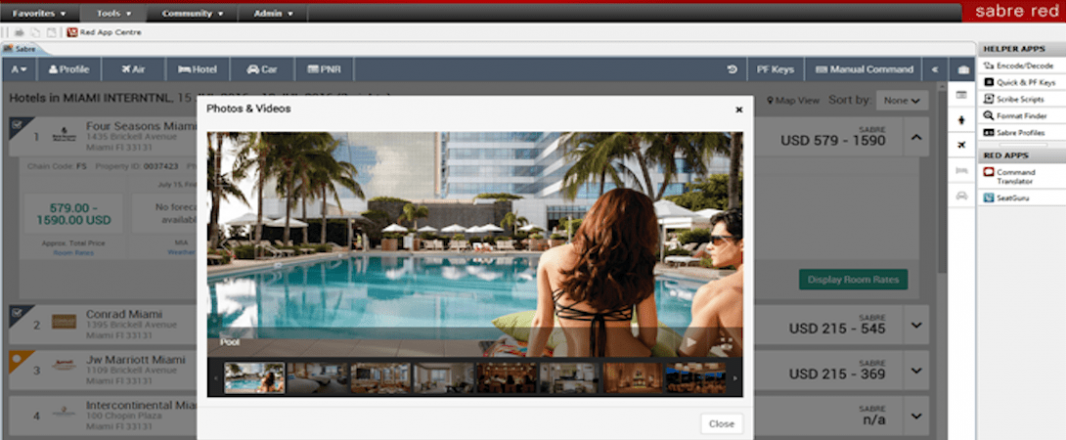
The weekly news roundup: Refreshed Sabre Red Workspace for travel industry, Android Pay in Singapore, Asian airlines’ performance in May
TECHNOLOGY: Sabre unveils new next-generation travel agency platform
Sabre Corporation has given travel consultants and suppliers across the airline, hotel, rail, cruise and car rental industries a sneak peek at its refreshed agency desktop, Sabre Red Workspace.
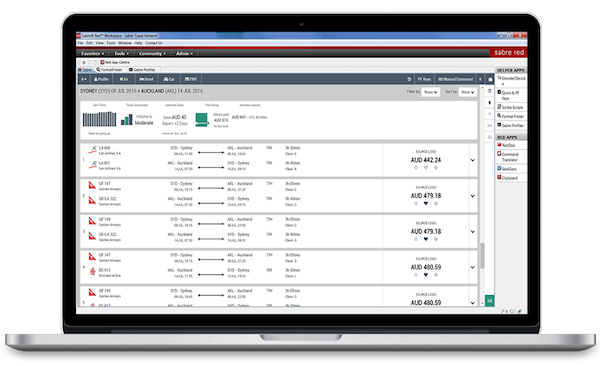
The new solution will be available to Sabre’s agency customers in early 2017.
Featuring powerful data insights and merchandising capabilities, Sabre said the new solution would transform the way consultants and suppliers can work together to create personalised experiences for travellers.
The company will begin upgrading travel agency customers to the new solution in early 2017, after a limited pilot later this year.
The Sabre Red Workspace will harness changes taking place in the industry for the benefit of retailers and suppliers to provide them with a content rich marketplace, intelligent decision support tools and predictive data insights. Agents and suppliers will be able to more easily create personalised experiences for travellers.
“Data, analytics, personalisation and mobile have been trending in the marketplace for some time and offer exciting opportunities for buyers and suppliers to meet changing traveller needs,” said Sean Menke, president of Sabre Travel Network.
“Travellers want more than an itinerary; they want to feel confident about their purchases and expect a trip built around choice. That’s why in addition to a superior user experience, our new Sabre Red Workspace provides travel consultants with data insights, relevant offers and price transparency.”
Menke added that data and analytics are critical assets to increase productivity and efficiency in the retail world, “and our travel insight engine will help drive decision-making, revenue optimization and true personalisation.”
In Asia Pacific the release of the new Sabre Red Workspace would help travel retailers and suppliers respond directly to a new generation of traveller that want flexibility in pricing, choices and personalisation, said Roshan Mendis, senior vice president of Sabre Travel Network Asia Pacific.
“Asia Pacific’s travel market is expanding – fact. Rapid economic growth and rising expendable incomes across the region’s burgeoning middle classes keep driving up demand. But with this, traveller expectations are also on the rise. We’re a region that dominates the global mobile economy and easier access to extensive travel information online continues to drive a more informed, more demanding traveller,” he added.
The Sabre Red Workspace is also an enhanced platform for suppliers. It features advanced merchandising capabilities with enhanced product information through images, video and more, enabling airlines, hotels and other travel providers to leverage the Sabre travel marketplace for an omni-channel marketing strategy.
The graphically-rich workflow supports ancillary and branded fares sales, and enhanced hotel capabilities.
“Sabre Red Workspace was designed with both supplier and agent needs in mind. Suppliers can count on improved consistency across channels while agents can work wherever and however they want, moving seamlessly between command and graphical interfaces,” said Menke.
The new solution will provide a consistent user experience across multiple operating systems and devices, including desktop, Sabre Red Mobile for consultants while on-the-go, and Sabre Web Services.
Watch video of Sabre Red Workspace below.
https://www.youtube.com/watch?v=OycpdCOnoRc
MOBILE: Singapore first Asian country to get Android Pay
Android Pay, Google’s mobile payment, landed in Singapore on June 28 making the city state the first Asian city to have this system and third in the world after the US and UK.
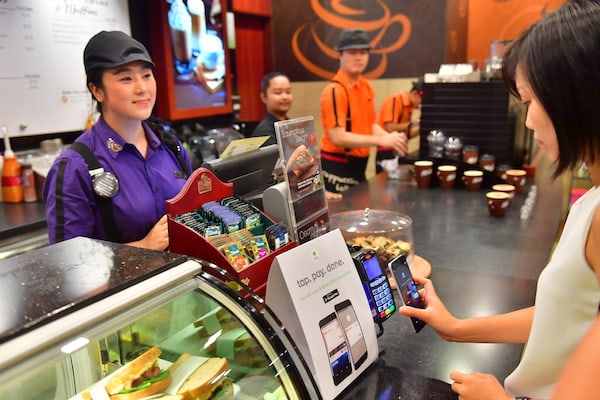
Singaporeans can use Android Pay at retail locations that accept NFC contactless payments. (Image credit: Google)
Android users in Singapore can now use their credit cards, linked to their smartphones, to pay for services and products at retail outlets across the island.
Google said that using Android Pay is simple. First download the app from Google Play store, and do all the necessary settings.
At the contactless merchant terminals, just wake the phone (without having to open an app), hold it to the reader, and a checked mark shows a successful transaction. A notification appears on the phone to show how much is spent and where.
The service is available on all Android devices that are near-field communication (NFC)-enabled and running on Android KitKat 4.4 and higher.
At launch, Android Pay works with MasterCard and Visa cards from DBS, OCBC Bank, POSB, Standard Chartered Bank and UOB. Google said users can add multiple cards and there is no limit to how many cards can be added by the consumer.
Singaporeans can now use Android Pay at retail locations island wide that accept NFC contactless payments including 7-11, BreadTalk, Cold Storage, McDonald’s, NTUC FairPrice, StarHub, Toast Box, Uniqlo, and Watsons.
“Singaporeans love mobile and are some of the fastest adopters of new technology in the world. It’s wonderful to see wide support in Singapore from the banks and the industry for Android Pay, enabling shoppers to use Android smartphones as a way to buy things when they’re on-the-go.” said Joanna Flint, country director of Google Singapore.
Android Pay first launched in the US in September 2015, followed by the launch in UK this May. It followed Apple Pay that arrived in Singapore in April and Samsung Pay on June 16.
AVIATION: Asian airlines carried 23.6m passengers in May
The month of May was definitely a merry one for airlines, as they carried 23.6 million international passengers, an increase of 2.8% over the same month in the previous year.
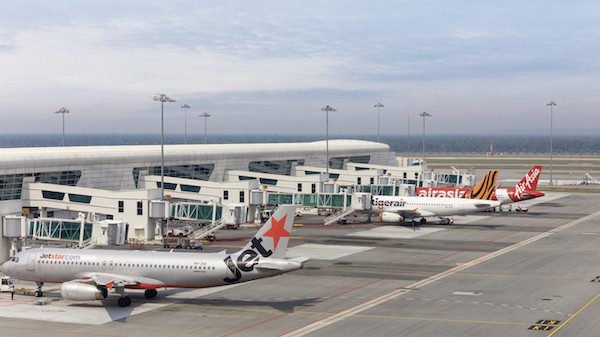
Market conditions remain “intensely competitive” for Asian airlines. (Image credit: lena_serditova/iStock)
Growth in revenue passenger kilometre (RPK) was 4.5%, highlighting the relative strength of long haul travel demand, said the Association of Asia Pacific Airlines (AAPA) in its release of preliminary traffic figures for May.
“Nevertheless, combined with the 5.8% expansion in available seat capacity, the average international passenger load factor fell by 0.9% to 75.4% for the month,” added the statement.
Andrew Herdman, AAPA director general, revealed for the first five months of 2016 Asian airlines posted a healthy 6% increase in the number of international passengers carried to 120.6 million.
Looking ahead, he noted that the demand outlook for air passenger remains broadly positive, “but the stimulus effect of low oil prices is dissipating, and uncertainty over the global economic outlook is further clouded by the potential repercussions from the political events unfolding in Europe.”
Market conditions would remain “intensely competitive” even with the expected growth in passenger demand, he added.