I don’t know if it was this post about a writer whose father died in a house rented on Airbnb that moved me and got me thinking – or if it was the terrorist attacks in Paris, or that bomb that downed a Russian jet, or the terrorist alert in Bali, but there’s no denying we live in frightening times where almost anything can happen anywhere to anyone of us.
And so as I spent the last weekend in Bangkok in a house rented on Airbnb, I found myself more conscious than ever of safety and security considerations.
Now I am usually the happy traveller, the one who tends to brush off concerns about risks on the road, but the world we live in today forces us to think differently if not for ourselves, then for our families and friends.
My niece is travelling to Paris and Europe in December. Her mother is concerned. I say she should go ahead and enjoy herself but be more aware of her surroundings and where she chooses to stay – it’s the best we can do in these new times.
We shouldn’t be cowed into not travelling but we should be perhaps more aware and more conscious of safety and security. What happens when something goes wrong?
We live in an increasingly dangerous world and taking extra precautions on the road would be a prudent thing to do for corporations and individuals.
The house we rented on Airbnb is advertised as big enough for 10-12 people. It’s four storeys, has five bedrooms, four of which comes with ensuite facilities. We were a party of eight and as such, we wanted a big house where we could all be together.
Hotels do not offer an affordable alternative if you want one big space for a group of friends and family.
And so while I personally would not have opted for an Airbnb in Bangkok which is full of wonderful, great value hotels, this requirement meant Airbnb was the best option for this trip.
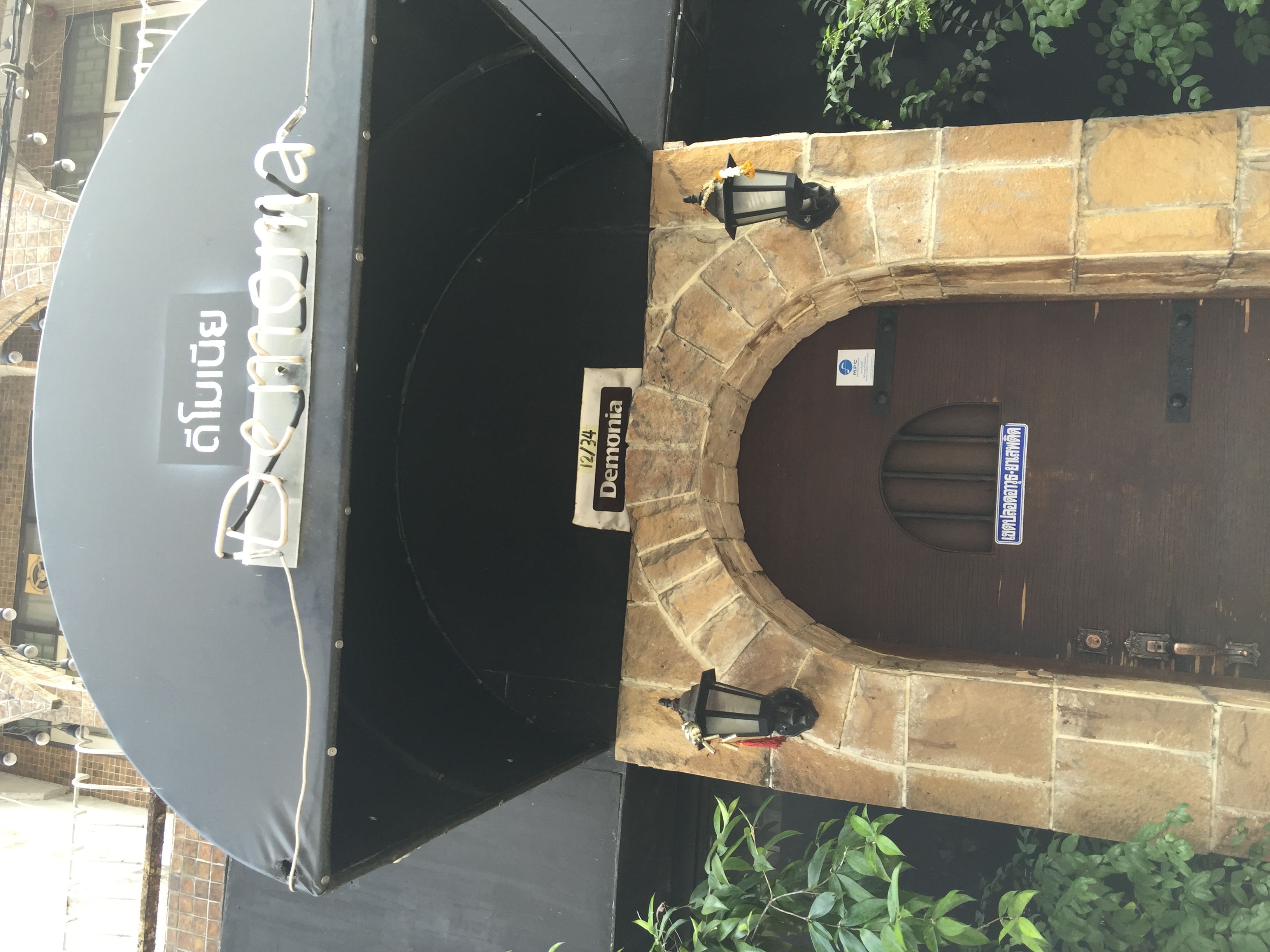
Demonia – wonder what’s inside?
The house is on Sukhumvit Soi 33, right in the heart of a district that boasts places like Honey “Body to Body Happy Ending”, “No Hand Massage” and a discreet little establishment called “Demonia” which if you google, will tell you it’s a pretty devilish place.
We chose it for the location because it puts us smack dap in the middle of Bangkok street life with all its colour and chaos, and posh shopping malls. It’s the kind of place where you pop out for street food anytime of the day, and when you’re done for the day, roll into a massage place for a 250 baht foot massage. It’s kind of experience an Airbnb delivers well – the repeat traveller to a place who knows it well and wants to live and wander like a local.
But it got me thinking about our safety and security and I started noticing details about our accommodation that I normally would have taken for granted.
The house is in a pretty dark alley off the main road, pretty hard to find and one taxi driver gave up and dropped us off somewhere to find our own way.
Signs of promise
It is clearly rented by the room and it seems to be tailored for Chinese guests. The hosts spoke Mandarin and asked if we did.
The main gate is unlocked. Guests are told where to leave the main door keys when you go out for the day – which means that any one who’s stayed there knows where it is – and could easily return to help themselves if they choose to.
There is no safe deposit box which meant we had to carry our valuables with us everywhere.
One morning, there was a blackout and we called the host and was told it would last for a few hours because there was an outage in the whole neighbourhood. There wasn’t much she could do about it really.
The house is reasonably clean although I’d advise wearing slippers indoors. We asked for extra towels to last us for the three days we were there. I didn’t sleep that well, conscious always of the linen and towels we were using. (Confession, I had to borrow a towel from a local friend.)
The kitchen is well-stocked – lots of pots, pans and paraphernalia for cooking – and the hosts left some food for us in the fridge. As hosts, you couldn’t fault them – you can book taxis with them and they were always contactable by phone – and they gave us a good review post-our stay.
Of course, for the price we paid – about US$200 per day – we weren’t expecting five star luxury but it got me thinking – creature comforts we can compromise on but should we compromise our safety and security on the road?
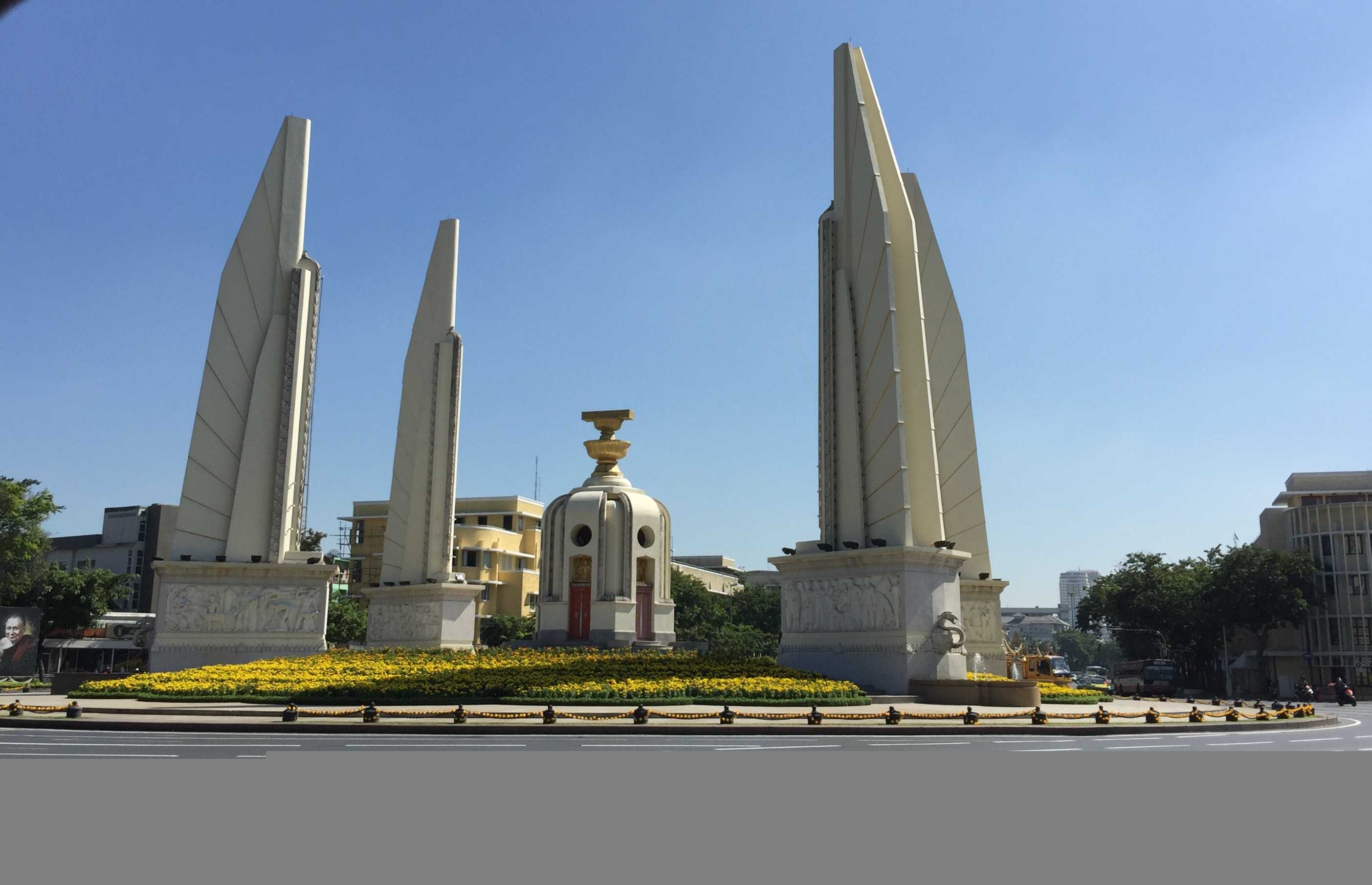
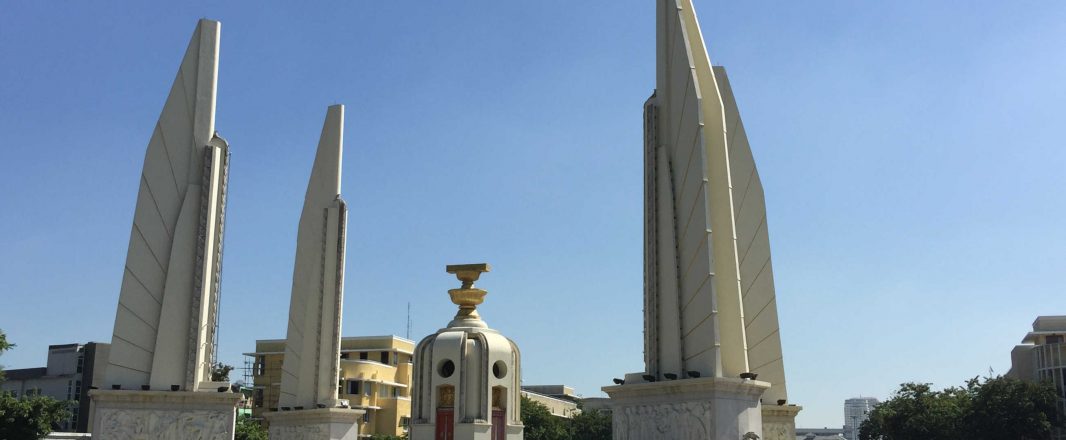
Victory Monument, Bangkok
What if we were robbed? What if one of us had an accident in the house like that poor writer whose father died while using a swing in the garden of the house? Or that woman who died from carbon monoxide poisoning at the place she rented in Taipei, due to a faulty heater? Who would we call? What about fire safety?
Am I being paranoid or do I have to be extra cautious these days especially when I am travelling with people I love?
Now I am not singling out this house or Bangkok in particular and of course, accidents and deaths happen in hotels as well. But hotels have systems and manuals in place to deal with these outlier events – do Airbnb hosts? Have they been equipped with the necessary training to handle crises?
A corporate executive friend from Australia likes to stay in Airbnbs when he is in Singapore. He likes being in local neighbourhoods and his last place was in Desker Road, which used to be one of the seediest areas in Little India. It’s a studio flat let out by a commercial property manager, and has an electronic key card system.
His female staff, while on business in Singapore, have also stayed in similar places but now with all that’s happening, he’s having second thoughts. “I am not sure how safe it is for my female staff,” he said.
I think this is the right time for hotels, who spend massive amounts in safety and security measures, to tell people about what they do behind the scenes.